Esther - If I Die, I Die
We explore the Book of Esther, a powerful story highlighting God's hidden yet profound presence in our lives. We also look at the version of Esther found in the Bible of the early church and see how God is less “hidden”. We’ll see courage, divine reversals, and discover how Esther’s bravery points us to Jesus Christ, our ultimate Savior.
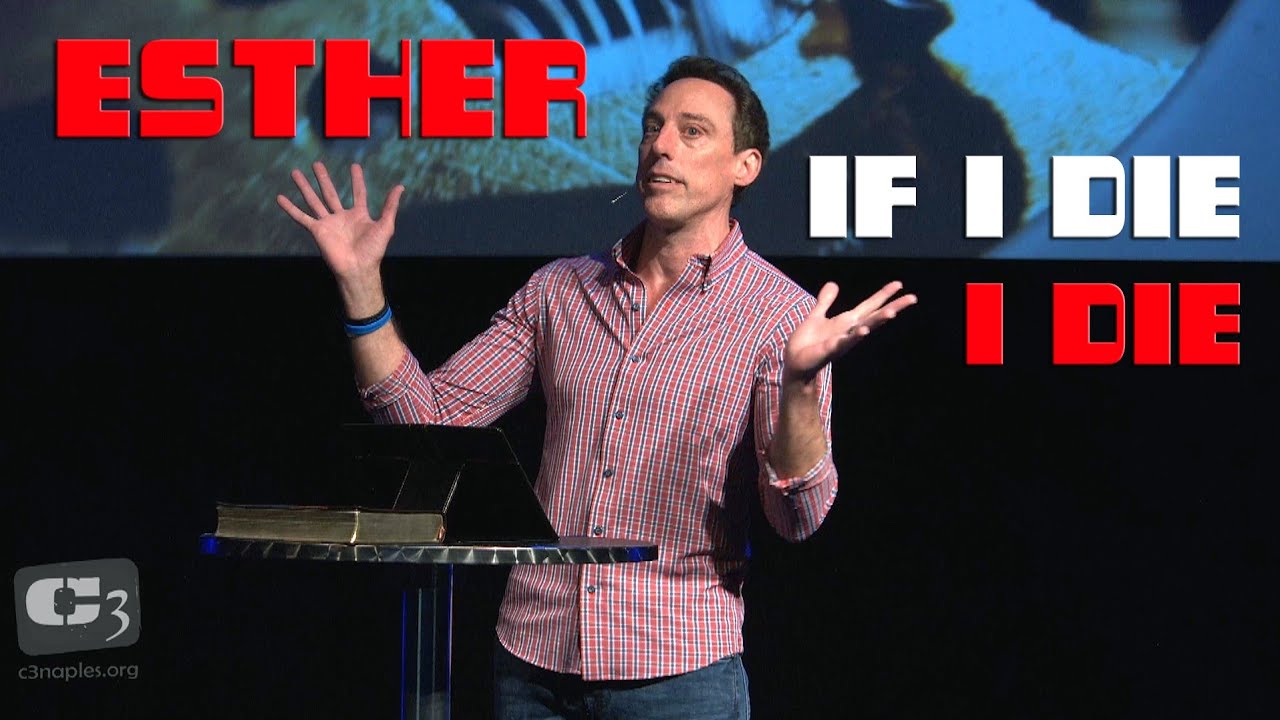
Video can’t be displayed
Sermon Transcript
Esther: If I Die, I DieSermon by Gene SimcoReader’s Version
I once heard a story about an elderly lady who never married. At her funeral, she had a very specific request: no male pallbearers. In her will, she wrote, “They wouldn’t take me out while I was living. I don’t want them to take me out when I’m dead.” We continue now in our Alpha and Omega series, where each week we look at one book of the Bible to uncover its purpose, its placement, and how it ultimately points to Jesus. In our last chapter, we explored the Book of Judith. Before that, we walked through the story of Tobit, which focused on the Israelites living under Assyrian captivity—faithful exiles clinging to righteousness under pressure. Then we looked at Ezra and Nehemiah, where we saw the exiles return from Babylon and begin the long, hard work of rebuilding. In Ezra, the focus was the physical restoration of Jerusalem and the reestablishment of temple worship. In Nehemiah, the walls of the city were rebuilt, and spiritual reforms were put in place. But today, we pause between those rebuilding stories. During the reign of Xerxes, we get a story not set in Jerusalem, but in Persia. We turn to Esther—a book about the exiles who stayed behind. And while there is no mention of the temple, the law, or even the name of God in the Hebrew version, what we do see is God’s quiet, powerful providence moving behind the scenes. Esther shows us a faithful remnant preserved by a hidden hand. It echoes the boldness of Judith and the endurance of Tobit. But once again, all of it ultimately points forward—to Jesus. Remember, we've been talking about the Bible of the early Church. So once again, I encourage you to check out the article linked earlier, which explains the Bible of the early Church and how the books now called “Apocrypha” were part of it. In this lesson, we’ll be talking about Greek Esther. Yes, there is a different version of Esther—one that most modern Bibles don’t contain. We’ll look at that version a little later as we examine the Bible used by the early Church. But for now, here’s the version of Esther that most people know today. For more on the Bible of the early Church, click here. When we open up the book of Esther in modern Bibles, we begin in chapter 1, verse 1:“These events happened in the days of King Xerxes, who reigned over 127 provinces stretching from India to Ethiopia. At that time Xerxes ruled his empire from his royal throne at the fortress of Susa. In the third year of his reign, he gave a banquet for all his nobles and officials. He invited all the military officers of Persia and Media, as well as the princes and nobles of the provinces. The celebration lasted 180 days—a tremendous display of the opulent wealth of his empire and the pomp and splendor of his majesty.” Note: In the New Living Translation (NLT), Ahasuerus is rendered as Xerxes to reflect the commonly recognized Greek name of the historical Persian king. Here’s why:
1. Historical IdentificationAhasuerus (Hebrew: אֲחַשְׁוֵרוֹשׁ) is the name used in the Masoretic Text (Hebrew Bible).However, most scholars agree that this refers to King Xerxes I, who ruled the Persian Empire from 486–465 BC.The Greek version of the name, Ξέρξης (Xerxes), is more familiar to modern readers through history (e.g., Herodotus) and pop culture (e.g., the movie 300).
2. Translation PhilosophyThe NLT is a dynamic equivalence (thought-for-thought) translation.It aims for clarity and accessibility, so it often uses modern, historically recognized names instead of transliterated Hebrew names.Using "Xerxes" instead of "Ahasuerus" helps readers immediately connect the biblical narrative to known historical figures.
3. Greek Septuagint SupportThe Septuagint, the Greek Old Testament used by the early Church, also rendered the king’s name in Greek form.This tradition supports the NLT’s approach, especially given that Greek Esther (Additions to Esther) uses Greek terminology and context.
Summary:The NLT uses Xerxes instead of Ahasuerus to make the text more accessible and historically grounded. It reflects scholarly consensus that Ahasuerus refers to Xerxes I of Persia, and it aligns with the Greek-speaking tradition of the early Church. Back to the story ... Following this, we’re told of a second banquet—a seven-day feast that’s even more indulgent. The king orders there be no limit to the drinking. This should sound familiar. We’ve seen how drinking leads to trouble all the way back to Noah, and again with Holofernes in Judith—this detail is never accidental. At the same time, Queen Vashti is holding a banquet of her own. On the seventh day, King Xerxes calls for her to appear before the men. But she refuses. Offended, he consults his officials. Their solution? Remove her and issue a decree that “every man should be the ruler of his own home.” So Vashti is deposed, and a search begins across the empire for a new queen—one of the “beautiful young virgins” brought into the royal harem at the fortress of Susa. It’s here that we meet Mordecai—a Jewish man from the tribe of Benjamin, descended from Kish. That detail will matter later. Mordecai had been exiled from Jerusalem during the Babylonian captivity under King Jehoiachin, carried off by Nebuchadnezzar. He’s now living in Susa, raising his cousin, Hadassah—also known as Esther—who was orphaned. Esther is described as beautiful and gracious. When she is taken into the palace as part of the king’s search, she conceals her Jewish identity on Mordecai’s advice. Esther undergoes twelve months of beauty treatments. Eventually, she wins the king’s favor and is crowned queen. Still, she says nothing of her people or her lineage.Meanwhile, we’re introduced to a subplot: Mordecai overhears two of the king’s guards plotting to assassinate Xerxes. He reports it to Esther, who warns the king in Mordecai’s name. The plot is foiled, and the men are executed. That piece of information gets recorded in the royal record—a detail that will come back later. Now in chapter 3, we meet Haman. Xerxes elevates Haman to the highest position in the empire. Everyone is commanded to bow before him. But Mordecai refuses. Why? Here’s where those genealogies come into play. Haman is described as an Agagite—a likely descendant of King Agag, the Amalekite king whom Saul was ordered to kill but spared in 1 Samuel 15, until Samuel finished the job. Meanwhile, Mordecai is a descendant of Kish—the father of Saul. So this conflict is a continuation of unfinished business. Infuriated, Haman isn’t satisfied with punishing Mordecai alone—he plots to annihilate all the Jews in the empire. He casts lots (called Purim) to determine the date. Then, offering 10,000 talents of silver to fund the execution of his plan, Haman persuades the king to approve a decree for the destruction of all the Jews.When Mordecai learns of this, he puts on sackcloth and mourns publicly. He sends word to Esther, urging her to intercede with the king. Esther is hesitant. She hasn’t been summoned in 30 days, and to approach the king uninvited could mean death—unless he extends the golden scepter.Mordecai replies:“Don’t think for a moment that because you’re in the palace, you will escape when all other Jews are killed. If you keep quiet at a time like this, deliverance and relief for the Jews will arise from some other place, but you and your relatives will die. Who knows if perhaps you were made queen for just such a time as this?” (Esther 4:13–14) Then comes Esther’s powerful reply:“Go and gather together all the Jews of Susa and fast for me. Do not eat or drink for three days, night or day. My maids and I will do the same. And then, though it is against the law, I will go in to see the king. If I must die, I must die.” (Esther 4:16) Mordecai obeys.On the third day of the fast, Esther dresses in her royal robes and approaches the throne room. The king sees her, extends the golden scepter, and receives her favorably. He asks:“What do you want, Queen Esther? What is your request? I will give it to you, even if it is half the kingdom!” (Esther 5:3) Now, before we continue, let’s recall Judith. Remember how she fasted and prayed before acting? That faith brought her into favor with Holofernes. We have a similar scene unfolding here in Esther. After three days of fasting, she doesn’t barge in with rage or weapons—she prepares a banquet. There’s something deeply spiritual about this—it’s a sacred setup, not a spectacle. Esther replies, “If it please the king, let the king and Haman come today to a banquet I have prepared for the king.” The king says, “Tell Haman to come quickly to a banquet, as Esther has requested.” So the king and Haman attend Esther’s banquet. At that banquet, the king repeats his question: “Tell me what you really want. What is your request? I will give it to you, even if it is half the kingdom!” But Esther doesn’t rush it. Instead, she asks them to return the next day for a second banquet, where she’ll explain everything. Haman leaves that first banquet elated—but his pride is shattered the moment he sees Mordecai still sitting at the palace gate, refusing to bow. Furious, Haman rants to his wife and friends about Mordecai. Though he's just dined with the king and queen, he says, “But this is all worth nothing as long as I see Mordecai the Jew just sitting there at the palace gate.” So his wife Zeresh and his advisors suggest building a sharpened pole—75 feet high—and asking the king to impale Mordecai on it the next morning. Some versions say “hang,” but given historical context and execution methods of the time, scholars lean toward “impale” as the accurate term. It’s more brutal, more dramatic—and more fitting to what’s about to unfold. Haman loves the idea and gives the order to set it up. Note:The "Gallows" or the "Pole"?In many English translations based on the Masoretic Text (like the KJV or ESV), Haman builds a "gallows" 50 cubits high (about 75 feet) to hang Mordecai on (Esther 5:14).
But here's the reality:The Hebrew word used is עֵץ (etz) – which literally means tree, wood, or pole.There is no Hebrew word for "gallows" in the text—it’s a translator’s interpretive choice.In ancient Persia, people weren’t hanged by the neck like in the Wild West—they were impaled on poles.
What Does the Septuagint Say?In the Greek Esther, the word used in the Septuagint is ξύλον (xulon), which also means wood, tree, or stake.This reinforces the image of a sharpened stake or pole used for impalement, not a hanging platform.
Why This Matters Theologically:
It gets even more interesting:Acts 5:30 – “The God of our ancestors raised Jesus from the dead after you killed him by hanging him on a tree (ξύλον/xulon).”
The same Greek word used for Jesus’ cross is used for Mordecai’s execution device.This makes the execution stake in Esther a typological foreshadowing of the Cross:Mordecai, the faithful one, is spared.Haman, the enemy of God’s people, is hoisted on his own pole.Christ, the ultimate faithful one, is “hung on a tree” to defeat the true enemy—sin and death.
Summary:The “gallows” in Esther is likely a tall execution stake for impalement, not a noose.Both the Hebrew and Greek support this.The same Greek word used in the Septuagint is later used in the New Testament for Jesus’ crucifixion, making this an incredible Christological connection.
Back to the story … But that very night, the king can't sleep. He orders the royal records to be read aloud—because that’s what kings apparently do when they can’t sleep. In the records, the account of Mordecai uncovering the assassination plot is read. The king asks, “What reward or recognition did we ever give Mordecai for this?” The answer: “Nothing has been done for him.” Right then, Haman enters the courtyard. He’s come to ask for Mordecai’s execution. The king calls him in and says, “What should I do to honor a man who truly pleases me?” Haman, thinking the king means him, responds:“He should be dressed in royal robes the king himself has worn. Let him ride the king’s own horse, with a royal emblem on its head. Have one of the king’s highest officials lead him through the city square, shouting, ‘This is what the king does for someone he wishes to honor!’” The king says, “Excellent! Quick! Take the robes and my horse, and do just as you’ve said for Mordecai the Jew.” So Haman, seething inside, parades Mordecai around the city like a royal hero. The humiliation is total. He returns home devastated. But before he can regroup, the king’s eunuchs arrive to escort him to the second banquet.And this time, Esther doesn't hold back. “What do you want, Queen Esther? What is your request? I’ll give it to you, even if it’s half the kingdom!”Esther replies, “If I have found favor with the king, and if it pleases the king to grant my request, I ask that my life and the lives of my people be spared. For my people and I have been sold to those who would kill, slaughter, and annihilate us.”The king demands, “Who would do such a thing?”Esther points her finger: “This wicked Haman is our adversary and our enemy.” Haman turns pale with fright. The king storms out into the garden. Haman, in desperation, falls on Esther’s couch to plead for his life. The king walks back in and shouts, “Will he even assault the queen right here in the palace before my very eyes?”Immediately, the attendants cover Haman’s face—a signal of impending execution. Then one of the eunuchs, Harbona, speaks up: “Haman has set up a sharpened pole in his courtyard, seventy-five feet tall, intended for Mordecai—the man who saved the king from assassination.”The king commands, “Then impale Haman on it!”And just like that, Haman is executed on the very stake he built for his enemy. Here’s where it gets interesting. Remember that detail? Haman was a descendant of Agag, king of the Amalekites. Mordecai is a descendant of Kish, the father of King Saul. This is more than just revenge—it’s restoration. Saul had failed to fully carry out God’s command to destroy Agag. He spared him, and that disobedience cost him the throne. Now, through Mordecai—faithful where Saul failed—God finishes what had been left undone. In chapter 8, the king gives Haman’s estate to Queen Esther. She reveals her relationship to Mordecai, and the king gives Mordecai his signet ring—transferring power and authority. Esther again approaches the king uninvited, and once more he holds out the golden scepter. She requests that the king issue a new decree, allowing the Jews to defend themselves, since royal decrees can’t be revoked. The king agrees. A new edict is sent throughout the empire, granting the Jews permission to unite and defend themselves. It’s a full reversal. The Jews prepare for the day of attack—March 7. And when it arrives, they are ready. In Susa alone, the Jews kill 500 attackers. Esther goes before the king again and requests one more day of defense, and that the ten sons of Haman be impaled. The king grants it. On March 8, another 300 are killed in Susa. Across the provinces, 75,000 enemies of the Jews are defeated. But the Jews do not take any plunder. This was not about revenge—it was about survival. A feast is established—Purim—to celebrate this great deliverance. Mordecai writes it into law, and Esther confirms it. The book ends by highlighting the greatness of Mordecai and King Xerxes. But you might be wondering: What about God?And that’s the great paradox of Esther. God’s name is never mentioned in the Hebrew text—but His fingerprints are on every page. And in the Greek version, as we’ll soon see, God’s name is made explicit—just like He’s made visible in Jesus Christ. And that’s where we’re heading next. Strangely, there’s no mention of God in the book of Esther. That is, in the modern book of Esther. But in the Bible of the early Church, Esther’s story doesn’t end with the salvation of the Jewish people—nor does it end by glorifying King Xerxes or Mordecai. Instead, it echoes forward, pointing us to Jesus Christ.When we turn to the great Septuagint version—the Bible of the early Church—we see the name of God clearly and repeatedly included in the narrative, leaving no doubt that this deliverance was divinely orchestrated. The early Church read Esther through this lens of providence, recognizing that the hidden hand of God revealed in Esther became fully visible in Jesus Christ. In the Greek version of Esther, found in the Septuagint, the so-called "additions" are not merely literary add-ons or expansions—they are the theological heart of the book. They don’t just turn political drama into spiritual allegory—they restore the book’s divine spine. These sections—Mordecai’s dream, the extended prayers of Esther and Mordecai, the references to divine intervention—are essential. They give Esther its depth and purpose, revealing a theology of deliverance, repentance, and messianic hope. If you read the Lexham English Septuagint, you’ll see these sections often labeled as “Additions to Esther.” But from a Christian point of view, that label is misleading. These aren’t additions—they are redactions from our modern Bibles. If we understand that the Septuagint—the Greek version of the Old Testament—was the Bible of the early Church, then the longer, Greek version of Esther isn’t just valid—it’s vital. Whether or not a later Hebrew version omitted them is beside the point. The issue isn’t what was subtracted for the Masoretic tradition, but what was inspired and preserved by the Spirit for the Christian Church. The early Church included these sections. So when modern Bibles omit them in favor of the Hebrew tradition, it is not an act of clarification—it’s an act of subtraction. The right way to view these "additions" is to recognize them as "removals" or “redactions”—pieces of sacred Scripture that were edited out as the canon began aligning with a post-Christian, rabbinic Hebrew text. And just as we've seen in Tobit, Judith, and the Maccabees, what was lost in redaction is restored in the Gospel when we reclaim the Scriptures used by the Apostles themselves. So let’s take a look at what was originally there, and how these “additions” to Esther—preserved in the Bible of the early Church—lead us to Christ.The first redaction in (or from) the Greek version of Esther appears not somewhere in the middle—but right at the beginning. Before the moral drama unfolds, we’re given a prophetic dream.Mordecai sees a cosmic clash: a roaring tumult of nations, two great dragons poised to fight, and a small spring that grows into a great river and brings light and deliverance to the people of God. It’s apocalyptic. It’s divine foreshadowing. And it mirrors the Book of Revelation in its symbolic language and victorious conclusion.Just as John’s vision in Revelation 12 shows the Lamb’s triumph over the dragon, Mordecai’s dream sets the tone for a deliverance not rooted in human might—but in divine providence. As Revelation 12:17 tells us: “And the dragon was angry at the woman and declared war against the rest of her children—all who keep God’s commandments and maintain their testimony for Jesus.” Mordecai’s dream, recorded in the Greek but missing from the Hebrew, was always more than a dream—it was a prophecy embedded in history. Redaction number two is found just before Esther chapter 4 and often listed as Addition B in the Septuagint. This is the content of Haman’s letter, sent throughout the empire, ordering the extermination of the Jews. While the Hebrew version simply describes the decree, the Greek version gives the full text of the letter. And in this text, we hear the language of imperial arrogance and genocidal hatred. It heightens the evil at hand and prepares us for the divine justice to come.Then comes the third major redaction, usually labeled as Additions C and D. These occur between Esther chapters 4 and 5—right after Esther declares, “If I must die, I must die.” But in the Greek version, this turning point is far more spiritual. In the Hebrew version, Esther agrees to go before the king. In the Greek version, she fasts, mourns, and prays—and so does Mordecai. These two prayers are some of the most beautiful and raw moments in the entire Septuagint. They call upon the God of Israel, recount past deliverance, and plead for mercy. This is not simply political maneuvering—it is intercession. Esther’s Greek prayer in Esther 4:17 (LXX) says:“You know all things, O Lord. You know that I hate the honor of the wicked and detest the bed of the uncircumcised and of any foreigner... I have not exalted myself in pride or joy or honor, O Lord, but I have acted according to your wisdom.” She removes her royal robes, puts on garments of mourning, lays aside perfume for ashes, and humbles herself in the dust. She confesses that she never took joy in being queen—but trusted in God's truth alone. The echo of Judith is clear. In that book, another faithful woman fasts before confronting a murderous tyrant. And yet, we also hear the foreshadowing of Christ, who would spend three days buried in darkness before rising in victory. This is no coincidence—this is a pattern. Esther fasted for three days. Jesus remained in the grave for three days. These prayers not only restore God's name to Esther—they restore God's presence to the plot. And in doing so, they make it clear: the triumph of Esther is not by beauty or cleverness alone. It is by God’s hand. The fourth redaction appears just before Esther chapter 5 in the Greek Septuagint, and it dramatically expands the narrative of Esther’s entrance into the throne room.Unlike the Hebrew version, where Esther simply walks in and is greeted by the king, the Greek text presents a scene of intense fear and divine intervention. Esther faints from the overwhelming dread of approaching the king uninvited. This isn’t a moment of cinematic glamour—it’s one of trembling obedience. And it’s God—not cosmetics or confidence—who moves the king’s heart to compassion. Esther becomes a type of intercessor. She stands in the gap for her people. Just as Jesus would later enter the presence of the Father on our behalf, Esther enters the royal throne room, not for personal gain, but to plead for the lives of others. Her moment mirrors Jesus’ agony in Gethsemane, when He prayed with such intensity before His own act of intercession through the cross. There’s also a repeated phrase that ties Esther’s moment to a much darker New Testament counterpart: the king tells her, “I will give you whatever you ask, even up to half the kingdom.” This phrase appears three times in the Book of Esther (Greek: Esther 5:3, 5:6, 7:2), and it foreshadows a disturbing echo in Mark 6:23, where King Herod, captivated by the dancing of Herodias’ daughter, makes the same offer: “I will give you whatever you ask, up to half my kingdom!”But the results couldn’t be more different. Herod’s offer leads to the beheading of John the Baptist—the death of a prophet. Xerxes’ offer, prompted by Esther’s fast, faith, and courage, leads to the salvation of an entire people. It’s a powerful typological reversal. One king uses power to please the flesh and brings death. The other—though no saint—acts under divine influence to preserve life. Esther’s story reminds us that intercession requires sacrifice, and that access to the king—whether earthly or heavenly—is never a small thing. In the Greek version, God’s fingerprints are all over this moment. He is the unseen mover, the quiet power behind her courage. And in this, Esther points forward to the greater Mediator—Jesus, who would not only risk His life for His people but would give it, once for all.In the fifth redaction, we see a crucial turning point: the issuing of the counter-edict by the king, found just after Esther 8:12. In the Greek version, it is King Artaxerxes, another name often associated with Xerxes, likely reflecting the Greek transliteration. While this can cause confusion, scholars agree that it refers to the same Persian monarch depicted in the Hebrew text—King Xerxes (Ahasuerus). In this redaction, Mordecai's loyalty is exalted, and the edict now praises the God who “rules the destinies of kings and avenges His people.” At last, God is not merely inferred—He is named directly. The redaction doesn’t just reverse the decree; it reframes it theologically. It’s not just Mordecai who acts, but God working through Mordecai and Esther to overturn death itself. Then we come to the sixth and final redaction, placed after Esther 10:3, which fulfills the prophetic dream that opened the Greek version of the book. This is not merely a literary wrap-up—it’s a theological climax. Mordecai’s dream is interpreted, and the symbols—roaring beasts, light, and a great river—are revealed to represent God's sovereign victory. The dream's meaning confirms that the deliverance of Israel was no political accident but a divine orchestration.The book doesn’t end, as it does in the modern Hebrew version, with a celebration of Mordecai’s greatness or the glory of King Xerxes. Instead, it concludes with the true center of the narrative: God’s faithfulness to His people. The triumph is not political—it’s spiritual. The real power in the story is not in the hand of kings or courtiers, but in the quiet, unstoppable hand of the Lord. The Greek redactions in (from) Esther do more than add content—they add clarity. They lift the veil. They reveal the spiritual dimension behind the visible events. They restore God’s name where it was once redacted. Through added prayers, divine dreams, and explicit intervention, they echo the words of Jesus: “Everything written about Me in the Law of Moses and the prophets and in the Psalms must be fulfilled” (Luke 24:44). Esther’s story, in its full Greek form, gives us a profound foreshadowing of Christ—a humble intercessor who fasted, prayed, and risked everything to save her people. Jesus Himself would echo Esther’s defining moment. In John 12:27, He says, “Now my soul is deeply troubled. Should I pray, ‘Father, save me from this hour’? But this is the very reason I came!” Like Esther, Jesus stood in the gap, not for a nation, but for the whole world. And just as Esther declared, “If I must die, I must die,” Jesus said, “Not my will, but Yours be done.” Paul echoes Esther’s timing in Romans 5:6: “When we were utterly helpless, Christ came at just the right time and died for us sinners.” Esther’s moment was temporal—Christ’s is eternal. Hebrews 7:25 declares: “Therefore He is able, once and forever, to save those who come to God through Him. He lives forever to intercede with God on their behalf.” Esther’s courage didn’t just echo forward into Christian teaching—it pointed to its source. Her momentary victory revealed a greater one to come: where the hidden is revealed, the voiceless are heard, the condemned are saved, and the intercessor becomes the Savior. Alpha & Omega – Christophanies and Fulfillments in Esther Esther’s courageous stand is more than an inspiring story—it is a prophetic glimpse of the greater deliverance fulfilled in Jesus Christ. This is how the early church read Esther: not as a tale of isolated heroism, but as part of a divine pattern pointing forward to the Messiah.________________________________________ 1. The Intercessor Who Risks EverythingἌλφα – Esther 4:16"I will go in to see the king. If I must die, I must die."Ὦμέγα – Hebrews 7:25"Therefore He is able, once and forever, to save those who come to God through Him. He lives forever to intercede with God on their behalf."Also see – Luke 22:42"Father, if You are willing, please take this cup of suffering away from Me. Yet I want Your will to be done, not Mine." Explanation:Esther risked her life to intercede before an earthly king. Jesus, our greater Intercessor, entered the presence of the Holy God, not just risking but giving His life. The early Church saw Esther’s boldness as a type of the access we now have to God through Christ (Hebrews 4:16), made possible by His willing sacrifice and eternal intercession. ________________________________________ 2. The Humble Are ExaltedἌλφα – Esther 6:10–11"Then the king said to Haman, 'Quick! Take the robes and my horse, and do just as you have said for Mordecai the Jew…'"Ὦμέγα – Philippians 2:8–9"He humbled Himself in obedience to God and died a criminal’s death on a cross. Therefore, God elevated Him to the place of highest honor and gave Him the name above all other names."Also see – Matthew 21:5 / Zechariah 9:9"Tell the people of Jerusalem, ‘Look, your King is coming to you. He is humble, riding on a donkey…’" Explanation:Mordecai’s humble service is unexpectedly honored. Likewise, Jesus, though rejected and lowly, is exalted to the highest place. Early Christian thinkers such as Irenaeus and Augustine highlighted this “divine inversion” where humility becomes the path to glory—first seen in Mordecai, ultimately fulfilled in Christ. ________________________________________ 3. Deliverance from Certain DeathἌλφα – Esther 9:1"On the very day when the enemies of the Jews had hoped to overpower them, the opposite happened, and the Jews overpowered their enemies."Ὦμέγα – Colossians 2:15"In this way, He disarmed the spiritual rulers and authorities. He shamed them publicly by His victory over them on the cross." Explanation:The very day meant for destruction became a day of salvation. So it was at the cross: what looked like defeat became triumph. Christ’s victory turns the enemy’s weapons into instruments of his own shame. This theme of reversal and deliverance—so central to Esther—was preached by the early church as the heart of the Gospel.________________________________________ 4. Hidden Yet SovereignἌλφα – The Hebrew Esther (implied divine action)God’s name is absent, but His providence is visible throughout.Ὦμέγα – John 1:14"So the Word became human and made His home among us. He was full of unfailing love and faithfulness..." Also see – Romans 16:25–26"This message about Jesus Christ... was kept secret for centuries and ages past. But now as the prophets foretold... it is made known to all Gentiles everywhere..." Explanation:In the Hebrew version of Esther, God remains unnamed—yet His fingerprints are on every rescue, reversal, and act of redemption. Jesus is the ultimate “hidden revealed,” the one long-concealed, now made manifest. Just as God’s presence in Esther was veiled but decisive, so Christ—once hidden in prophetic shadow—is now revealed in glory. ________________________________________ So how does this apply to us? As we’ve seen, Esther's story isn’t just an ancient tale of royal drama—it’s a real-time example of how God works behind the scenes in everyday lives. The spiritual takeaway is this: even when God seems silent, He is never absent. His providence is still active. And that means our own stories—your story—is part of a divine plan that’s bigger than we can see. We must recognize God’s sovereignty in our daily circumstances, even when His name isn’t written all over them. Just as Esther couldn’t see the end from the middle of the crisis, neither can we. But we can trust that God positions us strategically for His greater purpose. Esther’s story becomes a template for courageous, faithful, and purposeful living in a world that’s often hostile to God’s people. “Who knows if perhaps you were made queen for just such a time as this?” (Esther 4:14) —that’s not just her question. It’s ours. Paul gives us the answer in Ephesians 2:10: “For we are God’s masterpiece. He has created us anew in Christ Jesus, so we can do the good things He planned for us long ago.” Yes, we’re saved by grace (Ephesians 2:8–9)—but we were also saved for a purpose. Just like Esther could’ve kept quiet and coasted in the palace, you and I can stay comfortable and pretend it’s someone else’s job. But Mordecai’s warning still rings: If you remain silent… deliverance will come from somewhere else, but you will miss the moment. So let me ask: Are you holding back? Are you waiting for the perfect conditions to step out in faith? Your position, your voice, your influence—those are not accidents. They’re divine appointments. Stop waiting. Start walking. This week, identify one place where you’ve been hesitating. Maybe it’s finally sharing your faith. Maybe it’s reconciling a broken relationship. Maybe it’s standing up for someone who has no voice. Whatever it is—move. And don’t move alone. Intercede like it matters—because it does. Esther 4:16 reminds us that before she acted, she prayed. She fasted. She sought God first. So did Judith. So did Jesus. 1 Thessalonians 5:17 says, “Never stop praying.” Before Jesus entered ministry, before He chose His disciples, before He went to the cross—He prayed. Prayer isn’t our last resort—it’s our first offensive move.So set time aside this week. Not just for silent reflection, but for real, bold intercession. Pray over your family, your job, your mission. Ask God to use you—for such a time as this. Because He still delivers, and He still works through those willing to say, “If I must perish, I perish.” Be a Voice for the Voiceless “Speak up for those who cannot speak for themselves; ensure justice for those being crushed. Yes, speak up for the poor and helpless, and see that they get justice.” – Proverbs 31:8–9 This is echoed in the New Testament as well. “Pure and genuine religion”—the Greek word here is thrēskeía, meaning external worship—“in the sight of God the Father means caring for orphans and widows in their distress and refusing to let the world corrupt you.” – James 1:27 Esther used her influence not to make a spectacle, not to demand the spotlight, but to courageously intercede for those who had no voice. And look at how she did it—with prayer, fasting, humility, and wisdom—but before you point to Purim, let me point you to some clarification in the New Testament: Romans 12:17 Never pay back evil with more evil. Do things in such a way that everyone can see you are honorable. 18 Do all that you can to live in peace with everyone. 19 Dear friends, never take revenge. Leave that to the righteous anger of God. For the Scriptures say, “I will take revenge; I will pay them back,” says the Lord. Here’s where we have to be very clear: Under the New Covenant, our approach must reflect Christ. Remember that sword we talked about in Judith? Jesus is that sword now. We are not under the Old Covenant. Jesus changed everything. Yes, Esther’s courage is inspiring, but so is her posture. She didn't protest loudly; she fasted quietly. She didn’t confront rashly; she waited prayerfully. She interceded before the king—and so do we, but now through the King of kings. James 1:27 says we’re to care for widows and orphans—not necessarily fight for them with earthly weapons. Ephesians 6 tells us to put on the armor of God, because our battle is spiritual, not political or personal. 2 Corinthians 10:4 reminds us: “We use God's mighty weapons, not worldly weapons.” Our weapon is prayer. Our battle is waged in the heavenlies. Christ brings the justice—we trust in that. Let’s be careful that our so-called “activism” or “advocacy” isn’t a thin veil for unrighteous anger. James 1:20 says, “Human anger does not produce the righteousness God desires.” If your actions are rooted in frustration or pride—if you’re just trying to be heard or seen—it’s not biblical. It’s fleshly. It’s sin.Galatians 5 includes outbursts of anger in the works of the flesh. Ephesians 4 warns us not to let the sun go down while we're angry. 1 Peter 2 reminds us that we silence critics through honorable lives, not harsh words. Let’s be honest: Social media is flooded with professing Christians who are sinning loudly, driving others away from the faith. They’re not winning souls. They're feeding a mob. But Romans 12:21 tells us to “overcome evil with good.” That’s why Romans 13, Titus 3, and 1 Peter 2 all remind us to honor the governing authorities—even unjust ones. We are not revolutionaries. We are ambassadors of Christ. That’s who Esther was—a representative of God’s people, not an instigator of war. Even Mordecai may have missed this at first. His refusal to honor Haman started the chain reaction, but under the New Covenant, we’re explicitly told: “Respect everyone. Love the family of believers. Fear God. Honor the king.” – 1 Peter 2:17 And how did Jesus do it? He didn’t storm Pilate’s palace. He didn’t protest in Rome. He laid down His life.That’s our model. So if you want more on this, I encourage you to read “Peace or a Sword?” here.Or Fortune Cookie Theology book @ Amazon.
________________________________________The Courage to Die—and the Call to Live And we need to be courageous, even when it’s costly. Esther 4:16 says, “If I must die, I must die.” Likewise, in Philippians 1:20, Paul writes, “For I fully expect and hope that I will never be ashamed, but that I will continue to be bold for Christ, as I have been in the past. And I trust that my life will bring honor to Christ, whether I live or die.” Esther teaches us that obedience to God may be risky, but it’s always worth it. Don’t be paralyzed by fear—stand firm in your convictions. Paul, writing from prison, continues in Philippians 1:21: “For to me, living means living for Christ, and dying is even better. But if I live, I can do more fruitful work for Christ. So I really don’t know which is better. I’m torn between two desires: I long to go and be with Christ, which would be far better for me.” This is an interesting and often overlooked truth: many Christians today are afraid of dying, and quite frankly, that fear doesn’t reflect faith. It’s perplexing. We should be displaying our faith as faithful witnesses of Jesus Christ.The word martyr comes from the Greek word for witness. Over time, it became synonymous with dying—because to witness for Christ in the early Church often meant dying. This became a badge of courage among believers, knowing full well what was waiting for them on the other side. In Revelation, we’re told that those who are beheaded or martyred for Jesus will experience the first resurrection. Did you know there’s a first and second resurrection? If you’re taking Revelation literally, it says that those who are beheaded for Christ will reign with Him for a thousand years. Hebrews 2:14–15 tells us: “Because God’s children are human beings—made of flesh and blood—the Son also became flesh and blood. For only as a human being could He die, and only by dying could He break the power of the devil, who had the power of death. Only in this way could He set free all who have lived their lives as slaves to the fear of dying.”That fear? It's broken in Jesus. Paul continues in Philippians 3 with even more conviction that to die is to be with Christ. Philippians 3:10 I want to know Christ and experience the mighty power that raised him from the dead. I want to suffer with him, sharing in his death, 11 so that one way or another I will experience the resurrection from the dead! And here’s the key: you can’t rise from the dead or experience heaven unless you die. Now, let me be very clear—this is not an endorsement of suicide. Scripture is also clear on this: 1 Corinthians 3:17 says, “God will destroy anyone who destroys this temple. For God’s temple is holy, and you are that temple.” We are not to take our own lives. But this is precisely why martyrdom became so big in the early Church.Yet here in places like Naples, Florida, some act as though we’re already in heaven. So we must be careful not to let the comforts of this world distract us from the heavenly goal. When the thief on the cross turned to Jesus, Jesus didn’t say, “Today you’ll be with me in Naples.” No, He said, “Today you’ll be with me in paradise.” And I assure you, paradise wasn’t a beach resort. This world—this life—isn’t the paradise Jesus had in mind. Paul says this in 2 Corinthians 4:10: “Through suffering, our bodies continue to share in the death of Jesus so that the life of Jesus may also be seen in our bodies.” Jump down to verse 16: “That is why we never give up. Though our bodies are dying, our spirits are being renewed every day. For our present troubles are small and won’t last very long. Yet they produce for us a glory that vastly outweighs them and will last forever! So we don’t look at the troubles we can see now; rather, we fix our gaze on things that cannot be seen.” In 2 Corinthians 5:1–4, Paul continues: “For we know that when this earthly tent we live in is taken down (that is, when we die and leave this earthly body), we will have a house in heaven, an eternal body made for us by God himself and not by human hands. We grow weary in our present bodies, and we long to put on our heavenly bodies like new clothing... these dying bodies will be swallowed up by life.”That’s eternal life. So take courage—not in your strength, but in His promises. Whether you live or die, you are held in the hands of the One who conquered death. Don’t waste your life running from what Christ already overcame. Instead, live boldly, speak faithfully, and walk confidently—because for those who belong to Jesus, even death is just a doorway home.________________________________________ Esther’s Legacy and YoursEsther didn’t ask for the spotlight. She didn’t volunteer for the job. She was an orphan, tucked away in the background of an empire. But when the moment came, she stepped forward in obedience—and God used her to save a nation.And He can use you too. Even if you feel invisible. Even if you feel unqualified. You are not an accident. You are strategically placed in this moment of history for a divine purpose.God isn’t looking for perfect people. He’s looking for available people.So what will you do with the influence, voice, and platform you’ve been given? The time isn’t coming—it’s already here. So rise up, Church. Pray boldly. Live courageously. Love relentlessly. And live every moment knowing the King of kings holds the scepter out to you, inviting you to come boldly before His throne. Remember:You may feel ordinary—but God delights in using the ordinary to accomplish the extraordinary.
You Are Sons & Daughters of The MOST HIGH KING – For A Time Such As This!
©️ Copyright 2025 Gene Simco Most Scripture quotations are taken from the Holy Bible, New Living Translation, copyright ©1996, 2004, 2015 by Tyndale House Foundation. Used by permission of Tyndale House Publishers, Carol Stream, Illinois 60188. All rights reserved. Scriptures in brackets reflect the original Biblical languages.
I once heard a story about an elderly lady who never married. At her funeral, she had a very specific request: no male pallbearers. In her will, she wrote, “They wouldn’t take me out while I was living. I don’t want them to take me out when I’m dead.” We continue now in our Alpha and Omega series, where each week we look at one book of the Bible to uncover its purpose, its placement, and how it ultimately points to Jesus. In our last chapter, we explored the Book of Judith. Before that, we walked through the story of Tobit, which focused on the Israelites living under Assyrian captivity—faithful exiles clinging to righteousness under pressure. Then we looked at Ezra and Nehemiah, where we saw the exiles return from Babylon and begin the long, hard work of rebuilding. In Ezra, the focus was the physical restoration of Jerusalem and the reestablishment of temple worship. In Nehemiah, the walls of the city were rebuilt, and spiritual reforms were put in place. But today, we pause between those rebuilding stories. During the reign of Xerxes, we get a story not set in Jerusalem, but in Persia. We turn to Esther—a book about the exiles who stayed behind. And while there is no mention of the temple, the law, or even the name of God in the Hebrew version, what we do see is God’s quiet, powerful providence moving behind the scenes. Esther shows us a faithful remnant preserved by a hidden hand. It echoes the boldness of Judith and the endurance of Tobit. But once again, all of it ultimately points forward—to Jesus. Remember, we've been talking about the Bible of the early Church. So once again, I encourage you to check out the article linked earlier, which explains the Bible of the early Church and how the books now called “Apocrypha” were part of it. In this lesson, we’ll be talking about Greek Esther. Yes, there is a different version of Esther—one that most modern Bibles don’t contain. We’ll look at that version a little later as we examine the Bible used by the early Church. But for now, here’s the version of Esther that most people know today. For more on the Bible of the early Church, click here. When we open up the book of Esther in modern Bibles, we begin in chapter 1, verse 1:“These events happened in the days of King Xerxes, who reigned over 127 provinces stretching from India to Ethiopia. At that time Xerxes ruled his empire from his royal throne at the fortress of Susa. In the third year of his reign, he gave a banquet for all his nobles and officials. He invited all the military officers of Persia and Media, as well as the princes and nobles of the provinces. The celebration lasted 180 days—a tremendous display of the opulent wealth of his empire and the pomp and splendor of his majesty.” Note: In the New Living Translation (NLT), Ahasuerus is rendered as Xerxes to reflect the commonly recognized Greek name of the historical Persian king. Here’s why:
1. Historical IdentificationAhasuerus (Hebrew: אֲחַשְׁוֵרוֹשׁ) is the name used in the Masoretic Text (Hebrew Bible).However, most scholars agree that this refers to King Xerxes I, who ruled the Persian Empire from 486–465 BC.The Greek version of the name, Ξέρξης (Xerxes), is more familiar to modern readers through history (e.g., Herodotus) and pop culture (e.g., the movie 300).
2. Translation PhilosophyThe NLT is a dynamic equivalence (thought-for-thought) translation.It aims for clarity and accessibility, so it often uses modern, historically recognized names instead of transliterated Hebrew names.Using "Xerxes" instead of "Ahasuerus" helps readers immediately connect the biblical narrative to known historical figures.
3. Greek Septuagint SupportThe Septuagint, the Greek Old Testament used by the early Church, also rendered the king’s name in Greek form.This tradition supports the NLT’s approach, especially given that Greek Esther (Additions to Esther) uses Greek terminology and context.
Summary:The NLT uses Xerxes instead of Ahasuerus to make the text more accessible and historically grounded. It reflects scholarly consensus that Ahasuerus refers to Xerxes I of Persia, and it aligns with the Greek-speaking tradition of the early Church. Back to the story ... Following this, we’re told of a second banquet—a seven-day feast that’s even more indulgent. The king orders there be no limit to the drinking. This should sound familiar. We’ve seen how drinking leads to trouble all the way back to Noah, and again with Holofernes in Judith—this detail is never accidental. At the same time, Queen Vashti is holding a banquet of her own. On the seventh day, King Xerxes calls for her to appear before the men. But she refuses. Offended, he consults his officials. Their solution? Remove her and issue a decree that “every man should be the ruler of his own home.” So Vashti is deposed, and a search begins across the empire for a new queen—one of the “beautiful young virgins” brought into the royal harem at the fortress of Susa. It’s here that we meet Mordecai—a Jewish man from the tribe of Benjamin, descended from Kish. That detail will matter later. Mordecai had been exiled from Jerusalem during the Babylonian captivity under King Jehoiachin, carried off by Nebuchadnezzar. He’s now living in Susa, raising his cousin, Hadassah—also known as Esther—who was orphaned. Esther is described as beautiful and gracious. When she is taken into the palace as part of the king’s search, she conceals her Jewish identity on Mordecai’s advice. Esther undergoes twelve months of beauty treatments. Eventually, she wins the king’s favor and is crowned queen. Still, she says nothing of her people or her lineage.Meanwhile, we’re introduced to a subplot: Mordecai overhears two of the king’s guards plotting to assassinate Xerxes. He reports it to Esther, who warns the king in Mordecai’s name. The plot is foiled, and the men are executed. That piece of information gets recorded in the royal record—a detail that will come back later. Now in chapter 3, we meet Haman. Xerxes elevates Haman to the highest position in the empire. Everyone is commanded to bow before him. But Mordecai refuses. Why? Here’s where those genealogies come into play. Haman is described as an Agagite—a likely descendant of King Agag, the Amalekite king whom Saul was ordered to kill but spared in 1 Samuel 15, until Samuel finished the job. Meanwhile, Mordecai is a descendant of Kish—the father of Saul. So this conflict is a continuation of unfinished business. Infuriated, Haman isn’t satisfied with punishing Mordecai alone—he plots to annihilate all the Jews in the empire. He casts lots (called Purim) to determine the date. Then, offering 10,000 talents of silver to fund the execution of his plan, Haman persuades the king to approve a decree for the destruction of all the Jews.When Mordecai learns of this, he puts on sackcloth and mourns publicly. He sends word to Esther, urging her to intercede with the king. Esther is hesitant. She hasn’t been summoned in 30 days, and to approach the king uninvited could mean death—unless he extends the golden scepter.Mordecai replies:“Don’t think for a moment that because you’re in the palace, you will escape when all other Jews are killed. If you keep quiet at a time like this, deliverance and relief for the Jews will arise from some other place, but you and your relatives will die. Who knows if perhaps you were made queen for just such a time as this?” (Esther 4:13–14) Then comes Esther’s powerful reply:“Go and gather together all the Jews of Susa and fast for me. Do not eat or drink for three days, night or day. My maids and I will do the same. And then, though it is against the law, I will go in to see the king. If I must die, I must die.” (Esther 4:16) Mordecai obeys.On the third day of the fast, Esther dresses in her royal robes and approaches the throne room. The king sees her, extends the golden scepter, and receives her favorably. He asks:“What do you want, Queen Esther? What is your request? I will give it to you, even if it is half the kingdom!” (Esther 5:3) Now, before we continue, let’s recall Judith. Remember how she fasted and prayed before acting? That faith brought her into favor with Holofernes. We have a similar scene unfolding here in Esther. After three days of fasting, she doesn’t barge in with rage or weapons—she prepares a banquet. There’s something deeply spiritual about this—it’s a sacred setup, not a spectacle. Esther replies, “If it please the king, let the king and Haman come today to a banquet I have prepared for the king.” The king says, “Tell Haman to come quickly to a banquet, as Esther has requested.” So the king and Haman attend Esther’s banquet. At that banquet, the king repeats his question: “Tell me what you really want. What is your request? I will give it to you, even if it is half the kingdom!” But Esther doesn’t rush it. Instead, she asks them to return the next day for a second banquet, where she’ll explain everything. Haman leaves that first banquet elated—but his pride is shattered the moment he sees Mordecai still sitting at the palace gate, refusing to bow. Furious, Haman rants to his wife and friends about Mordecai. Though he's just dined with the king and queen, he says, “But this is all worth nothing as long as I see Mordecai the Jew just sitting there at the palace gate.” So his wife Zeresh and his advisors suggest building a sharpened pole—75 feet high—and asking the king to impale Mordecai on it the next morning. Some versions say “hang,” but given historical context and execution methods of the time, scholars lean toward “impale” as the accurate term. It’s more brutal, more dramatic—and more fitting to what’s about to unfold. Haman loves the idea and gives the order to set it up. Note:The "Gallows" or the "Pole"?In many English translations based on the Masoretic Text (like the KJV or ESV), Haman builds a "gallows" 50 cubits high (about 75 feet) to hang Mordecai on (Esther 5:14).
But here's the reality:The Hebrew word used is עֵץ (etz) – which literally means tree, wood, or pole.There is no Hebrew word for "gallows" in the text—it’s a translator’s interpretive choice.In ancient Persia, people weren’t hanged by the neck like in the Wild West—they were impaled on poles.
What Does the Septuagint Say?In the Greek Esther, the word used in the Septuagint is ξύλον (xulon), which also means wood, tree, or stake.This reinforces the image of a sharpened stake or pole used for impalement, not a hanging platform.
Why This Matters Theologically:
It gets even more interesting:Acts 5:30 – “The God of our ancestors raised Jesus from the dead after you killed him by hanging him on a tree (ξύλον/xulon).”
The same Greek word used for Jesus’ cross is used for Mordecai’s execution device.This makes the execution stake in Esther a typological foreshadowing of the Cross:Mordecai, the faithful one, is spared.Haman, the enemy of God’s people, is hoisted on his own pole.Christ, the ultimate faithful one, is “hung on a tree” to defeat the true enemy—sin and death.
Summary:The “gallows” in Esther is likely a tall execution stake for impalement, not a noose.Both the Hebrew and Greek support this.The same Greek word used in the Septuagint is later used in the New Testament for Jesus’ crucifixion, making this an incredible Christological connection.
Back to the story … But that very night, the king can't sleep. He orders the royal records to be read aloud—because that’s what kings apparently do when they can’t sleep. In the records, the account of Mordecai uncovering the assassination plot is read. The king asks, “What reward or recognition did we ever give Mordecai for this?” The answer: “Nothing has been done for him.” Right then, Haman enters the courtyard. He’s come to ask for Mordecai’s execution. The king calls him in and says, “What should I do to honor a man who truly pleases me?” Haman, thinking the king means him, responds:“He should be dressed in royal robes the king himself has worn. Let him ride the king’s own horse, with a royal emblem on its head. Have one of the king’s highest officials lead him through the city square, shouting, ‘This is what the king does for someone he wishes to honor!’” The king says, “Excellent! Quick! Take the robes and my horse, and do just as you’ve said for Mordecai the Jew.” So Haman, seething inside, parades Mordecai around the city like a royal hero. The humiliation is total. He returns home devastated. But before he can regroup, the king’s eunuchs arrive to escort him to the second banquet.And this time, Esther doesn't hold back. “What do you want, Queen Esther? What is your request? I’ll give it to you, even if it’s half the kingdom!”Esther replies, “If I have found favor with the king, and if it pleases the king to grant my request, I ask that my life and the lives of my people be spared. For my people and I have been sold to those who would kill, slaughter, and annihilate us.”The king demands, “Who would do such a thing?”Esther points her finger: “This wicked Haman is our adversary and our enemy.” Haman turns pale with fright. The king storms out into the garden. Haman, in desperation, falls on Esther’s couch to plead for his life. The king walks back in and shouts, “Will he even assault the queen right here in the palace before my very eyes?”Immediately, the attendants cover Haman’s face—a signal of impending execution. Then one of the eunuchs, Harbona, speaks up: “Haman has set up a sharpened pole in his courtyard, seventy-five feet tall, intended for Mordecai—the man who saved the king from assassination.”The king commands, “Then impale Haman on it!”And just like that, Haman is executed on the very stake he built for his enemy. Here’s where it gets interesting. Remember that detail? Haman was a descendant of Agag, king of the Amalekites. Mordecai is a descendant of Kish, the father of King Saul. This is more than just revenge—it’s restoration. Saul had failed to fully carry out God’s command to destroy Agag. He spared him, and that disobedience cost him the throne. Now, through Mordecai—faithful where Saul failed—God finishes what had been left undone. In chapter 8, the king gives Haman’s estate to Queen Esther. She reveals her relationship to Mordecai, and the king gives Mordecai his signet ring—transferring power and authority. Esther again approaches the king uninvited, and once more he holds out the golden scepter. She requests that the king issue a new decree, allowing the Jews to defend themselves, since royal decrees can’t be revoked. The king agrees. A new edict is sent throughout the empire, granting the Jews permission to unite and defend themselves. It’s a full reversal. The Jews prepare for the day of attack—March 7. And when it arrives, they are ready. In Susa alone, the Jews kill 500 attackers. Esther goes before the king again and requests one more day of defense, and that the ten sons of Haman be impaled. The king grants it. On March 8, another 300 are killed in Susa. Across the provinces, 75,000 enemies of the Jews are defeated. But the Jews do not take any plunder. This was not about revenge—it was about survival. A feast is established—Purim—to celebrate this great deliverance. Mordecai writes it into law, and Esther confirms it. The book ends by highlighting the greatness of Mordecai and King Xerxes. But you might be wondering: What about God?And that’s the great paradox of Esther. God’s name is never mentioned in the Hebrew text—but His fingerprints are on every page. And in the Greek version, as we’ll soon see, God’s name is made explicit—just like He’s made visible in Jesus Christ. And that’s where we’re heading next. Strangely, there’s no mention of God in the book of Esther. That is, in the modern book of Esther. But in the Bible of the early Church, Esther’s story doesn’t end with the salvation of the Jewish people—nor does it end by glorifying King Xerxes or Mordecai. Instead, it echoes forward, pointing us to Jesus Christ.When we turn to the great Septuagint version—the Bible of the early Church—we see the name of God clearly and repeatedly included in the narrative, leaving no doubt that this deliverance was divinely orchestrated. The early Church read Esther through this lens of providence, recognizing that the hidden hand of God revealed in Esther became fully visible in Jesus Christ. In the Greek version of Esther, found in the Septuagint, the so-called "additions" are not merely literary add-ons or expansions—they are the theological heart of the book. They don’t just turn political drama into spiritual allegory—they restore the book’s divine spine. These sections—Mordecai’s dream, the extended prayers of Esther and Mordecai, the references to divine intervention—are essential. They give Esther its depth and purpose, revealing a theology of deliverance, repentance, and messianic hope. If you read the Lexham English Septuagint, you’ll see these sections often labeled as “Additions to Esther.” But from a Christian point of view, that label is misleading. These aren’t additions—they are redactions from our modern Bibles. If we understand that the Septuagint—the Greek version of the Old Testament—was the Bible of the early Church, then the longer, Greek version of Esther isn’t just valid—it’s vital. Whether or not a later Hebrew version omitted them is beside the point. The issue isn’t what was subtracted for the Masoretic tradition, but what was inspired and preserved by the Spirit for the Christian Church. The early Church included these sections. So when modern Bibles omit them in favor of the Hebrew tradition, it is not an act of clarification—it’s an act of subtraction. The right way to view these "additions" is to recognize them as "removals" or “redactions”—pieces of sacred Scripture that were edited out as the canon began aligning with a post-Christian, rabbinic Hebrew text. And just as we've seen in Tobit, Judith, and the Maccabees, what was lost in redaction is restored in the Gospel when we reclaim the Scriptures used by the Apostles themselves. So let’s take a look at what was originally there, and how these “additions” to Esther—preserved in the Bible of the early Church—lead us to Christ.The first redaction in (or from) the Greek version of Esther appears not somewhere in the middle—but right at the beginning. Before the moral drama unfolds, we’re given a prophetic dream.Mordecai sees a cosmic clash: a roaring tumult of nations, two great dragons poised to fight, and a small spring that grows into a great river and brings light and deliverance to the people of God. It’s apocalyptic. It’s divine foreshadowing. And it mirrors the Book of Revelation in its symbolic language and victorious conclusion.Just as John’s vision in Revelation 12 shows the Lamb’s triumph over the dragon, Mordecai’s dream sets the tone for a deliverance not rooted in human might—but in divine providence. As Revelation 12:17 tells us: “And the dragon was angry at the woman and declared war against the rest of her children—all who keep God’s commandments and maintain their testimony for Jesus.” Mordecai’s dream, recorded in the Greek but missing from the Hebrew, was always more than a dream—it was a prophecy embedded in history. Redaction number two is found just before Esther chapter 4 and often listed as Addition B in the Septuagint. This is the content of Haman’s letter, sent throughout the empire, ordering the extermination of the Jews. While the Hebrew version simply describes the decree, the Greek version gives the full text of the letter. And in this text, we hear the language of imperial arrogance and genocidal hatred. It heightens the evil at hand and prepares us for the divine justice to come.Then comes the third major redaction, usually labeled as Additions C and D. These occur between Esther chapters 4 and 5—right after Esther declares, “If I must die, I must die.” But in the Greek version, this turning point is far more spiritual. In the Hebrew version, Esther agrees to go before the king. In the Greek version, she fasts, mourns, and prays—and so does Mordecai. These two prayers are some of the most beautiful and raw moments in the entire Septuagint. They call upon the God of Israel, recount past deliverance, and plead for mercy. This is not simply political maneuvering—it is intercession. Esther’s Greek prayer in Esther 4:17 (LXX) says:“You know all things, O Lord. You know that I hate the honor of the wicked and detest the bed of the uncircumcised and of any foreigner... I have not exalted myself in pride or joy or honor, O Lord, but I have acted according to your wisdom.” She removes her royal robes, puts on garments of mourning, lays aside perfume for ashes, and humbles herself in the dust. She confesses that she never took joy in being queen—but trusted in God's truth alone. The echo of Judith is clear. In that book, another faithful woman fasts before confronting a murderous tyrant. And yet, we also hear the foreshadowing of Christ, who would spend three days buried in darkness before rising in victory. This is no coincidence—this is a pattern. Esther fasted for three days. Jesus remained in the grave for three days. These prayers not only restore God's name to Esther—they restore God's presence to the plot. And in doing so, they make it clear: the triumph of Esther is not by beauty or cleverness alone. It is by God’s hand. The fourth redaction appears just before Esther chapter 5 in the Greek Septuagint, and it dramatically expands the narrative of Esther’s entrance into the throne room.Unlike the Hebrew version, where Esther simply walks in and is greeted by the king, the Greek text presents a scene of intense fear and divine intervention. Esther faints from the overwhelming dread of approaching the king uninvited. This isn’t a moment of cinematic glamour—it’s one of trembling obedience. And it’s God—not cosmetics or confidence—who moves the king’s heart to compassion. Esther becomes a type of intercessor. She stands in the gap for her people. Just as Jesus would later enter the presence of the Father on our behalf, Esther enters the royal throne room, not for personal gain, but to plead for the lives of others. Her moment mirrors Jesus’ agony in Gethsemane, when He prayed with such intensity before His own act of intercession through the cross. There’s also a repeated phrase that ties Esther’s moment to a much darker New Testament counterpart: the king tells her, “I will give you whatever you ask, even up to half the kingdom.” This phrase appears three times in the Book of Esther (Greek: Esther 5:3, 5:6, 7:2), and it foreshadows a disturbing echo in Mark 6:23, where King Herod, captivated by the dancing of Herodias’ daughter, makes the same offer: “I will give you whatever you ask, up to half my kingdom!”But the results couldn’t be more different. Herod’s offer leads to the beheading of John the Baptist—the death of a prophet. Xerxes’ offer, prompted by Esther’s fast, faith, and courage, leads to the salvation of an entire people. It’s a powerful typological reversal. One king uses power to please the flesh and brings death. The other—though no saint—acts under divine influence to preserve life. Esther’s story reminds us that intercession requires sacrifice, and that access to the king—whether earthly or heavenly—is never a small thing. In the Greek version, God’s fingerprints are all over this moment. He is the unseen mover, the quiet power behind her courage. And in this, Esther points forward to the greater Mediator—Jesus, who would not only risk His life for His people but would give it, once for all.In the fifth redaction, we see a crucial turning point: the issuing of the counter-edict by the king, found just after Esther 8:12. In the Greek version, it is King Artaxerxes, another name often associated with Xerxes, likely reflecting the Greek transliteration. While this can cause confusion, scholars agree that it refers to the same Persian monarch depicted in the Hebrew text—King Xerxes (Ahasuerus). In this redaction, Mordecai's loyalty is exalted, and the edict now praises the God who “rules the destinies of kings and avenges His people.” At last, God is not merely inferred—He is named directly. The redaction doesn’t just reverse the decree; it reframes it theologically. It’s not just Mordecai who acts, but God working through Mordecai and Esther to overturn death itself. Then we come to the sixth and final redaction, placed after Esther 10:3, which fulfills the prophetic dream that opened the Greek version of the book. This is not merely a literary wrap-up—it’s a theological climax. Mordecai’s dream is interpreted, and the symbols—roaring beasts, light, and a great river—are revealed to represent God's sovereign victory. The dream's meaning confirms that the deliverance of Israel was no political accident but a divine orchestration.The book doesn’t end, as it does in the modern Hebrew version, with a celebration of Mordecai’s greatness or the glory of King Xerxes. Instead, it concludes with the true center of the narrative: God’s faithfulness to His people. The triumph is not political—it’s spiritual. The real power in the story is not in the hand of kings or courtiers, but in the quiet, unstoppable hand of the Lord. The Greek redactions in (from) Esther do more than add content—they add clarity. They lift the veil. They reveal the spiritual dimension behind the visible events. They restore God’s name where it was once redacted. Through added prayers, divine dreams, and explicit intervention, they echo the words of Jesus: “Everything written about Me in the Law of Moses and the prophets and in the Psalms must be fulfilled” (Luke 24:44). Esther’s story, in its full Greek form, gives us a profound foreshadowing of Christ—a humble intercessor who fasted, prayed, and risked everything to save her people. Jesus Himself would echo Esther’s defining moment. In John 12:27, He says, “Now my soul is deeply troubled. Should I pray, ‘Father, save me from this hour’? But this is the very reason I came!” Like Esther, Jesus stood in the gap, not for a nation, but for the whole world. And just as Esther declared, “If I must die, I must die,” Jesus said, “Not my will, but Yours be done.” Paul echoes Esther’s timing in Romans 5:6: “When we were utterly helpless, Christ came at just the right time and died for us sinners.” Esther’s moment was temporal—Christ’s is eternal. Hebrews 7:25 declares: “Therefore He is able, once and forever, to save those who come to God through Him. He lives forever to intercede with God on their behalf.” Esther’s courage didn’t just echo forward into Christian teaching—it pointed to its source. Her momentary victory revealed a greater one to come: where the hidden is revealed, the voiceless are heard, the condemned are saved, and the intercessor becomes the Savior. Alpha & Omega – Christophanies and Fulfillments in Esther Esther’s courageous stand is more than an inspiring story—it is a prophetic glimpse of the greater deliverance fulfilled in Jesus Christ. This is how the early church read Esther: not as a tale of isolated heroism, but as part of a divine pattern pointing forward to the Messiah.________________________________________ 1. The Intercessor Who Risks EverythingἌλφα – Esther 4:16"I will go in to see the king. If I must die, I must die."Ὦμέγα – Hebrews 7:25"Therefore He is able, once and forever, to save those who come to God through Him. He lives forever to intercede with God on their behalf."Also see – Luke 22:42"Father, if You are willing, please take this cup of suffering away from Me. Yet I want Your will to be done, not Mine." Explanation:Esther risked her life to intercede before an earthly king. Jesus, our greater Intercessor, entered the presence of the Holy God, not just risking but giving His life. The early Church saw Esther’s boldness as a type of the access we now have to God through Christ (Hebrews 4:16), made possible by His willing sacrifice and eternal intercession. ________________________________________ 2. The Humble Are ExaltedἌλφα – Esther 6:10–11"Then the king said to Haman, 'Quick! Take the robes and my horse, and do just as you have said for Mordecai the Jew…'"Ὦμέγα – Philippians 2:8–9"He humbled Himself in obedience to God and died a criminal’s death on a cross. Therefore, God elevated Him to the place of highest honor and gave Him the name above all other names."Also see – Matthew 21:5 / Zechariah 9:9"Tell the people of Jerusalem, ‘Look, your King is coming to you. He is humble, riding on a donkey…’" Explanation:Mordecai’s humble service is unexpectedly honored. Likewise, Jesus, though rejected and lowly, is exalted to the highest place. Early Christian thinkers such as Irenaeus and Augustine highlighted this “divine inversion” where humility becomes the path to glory—first seen in Mordecai, ultimately fulfilled in Christ. ________________________________________ 3. Deliverance from Certain DeathἌλφα – Esther 9:1"On the very day when the enemies of the Jews had hoped to overpower them, the opposite happened, and the Jews overpowered their enemies."Ὦμέγα – Colossians 2:15"In this way, He disarmed the spiritual rulers and authorities. He shamed them publicly by His victory over them on the cross." Explanation:The very day meant for destruction became a day of salvation. So it was at the cross: what looked like defeat became triumph. Christ’s victory turns the enemy’s weapons into instruments of his own shame. This theme of reversal and deliverance—so central to Esther—was preached by the early church as the heart of the Gospel.________________________________________ 4. Hidden Yet SovereignἌλφα – The Hebrew Esther (implied divine action)God’s name is absent, but His providence is visible throughout.Ὦμέγα – John 1:14"So the Word became human and made His home among us. He was full of unfailing love and faithfulness..." Also see – Romans 16:25–26"This message about Jesus Christ... was kept secret for centuries and ages past. But now as the prophets foretold... it is made known to all Gentiles everywhere..." Explanation:In the Hebrew version of Esther, God remains unnamed—yet His fingerprints are on every rescue, reversal, and act of redemption. Jesus is the ultimate “hidden revealed,” the one long-concealed, now made manifest. Just as God’s presence in Esther was veiled but decisive, so Christ—once hidden in prophetic shadow—is now revealed in glory. ________________________________________ So how does this apply to us? As we’ve seen, Esther's story isn’t just an ancient tale of royal drama—it’s a real-time example of how God works behind the scenes in everyday lives. The spiritual takeaway is this: even when God seems silent, He is never absent. His providence is still active. And that means our own stories—your story—is part of a divine plan that’s bigger than we can see. We must recognize God’s sovereignty in our daily circumstances, even when His name isn’t written all over them. Just as Esther couldn’t see the end from the middle of the crisis, neither can we. But we can trust that God positions us strategically for His greater purpose. Esther’s story becomes a template for courageous, faithful, and purposeful living in a world that’s often hostile to God’s people. “Who knows if perhaps you were made queen for just such a time as this?” (Esther 4:14) —that’s not just her question. It’s ours. Paul gives us the answer in Ephesians 2:10: “For we are God’s masterpiece. He has created us anew in Christ Jesus, so we can do the good things He planned for us long ago.” Yes, we’re saved by grace (Ephesians 2:8–9)—but we were also saved for a purpose. Just like Esther could’ve kept quiet and coasted in the palace, you and I can stay comfortable and pretend it’s someone else’s job. But Mordecai’s warning still rings: If you remain silent… deliverance will come from somewhere else, but you will miss the moment. So let me ask: Are you holding back? Are you waiting for the perfect conditions to step out in faith? Your position, your voice, your influence—those are not accidents. They’re divine appointments. Stop waiting. Start walking. This week, identify one place where you’ve been hesitating. Maybe it’s finally sharing your faith. Maybe it’s reconciling a broken relationship. Maybe it’s standing up for someone who has no voice. Whatever it is—move. And don’t move alone. Intercede like it matters—because it does. Esther 4:16 reminds us that before she acted, she prayed. She fasted. She sought God first. So did Judith. So did Jesus. 1 Thessalonians 5:17 says, “Never stop praying.” Before Jesus entered ministry, before He chose His disciples, before He went to the cross—He prayed. Prayer isn’t our last resort—it’s our first offensive move.So set time aside this week. Not just for silent reflection, but for real, bold intercession. Pray over your family, your job, your mission. Ask God to use you—for such a time as this. Because He still delivers, and He still works through those willing to say, “If I must perish, I perish.” Be a Voice for the Voiceless “Speak up for those who cannot speak for themselves; ensure justice for those being crushed. Yes, speak up for the poor and helpless, and see that they get justice.” – Proverbs 31:8–9 This is echoed in the New Testament as well. “Pure and genuine religion”—the Greek word here is thrēskeía, meaning external worship—“in the sight of God the Father means caring for orphans and widows in their distress and refusing to let the world corrupt you.” – James 1:27 Esther used her influence not to make a spectacle, not to demand the spotlight, but to courageously intercede for those who had no voice. And look at how she did it—with prayer, fasting, humility, and wisdom—but before you point to Purim, let me point you to some clarification in the New Testament: Romans 12:17 Never pay back evil with more evil. Do things in such a way that everyone can see you are honorable. 18 Do all that you can to live in peace with everyone. 19 Dear friends, never take revenge. Leave that to the righteous anger of God. For the Scriptures say, “I will take revenge; I will pay them back,” says the Lord. Here’s where we have to be very clear: Under the New Covenant, our approach must reflect Christ. Remember that sword we talked about in Judith? Jesus is that sword now. We are not under the Old Covenant. Jesus changed everything. Yes, Esther’s courage is inspiring, but so is her posture. She didn't protest loudly; she fasted quietly. She didn’t confront rashly; she waited prayerfully. She interceded before the king—and so do we, but now through the King of kings. James 1:27 says we’re to care for widows and orphans—not necessarily fight for them with earthly weapons. Ephesians 6 tells us to put on the armor of God, because our battle is spiritual, not political or personal. 2 Corinthians 10:4 reminds us: “We use God's mighty weapons, not worldly weapons.” Our weapon is prayer. Our battle is waged in the heavenlies. Christ brings the justice—we trust in that. Let’s be careful that our so-called “activism” or “advocacy” isn’t a thin veil for unrighteous anger. James 1:20 says, “Human anger does not produce the righteousness God desires.” If your actions are rooted in frustration or pride—if you’re just trying to be heard or seen—it’s not biblical. It’s fleshly. It’s sin.Galatians 5 includes outbursts of anger in the works of the flesh. Ephesians 4 warns us not to let the sun go down while we're angry. 1 Peter 2 reminds us that we silence critics through honorable lives, not harsh words. Let’s be honest: Social media is flooded with professing Christians who are sinning loudly, driving others away from the faith. They’re not winning souls. They're feeding a mob. But Romans 12:21 tells us to “overcome evil with good.” That’s why Romans 13, Titus 3, and 1 Peter 2 all remind us to honor the governing authorities—even unjust ones. We are not revolutionaries. We are ambassadors of Christ. That’s who Esther was—a representative of God’s people, not an instigator of war. Even Mordecai may have missed this at first. His refusal to honor Haman started the chain reaction, but under the New Covenant, we’re explicitly told: “Respect everyone. Love the family of believers. Fear God. Honor the king.” – 1 Peter 2:17 And how did Jesus do it? He didn’t storm Pilate’s palace. He didn’t protest in Rome. He laid down His life.That’s our model. So if you want more on this, I encourage you to read “Peace or a Sword?” here.Or Fortune Cookie Theology book @ Amazon.
________________________________________The Courage to Die—and the Call to Live And we need to be courageous, even when it’s costly. Esther 4:16 says, “If I must die, I must die.” Likewise, in Philippians 1:20, Paul writes, “For I fully expect and hope that I will never be ashamed, but that I will continue to be bold for Christ, as I have been in the past. And I trust that my life will bring honor to Christ, whether I live or die.” Esther teaches us that obedience to God may be risky, but it’s always worth it. Don’t be paralyzed by fear—stand firm in your convictions. Paul, writing from prison, continues in Philippians 1:21: “For to me, living means living for Christ, and dying is even better. But if I live, I can do more fruitful work for Christ. So I really don’t know which is better. I’m torn between two desires: I long to go and be with Christ, which would be far better for me.” This is an interesting and often overlooked truth: many Christians today are afraid of dying, and quite frankly, that fear doesn’t reflect faith. It’s perplexing. We should be displaying our faith as faithful witnesses of Jesus Christ.The word martyr comes from the Greek word for witness. Over time, it became synonymous with dying—because to witness for Christ in the early Church often meant dying. This became a badge of courage among believers, knowing full well what was waiting for them on the other side. In Revelation, we’re told that those who are beheaded or martyred for Jesus will experience the first resurrection. Did you know there’s a first and second resurrection? If you’re taking Revelation literally, it says that those who are beheaded for Christ will reign with Him for a thousand years. Hebrews 2:14–15 tells us: “Because God’s children are human beings—made of flesh and blood—the Son also became flesh and blood. For only as a human being could He die, and only by dying could He break the power of the devil, who had the power of death. Only in this way could He set free all who have lived their lives as slaves to the fear of dying.”That fear? It's broken in Jesus. Paul continues in Philippians 3 with even more conviction that to die is to be with Christ. Philippians 3:10 I want to know Christ and experience the mighty power that raised him from the dead. I want to suffer with him, sharing in his death, 11 so that one way or another I will experience the resurrection from the dead! And here’s the key: you can’t rise from the dead or experience heaven unless you die. Now, let me be very clear—this is not an endorsement of suicide. Scripture is also clear on this: 1 Corinthians 3:17 says, “God will destroy anyone who destroys this temple. For God’s temple is holy, and you are that temple.” We are not to take our own lives. But this is precisely why martyrdom became so big in the early Church.Yet here in places like Naples, Florida, some act as though we’re already in heaven. So we must be careful not to let the comforts of this world distract us from the heavenly goal. When the thief on the cross turned to Jesus, Jesus didn’t say, “Today you’ll be with me in Naples.” No, He said, “Today you’ll be with me in paradise.” And I assure you, paradise wasn’t a beach resort. This world—this life—isn’t the paradise Jesus had in mind. Paul says this in 2 Corinthians 4:10: “Through suffering, our bodies continue to share in the death of Jesus so that the life of Jesus may also be seen in our bodies.” Jump down to verse 16: “That is why we never give up. Though our bodies are dying, our spirits are being renewed every day. For our present troubles are small and won’t last very long. Yet they produce for us a glory that vastly outweighs them and will last forever! So we don’t look at the troubles we can see now; rather, we fix our gaze on things that cannot be seen.” In 2 Corinthians 5:1–4, Paul continues: “For we know that when this earthly tent we live in is taken down (that is, when we die and leave this earthly body), we will have a house in heaven, an eternal body made for us by God himself and not by human hands. We grow weary in our present bodies, and we long to put on our heavenly bodies like new clothing... these dying bodies will be swallowed up by life.”That’s eternal life. So take courage—not in your strength, but in His promises. Whether you live or die, you are held in the hands of the One who conquered death. Don’t waste your life running from what Christ already overcame. Instead, live boldly, speak faithfully, and walk confidently—because for those who belong to Jesus, even death is just a doorway home.________________________________________ Esther’s Legacy and YoursEsther didn’t ask for the spotlight. She didn’t volunteer for the job. She was an orphan, tucked away in the background of an empire. But when the moment came, she stepped forward in obedience—and God used her to save a nation.And He can use you too. Even if you feel invisible. Even if you feel unqualified. You are not an accident. You are strategically placed in this moment of history for a divine purpose.God isn’t looking for perfect people. He’s looking for available people.So what will you do with the influence, voice, and platform you’ve been given? The time isn’t coming—it’s already here. So rise up, Church. Pray boldly. Live courageously. Love relentlessly. And live every moment knowing the King of kings holds the scepter out to you, inviting you to come boldly before His throne. Remember:You may feel ordinary—but God delights in using the ordinary to accomplish the extraordinary.
You Are Sons & Daughters of The MOST HIGH KING – For A Time Such As This!
©️ Copyright 2025 Gene Simco Most Scripture quotations are taken from the Holy Bible, New Living Translation, copyright ©1996, 2004, 2015 by Tyndale House Foundation. Used by permission of Tyndale House Publishers, Carol Stream, Illinois 60188. All rights reserved. Scriptures in brackets reflect the original Biblical languages.