Reader's Version
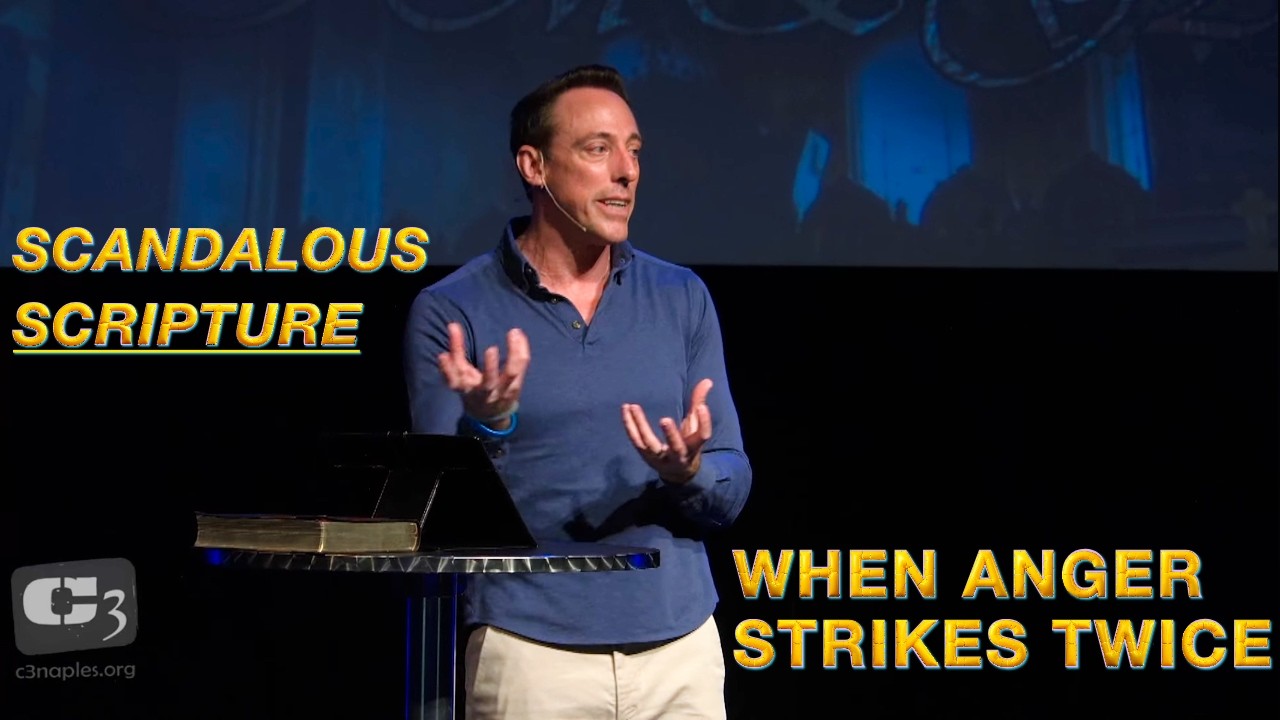
- Scandalous Scripture, Part Seven: When Anger Strikes Twice
- The Bible We Don’t Read in Church
- Reader’s Version — Sermon by Gene Simco
- I heard a story about a woman driving through traffic who was having a terrible day. She was tailgating the car in front of her, leaning on the horn, yelling through the windshield, and making several hand gestures that were definitely not sign language for “Jesus loves you.” Suddenly, police lights appeared behind her. The officer pulled her over, ordered her out of the car, cuffed her, and put her in the back seat of his cruiser. After checking everything out, the officer came back and apologized.
- “I’m sorry, ma’am,” he said. “I saw the Jesus fish symbol on your car, the ‘Follow Me to Church’ bumper sticker, and the ‘What Would Jesus Do?’ bumper sticker.
- … I assumed the car was stolen.”
- That joke hits home because we understand the problem. Sometimes what comes out of us does not look anything like the God we claim to represent, and often we do not discover that until pressure comes. We can look incredibly spiritual when everything is going our way. Then someone cuts us off, challenges us, gets the promotion, questions our authority, or disagrees with us politically, and suddenly we find out what is really inside.
- And that is the book of Numbers.
- Last week we finished Leviticus. God had moved into the middle of His people, called them near, taught them holiness, and provided atonement. Sin was confessed, dealt with, and carried away. Now Israel begins moving toward the Promised Land. They have the Law, the priesthood, the Tabernacle, atonement, and the presence of God. They are a redeemed people, but redeemed people can still respond according to the flesh.
- Numbers is going to show us what happens when the wilderness puts pressure on God’s people. The wilderness does not create everything inside us; it exposes it. And what keeps coming out of Israel is jealousy, comparison, selfish ambition, complaining, anger, and rebellion. Yet running underneath that entire story is something else: the Spirit of God.
- We have also been noticing something interesting about the names of the Torah. The Septuagint calls this book Ἀριθμοί — Arithmoi, literally “Numbers.” The title makes sense because the book contains two major censuses, one near the beginning and another in chapter 26. The traditional Hebrew title, however, means “In the Wilderness,” and for what we are looking at here, that title fits remarkably well. Numbers is the story of what happens in the wilderness. Israel is living between deliverance and destination. They are no longer slaves in Egypt, but they have not yet entered the Promised Land, and the wilderness begins exposing what remains inside them.
- As with the previous messages in this series, we are deliberately going to move quickly through several of the stories people normally associate with Numbers. The twelve spies matter. The bronze serpent matters. Balaam’s talking donkey definitely matters, and we will at least pay him a visit. But everybody parks at those stories, and that is part of the point of Scandalous Scripture. We are going to slow down at several scenes that are often skipped and discover a theme running underneath the book: jealousy, selfish ambition, and anger.
- The opening chapters establish a remarkably orderly camp. Numbers 1 records the first census and counts Israel’s fighting men. Numbers 2 arranges the tribes around the Tabernacle, while chapters 3 and 4 assign the Levites their sacred responsibilities. From the outside, everything appears organized. Now we begin discovering what is happening inside the people.
- The Jealousy Test
- Our first scandalous stop is Numbers 5, in a passage they probably did not teach with felt-board characters.
- Numbers 5:11–31 describes a situation in which a husband suspects that his wife has committed adultery, but there are no witnesses and she has not been caught in the act. There is therefore not enough evidence for an ordinary legal conviction. Nevertheless, suspicion has taken hold of the marriage, and the text describes what the NLT calls jealousy coming over the husband.
- The ancient Greek Septuagint describes this with πνεῦμα ζηλώσεως — pneuma zēlōseōs, a “spirit of jealousy.” That does not necessarily mean some demonic spirit has entered the man. The expression describes the disposition of jealousy that has come over him. The word family behind ζῆλος — zēlos can describe zeal or jealousy depending upon the context, and here suspicion has clearly become consuming enough that a formal procedure is required.
- What follows is one of the strangest legal rituals in the Torah. The husband brings his wife before the priest along with a barley-flour offering specifically associated with the jealousy case. Unlike other offerings, it is not mixed with oil or frankincense. The priest presents the woman before the LORD, takes holy water in an earthen vessel, and mixes into it dust from the floor of the Tabernacle. The woman’s hair is loosened, the offering is placed in her hands, and the priest stands before her with what the passage calls the bitter water that brings a curse.
- The priest then places the woman under oath. If she has not been unfaithful, the water will not harm her. If she has committed adultery, the curse is pronounced against her body and reproductive capacity. The woman responds to the oath by affirming, in effect, “Let it be so.” The priest then writes the words of the curse and washes the writing into the bitter water. Part of the grain offering is burned on the altar, and the woman drinks the water.
- If she is guilty, the ordeal brings the judgment described in the passage. If she is innocent, she remains unharmed and is able to bear children. The chapter concludes by describing this as the prescribed procedure when jealousy and suspicion arise without ordinary evidence.
- Welcome to Scandalous Scripture.
- Before we turn this passage into something it is not, however, we should notice one very important feature of the ritual. The jealous husband does not get to pronounce his wife guilty. He does not get to punish her simply because he is suspicious. He does not become judge, jury, and executioner. Whether the woman is guilty or innocent, the verdict is removed from the husband’s control and placed before God.
- That matters because jealousy desperately wants certainty and control. It tells us, “I know what she did. I know what he meant. I know what they said. I know what is really happening.” Yet in this strange ritual, the jealous person has to surrender the verdict.
- That naturally raises another question: Why would God allow a ritual like this at all?
- I think Jesus gives us a useful principle in Matthew 19. When the Pharisees question Him about divorce, Jesus first points them back to God’s original intention for marriage. When they ask why Moses nevertheless permitted divorce, Jesus answers that Moses allowed it because of the hardness of their hearts. In other words, not everything regulated within the Mosaic Law necessarily represents God’s ideal for human relationships. Sometimes the Law addresses fallen realities and places boundaries around what hard-hearted human beings are already doing.
- Numbers 5 does not itself say, “This ritual exists because your hearts are hard,” so we should not pretend Jesus was directly interpreting this passage. But I believe the principle helps us understand what is happening here. Jealousy was real. Suspicion was real. In a fallen culture, an accusing husband could become controlling, punitive, or even violent. Rather than leaving guilt to the husband’s suspicion and allowing him to decide the outcome for himself, this law removes the verdict from his hands and places the matter before God.
- The husband cannot simply declare, “I know she did it,” and punish her accordingly. He has to surrender judgment.
- Seen in that light, this bizarre ritual is not God celebrating human jealousy. It places restraint around jealousy in a hard-hearted world. The Law does not always endorse the brokenness it regulates. Sometimes it limits what broken people are permitted to do with it.
- From Sinai Into the Wilderness
- Before we arrive at the next major stop in Numbers, it helps to move quickly through the material that gets us there. Numbers 6 introduces the Nazirite vow, a form of voluntary special consecration in which a person set himself or herself apart to God for a particular period. Nazirites abstained from products of the grapevine, did not cut their hair during the period of the vow, and avoided ritual defilement through contact with the dead.
- That immediately brings Samson to mind. Samson is not simply an ordinary example of the temporary Nazirite vow described in Numbers 6, because his situation is unusual from the beginning. In Judges 13, before he is even born, the angel of the LORD tells his mother that the child will be a Nazirite to God from the womb. His hair is not to be cut, and his life is marked out for a special purpose in delivering Israel from the Philistines. In the Septuagint, Judges 13:5 describes him as ναζεὶρ θεοῦ — nazeir theou, a “Nazirite of God.” Samson’s calling therefore takes the basic idea of consecration found in Numbers and extends it across an entire life.
- Numbers 6 also gives us the famous Aaronic blessing, in which the priests are instructed to bless Israel in the name of the LORD. That blessing has had a surprisingly long cultural afterlife. Leonard Nimoy, the actor who played Spock on Star Trek, grew up in an Orthodox Jewish home and later explained that the famous Vulcan hand salute came from a gesture he had seen as a child during the priestly blessing in synagogue. He remembered the priests extending their hands in blessing while reciting words drawn from Numbers 6. Decades later, when he felt that Spock needed a distinctive Vulcan greeting, Nimoy adapted that childhood memory into the gesture that became associated with “Live long and prosper.”
- The blessing itself is far more significant than its pop-culture legacy. Numbers 6 closes with God placing His name upon His people. The priests speak the blessing, but God is the One who blesses. It is another reminder that Israel’s identity is not finally rooted in the wilderness, in military strength, or even in the priesthood itself. They belong to the God whose name rests upon them.
- Numbers 7 records the offerings brought by the tribal leaders in support of Tabernacle worship. Numbers 8 returns to the Levites and their dedication for service. Numbers 9 revisits Passover, reminding Israel of its deliverance from Egypt, and it also returns to the cloud and fire that visibly marked the presence and leading of God. By Numbers 10, the camp is organized, the people are consecrated, the Tabernacle is functioning, the Passover has been remembered, and Israel finally leaves Sinai.
- Everything appears ready.
- And almost immediately, the complaining begins.
- Jealous Over the Spirit
- Numbers 11 opens with unrest among the people, and before long Moses reaches the point of emotional exhaustion. The burden of leadership has become so heavy that he tells God he cannot carry the people alone. His despair becomes so intense that he even asks God to kill him rather than leave him under the weight of the responsibility by himself.
- God responds by telling Moses to gather seventy elders. He promises to take from the Spirit who is upon Moses and place that same Spirit upon them so that the burden of leadership can be shared. When the elders assemble around the Tabernacle, the LORD comes down in the cloud, speaks with Moses, and places the Spirit upon them. They begin to prophesy.
- Then the scene takes an unexpected turn.
- Two men named Eldad and Medad had remained in the camp. They had been counted among the elders but had not gone out to the Tabernacle with the others. Nevertheless, the Spirit rests upon them as well, and they begin prophesying right there in the camp. A young man runs to Moses with the news, and Joshua, who has served alongside Moses since his youth, immediately objects.
- He wants Moses to stop them.
- The Septuagint makes the tension especially vivid. Joshua says, κύριε Μωυσῆ, κώλυσον αὐτούς — kyrie Mōusē, kōlyson autous, “Lord Moses, stop them.” Moses responds with a question built around the Greek verb ζηλόω — zēloō, the same word family that can carry the sense of zeal or jealousy: μὴ ζηλοῖς σύ μοι — mē zēlois sy moi, essentially, “Are you jealous for me?” Then Moses expresses an astonishing desire: he wishes that all the LORD’s people were prophets and that the LORD would put His Spirit upon them.
- That moment matters because the Spirit has already appeared prominently in the story we have been following.
- Remember Bezalel
- We have seen this before. Bezalel was the craftsman whom God explicitly said He had filled with His Spirit for the work of building the Tabernacle. There, the Spirit empowered craftsmanship, wisdom, design, and skilled labor. Here in Numbers, the Spirit empowers others to help bear the burden of leadership and to prophesy.
- Joshua becomes territorial about what is happening. Moses refuses.
- Joshua’s instinct is, “Stop them.”
- Moses’ instinct is, “Why would I be threatened by God using more people?”
- The Spirit of God is not Moses’ private possession. God working through Eldad and Medad does not diminish what God is doing through Moses. Their usefulness does not subtract from his calling. Their gift does not threaten his.
- Moses does not merely tolerate the idea that God might work through others. He wishes the circle were even wider. He wants all God’s people to experience what these elders are experiencing.
- That desire will become extremely important later. For now, it is enough to let Moses’ question hang over the wilderness story:
- Are you jealous for my sake?
- Miriam and Aaron
- The next challenge comes from Moses’ own family. Numbers 12 opens with Miriam and Aaron criticizing Moses because he had married a Cushite woman. Before moving into the larger dispute, that description deserves a brief explanation because it raises an obvious question: Who was this woman, and what exactly did “Cushite” mean?
- If the term is being used in its normal geographical sense, Cush refers primarily to the region south of Egypt associated with Nubia, and the woman would therefore have been African and likely darker-skinned than the Israelites. The Septuagint makes its own understanding quite explicit. Instead of leaving the designation obscure, the Greek calls her γυνὴ Αἰθιόπισσα — gynē Aithiopissa, an “Ethiopian woman.” In the ancient Greek world, Aithiops was a conventional designation for peoples living south of Egypt. So the ancient Jewish translators of the Septuagint clearly understood the description geographically and ethnically.
- Whether this woman was Zipporah, Moses’ Midianite wife from Exodus, or another wife is less certain. Some ancient Jewish interpreters identified the Cushite woman with Zipporah, and various explanations were developed for why a Midianite woman might be called Cushite. Others have taken the statement at face value and concluded that Moses had married another woman from Cush. Numbers itself never pauses to settle the question.
- It is also tempting to assume that Miriam and Aaron’s criticism was motivated by the woman’s ethnicity or darker complexion. That is possible, but the text never actually tells us that. Some readers have even noticed a possible irony when Miriam is subsequently afflicted with a skin disease described as being “like snow,” but again, Numbers does not explicitly explain her punishment as a reversal of racial prejudice. We should not turn an interesting possibility into something the passage states outright. The Septuagint describes Miriam as λεπρῶσα ὡσεὶ χιών — leprōsa hōsei chiōn, “leprous like snow.” The ancient disease terminology covers a broader range of serious skin conditions than what modern medicine specifically calls Hansen’s disease.
- Whatever initially provoked the criticism of Moses’ wife, the conversation quickly reveals a deeper issue. Miriam and Aaron ask, “Has the LORD spoken only through Moses? Hasn’t He spoken through us too?” The complaint has moved from Moses’ marriage to Moses himself. This is now about status, authority, spiritual comparison, and what certainly looks like rivalry or jealousy over Moses’ unique position. The question underneath their words is essentially, What makes Moses so special?
- Numbers then inserts the remarkable observation that Moses was exceedingly humble, more so than anyone else on the earth. Immediately God summons Moses, Aaron, and Miriam to the Tabernacle. The LORD descends in the pillar of cloud and calls Aaron and Miriam forward. He explains that ordinary prophets may receive revelation through visions and dreams, but Moses occupies a unique position. God speaks with him with extraordinary directness, clearly rather than through riddles, and Moses beholds the form of the LORD. The NLT renders this rather boldly as Moses seeing “the LORD as He is,” although the underlying expression is more literally the “form” or “likeness” of the LORD. The point is not that Moses comprehends the unlimited essence of God—Exodus has already made clear that no human being can simply behold God’s unveiled glory and live—but that Moses enjoys a degree of direct revelation unparalleled among Israel’s prophets.
- God therefore asks Aaron and Miriam why they were not afraid to speak against His servant Moses. His anger burns against them, the cloud withdraws from the Tabernacle, and Miriam is suddenly afflicted with the severe skin condition described as being like snow. Aaron immediately recognizes the seriousness of what they have done and begs Moses not to hold their foolish sin against them. His description of Miriam is graphic: he pleads that she not be left looking like a stillborn child whose flesh is already wasting away.
- Then Moses does something important for the larger story we are following. He does not celebrate Miriam’s punishment. He does not say, “I told you so.” He does not enjoy watching someone who challenged his authority receive judgment. Instead, Moses cries out to God and begs Him to heal her.
- God does not immediately remove every consequence. Miriam must remain outside the camp for seven days, an exclusion God compares to the shame that would follow a father publicly spitting in his daughter’s face. Yet the entire nation waits for her. Israel does not resume its journey until Miriam is restored and brought back into the camp. Only then do they leave Hazeroth and travel into the wilderness of Paran.
- That response from Moses is worth remembering. His own sister has criticized him, challenged his authority, and participated in a dispute serious enough to bring God’s judgment. Yet Moses intercedes for the person who spoke against him.
- At this point in the wilderness story, Moses is still able to answer personal attack with intercession rather than retaliation.
- Later, under enough pressure, that will change.
- At this point in Numbers, Moses can still respond to someone challenging him by interceding for them. Remember that, because later the pressure of the wilderness will hit Moses very differently.
- From the Spies to Korah
- Before we get there, Numbers 13 through 15 contains some of the most familiar material in the book. Numbers 13 gives us the twelve spies who scout out the Promised Land. They return having seen the strength of the cities and the people living there, including the descendants associated with the Nephilim, and ten of the spies become overwhelmed by fear. They describe themselves as looking like grasshoppers by comparison.
- Numbers 14 records the rebellion that follows. Israel refuses to trust God and enter the land, so the generation that came out of Egypt is sentenced to wander in the wilderness for forty years—one year corresponding to each of the forty days the spies had explored the land. Numbers 15 then returns to covenant instructions, showing that even while one generation has placed itself under judgment, God is already giving commands that anticipate the generation that will eventually enter the land. The chapter also contains the disturbing account of a man who deliberately violates the Sabbath and experiences severe covenant judgment.
- Then the issue of spiritual rivalry erupts again.
- Numbers 16 introduces Korah, a Levite descended from Kohath, who joins with Dathan and Abiram from the tribe of Reuben, along with On son of Peleth. Together they stir up a rebellion against Moses and Aaron and gather 250 prominent leaders of the community around them. Their accusation sounds remarkably spiritual: Moses and Aaron have gone too far, because the entire congregation is holy and the LORD is among all of them. Why, they ask, should Moses and Aaron act as though they are above everyone else?
- There is truth inside their argument. Israel really had been set apart as a holy people. The problem is that they take a true theological statement and use it to justify a rebellious conclusion.
- When Moses hears the accusation, he falls facedown. He tells Korah and his followers that God Himself will reveal who belongs to Him and whom He has chosen to approach His presence. Korah and the others are to bring incense burners before the LORD, and God will make the distinction.
- Then Moses turns the accusation back upon Korah. Korah has claimed that Moses and Aaron have gone too far, but Moses tells the Levites that they are the ones who have gone too far. God has already separated them from the rest of Israel and given them the remarkable privilege of serving at the Tabernacle and ministering before the congregation. Moses asks whether this seems insignificant to them. God has already given Korah and his fellow Levites a special ministry, yet now they are demanding the priesthood as well.
- That exposes what is underneath the spiritual language.
- What God gave Korah was not enough for Korah.
- He had been given a sacred calling, but he wanted the calling God had given to someone else. His dissatisfaction eventually grew into open rebellion against Moses and Aaron, but Moses makes clear that the rebellion is ultimately against the LORD who assigned those roles in the first place.
- This is more than ordinary ambition. It is selfish ambition wearing religious clothes.
- The rebellion eventually ends in one of the strangest judgments in Scripture. The ground itself opens beneath the rebels and swallows them, turning their challenge to God’s appointed order into another unforgettable wilderness warning.
- When Anger Strikes Twice
- Before we reach the next major stop, Numbers 17 confirms Aaron’s priesthood through the miraculous budding of his staff. Numbers 18 returns to the responsibilities, duties, and provision of the priesthood. Numbers 19 gives us the wonderfully strange ritual of the red heifer and its role in purification from corpse contamination. That is another passage worthy of Scandalous Scripture, but not today.
- Numbers 20 begins painfully. Miriam dies, and then the people once again find themselves without water. They quarrel with Moses and Aaron, asking why they were brought into the wilderness at all. They complain that the place has no grain, figs, grapes, pomegranates, or water and speak as though death in the wilderness would have been preferable to the journey God has given them.
- Moses and Aaron withdraw from the people, go to the entrance of the Tabernacle, and fall facedown before God. The glory of the LORD appears, and God tells Moses exactly what to do. He is to take the staff, gather the congregation with Aaron, and then speak to the rock in front of the people. God promises that water will come from it in sufficient quantity for the entire community and their livestock.
- That detail matters because this is not the first time Moses has faced a complaining Israel with no water.
- Back in Exodus 17, Israel had camped at Rephidim and found itself in essentially the same crisis. The people complained, Moses went before God, and on that occasion God specifically told Moses to strike the rock. Moses obeyed, and water came out.
- The chronology is worth clarifying. Exodus 17 happens very early in the wilderness journey, before Israel even arrives at Mount Sinai. Exodus 19 dates their arrival at Sinai to the third month after leaving Egypt, so the first rock incident takes place within the opening months of the Exodus. Numbers 20 is much later. The chapter itself only says “the first month” without naming the year, so we should not claim greater precision than the text gives us. However, Aaron dies later in the same chapter, and Numbers 33:38 explicitly dates Aaron’s death to the fifth month of the fortieth year after the Exodus. That strongly places the events of Numbers 20 near the end of the wilderness period, probably decades after Exodus 17 rather than merely one year later.
- That makes the repetition even more striking. Decades may have passed, but the complaint sounds painfully familiar.
- No water.
- People complaining.
- Moses before God.
- But this time God gives a different instruction.
- Speak to the rock.
- Moses takes the staff, gathers the people, and then his frustration spills over. “Listen, you rebels!” he says. The description is not inaccurate. The people really are rebellious. Moses is not wrong about their behavior. But then he asks whether he and Aaron must bring water out of the rock for them, raises the staff, and strikes the rock twice.
- Water gushes out anyway.
- That is an important part of the story. God still gives water to His thirsty people. His provision is not cancelled by Moses’ failure. God remains gracious to the congregation even while His servant is failing to represent Him properly.
- But Moses has disobeyed.
- God then tells Moses and Aaron that because they did not trust Him enough to demonstrate His holiness before Israel, they will not lead the people into the land He is giving them. This judgment is often reduced to one mechanical mistake: Moses struck the rock instead of speaking to it. That certainly happened, but God Himself explains the deeper problem. Moses and Aaron failed to trust Him and failed to uphold Him as holy before the people.
- This is a problem of representation.
- Moses is not merely a frustrated traveler trying to find water. He stands before Israel as God’s appointed servant. God had given him a particular word and a particular action through which His holiness would be displayed. Moses allowed his anger to enter that representation.
- God said, “Speak.”
- Moses spoke rashly and struck.
- Twice.
- The place becomes known as Meribah, a name associated with quarreling or contention, because Israel quarreled there with the LORD. Yet Scripture does not leave us to guess what was happening inside Moses. Psalm 106 later looks back at this exact event and tells us that the people provoked him and that Moses spoke rashly with his lips.
- The Septuagint makes the emotional dimension especially vivid. In the Greek numbering this appears in Psalm 105:32–33, corresponding to Psalm 106 in most English Bibles. The Greek says the people παρεπίκραναν τὸ πνεῦμα αὐτοῦ — parepikranan to pneuma autou, literally that they embittered or provoked his spirit, and as a result he spoke unwisely with his lips. The ancient Greek translators therefore understood the psalm as describing Moses himself becoming embittered under the pressure of the people.
- Now the Bible has interpreted Numbers 20 for us. Anger is not something we are forcing into the story. The people provoked Moses. His spirit became embittered. His speech became rash. His actions became disobedient.
- And therein lies the tragedy of Moses.
- Think about who he is. Moses stood between God and Israel after the Golden Calf and even offered himself on their behalf. Miriam challenged him, suffered judgment, and Moses immediately prayed for her healing. Joshua became territorial when Eldad and Medad prophesied, and Moses refused to become jealous. Numbers has already described Moses as extraordinarily humble.
- Yet even Moses can reach a point where accumulated pressure changes the way he represents God.
- Being right about someone else’s rebellion does not make our response righteous.
- Hold onto that thought. We will come back to it after we finish following the biblical story.
- The Rock Was Christ
- There is one more connection worth preserving for the Reader’s Version. In 1 Corinthians 10:4, Paul looks back at Israel’s wilderness experience and says, remarkably, that “the rock was Christ.” Paul is reading the wilderness provision typologically, seeing Christ as the ultimate source of the life God provided for His people.
- That naturally makes the two rock episodes interesting. In Exodus, the rock is struck and water comes forth. Later, Moses is told simply to speak to the rock, yet in anger he strikes it twice.
- Christian interpreters have sometimes taken this further and suggested that striking the rock a second time symbolized striking or even “crucifying Christ twice,” which is why Moses was excluded from the Promised Land. The imagery may make for an interesting theological reflection, but Scripture never gives that as the explanation for Moses’ judgment.
- Numbers gives us the explanation directly: Moses failed to trust God and failed to uphold Him as holy before the people.
- Paul’s typology is valuable.
- The speculative explanation should remain speculation.
- We should not confuse the two.
- The Famous Story We Are Not Parking At
- Then we come to the famous story we are deliberately not going to park at: Balaam, in Numbers 22 through 24. This is probably the story most people remember from Numbers. Balak, the king of Moab, wants Balaam to curse Israel, but God will not permit the curse. Along the way, an angel stands in the road, Balaam cannot see him, and Balaam’s donkey can. Eventually the donkey speaks, which is scandalous enough for any Bible story, but there is a smaller detail that fits the theme we have been following throughout Numbers. Balaam becomes angry with the donkey and strikes her three times. The animal he is beating can see the spiritual reality that the prophet himself cannot see. Later, when Balaam repeatedly blesses Israel instead of cursing them, Balak’s anger burns against Balaam. Once again, anger keeps traveling through the book of Numbers. We are not going to stop at the donkey for long, however, because everybody stops at the donkey.
- From there, we can move quickly through the remainder of the book. Numbers 21 contains the bronze serpent, another strange wilderness story that Jesus Himself will later point back to in John 3 as He explains His own coming death. Israel experiences judgment, but God also provides a means of healing. Numbers 22 through 24 gives us Balaam and Balak, where a curse is sought but blessing comes instead. Numbers 25 records the disaster at Baal of Peor, where Israel again falls into idolatry and sexual rebellion. Numbers 26 contains the second census, and the significance of that census becomes clearer when we remember how the book began: the wilderness generation counted near the beginning has largely disappeared, and a new generation now stands in its place.
- Numbers 27 gives us the unusual and important case of Zelophehad’s daughters, whose inheritance question results in a legal ruling that protects their family’s inheritance. The same chapter also records Joshua being commissioned as Moses’ successor. Chapters 28 through 30 return to offerings, festivals, and vows. Numbers 31 records severe judgment against Midian following the events surrounding Peor. Numbers 32 describes Reuben and Gad requesting territory east of the Jordan. Numbers 33 reviews Israel’s wilderness journeys, Numbers 34 establishes the boundaries of the land, Numbers 35 establishes cities of refuge, and Numbers 36 returns to questions of inheritance as the book comes to a close.
- By the end of Numbers, the first generation counted at the beginning of the book has largely disappeared into the wilderness. A new generation has been counted. Joshua has been commissioned. Moses will see the Promised Land from a distance, but he will not enter it. The wilderness has exposed an entire generation.
- When we look back across the book, the thread becomes difficult to miss. Numbers 5 introduced us to a situation dominated by jealousy. Joshua became jealous over Eldad and Medad when the Spirit rested upon them. Miriam and Aaron questioned Moses’ unique status. Korah was dissatisfied with the ministry God had already given him and sought another role. Israel complained repeatedly. Balaam struck his donkey in anger. Finally, Moses himself became embittered, spoke rashly, and struck the rock twice. Jealousy, comparison, selfish ambition, division, frustration, and anger keep surfacing as the wilderness applies pressure.
- Yet right in the middle of that story, Moses said something remarkable: he wished that all the LORD’s people had His Spirit upon them.
- That statement becomes the bridge into the New Testament.
- Moses’ Wish Becomes New Covenant Reality
- What Moses desired in Numbers 11 did not disappear when Israel left the wilderness. Centuries later, the prophet Joel announced that God would pour out His Spirit upon His people in a remarkable new way. Sons and daughters would prophesy, young and old would participate, and even servants—men and women alike—would receive the Spirit of God.
- Then Pentecost arrives.
- In Acts 2:14–18, Peter stands with the other apostles before a confused crowd in Jerusalem. Some observers assume that the people speaking in other languages must be drunk, but Peter dismisses the accusation and tells them that what they are witnessing is the fulfillment of what the prophet Joel had spoken. God had promised that in the last days He would pour out His Spirit upon all kinds of people, and Peter announces that this promise is now being fulfilled before their eyes.
- The progression through the biblical story is remarkable. The Spirit filled Bezalel for the work God had given him. The Spirit rested upon Moses. In Numbers 11, the Spirit rested upon the seventy elders and even upon Eldad and Medad while they remained in the camp. Moses looked at what was happening and said, in effect, “I wish everyone had Him.” Joel later announced that a day was coming when God would pour out His Spirit broadly upon His people. At Pentecost, Peter declares that the promised day has arrived.
- Moses’ wish becomes a New Covenant reality.
- The Spirit who was once described as resting upon particular people for particular purposes is now poured out upon the people of God through Christ. That means the great question raised by Numbers can no longer simply be whether we possess the Spirit. The New Testament turns the question toward what the life of a Spirit-filled person should actually look like.
- And that is where Paul’s words in Galatians become impossible to ignore.
- Walking by the Spirit
- So now we have to ask the obvious question: What should people who have the Spirit eventually look like? Galatians 5 takes us back through Numbers almost in a single paragraph. Paul tells Christians to let the Holy Spirit guide their lives so that they will not simply carry out the desires of the sinful nature. The desires of the flesh pull in one direction, while the Spirit leads in another, and Paul describes the conflict between the two.
- That language is important. The Greek word Paul repeatedly uses is σάρξ — sarx, literally “flesh.” Some English translations render it “sinful nature,” which communicates part of Paul’s point, but “flesh” is broader. Paul is describing human life operating apart from the transforming direction of the Spirit. When that flesh is allowed to govern us, the results become visible: sexual immorality, impurity, idolatry, sorcery, hostility, quarreling, jealousy, outbursts of anger, selfish ambition, dissension, division, envy, drunkenness, and other sins like them.
- Several of those words sound as though Paul has been reading Numbers.
- Jealousy appears repeatedly in the wilderness story. So does rivalry. So does selfish ambition. So does division. And finally, anger becomes destructive even in Moses. In Galatians 5, Paul uses ζῆλος — zēlos for jealousy or envious zeal and θυμοί — thymoi for outbursts of anger or rage. He also includes ἐριθεῖαι — eritheiai, selfish ambitions or rivalries, along with divisions and envy. The wilderness narratives have already given us living examples of what those words look like when they take control of people.
- Then Paul gives the contrast. The fruit produced by the Spirit is love, joy, peace, patience, kindness, goodness, faithfulness, gentleness, and self-control. Those who belong to Christ have crucified the passions and desires of the flesh, and since they live by the Spirit, Paul tells them to keep in step with the Spirit in every part of life. He closes the section with another warning that sounds remarkably familiar after Numbers: do not become conceited, provoke one another, or become jealous of one another.
- Numbers shows us what repeatedly comes out of redeemed people when they continue responding according to the flesh. Galatians tells redeemed people to walk by the Spirit.
- The Wisdom Behind Jealousy
- James takes the same theme and pushes it even further. In James 3:13–18, he asks those who claim to be wise to prove that wisdom through an honorable life marked by humility and good works. But if bitter jealousy and selfish ambition are hiding in the heart, James says there is no reason to boast about being wise. That kind of wisdom is not from above. It is earthly, unspiritual, and even demonic.
- Where jealousy and selfish ambition are allowed to grow, James says disorder and every kind of evil follow.
- Again, Numbers almost becomes an illustration of James’ argument. Joshua becomes jealous when Eldad and Medad prophesy. Miriam and Aaron enter into rivalry over Moses’ unique role. Korah’s dissatisfaction develops into selfish ambition and open rebellion. The camp repeatedly descends into disorder. By the time we reach Moses striking the rock, even the man described as extraordinarily humble has been worn down enough that his own spirit becomes embittered and his speech rash.
- James contrasts all of that with wisdom from above. God’s wisdom is pure, peace-loving, gentle, willing to yield, full of mercy and good fruit, impartial, and sincere. Peacemakers sow peace and reap a harvest of righteousness.
- The contrast could hardly be sharper. Jealousy and selfish ambition create disorder. Wisdom from God produces peace.
- But whenever we speak this strongly about anger, an objection almost immediately appears.
- “But Jesus Got Angry”
- Someone will point out that God becomes angry in the Old Testament. Then they will point to Jesus cleansing the Temple. Finally, they will remind us that Christians are supposed to imitate Jesus and conclude that righteous anger must therefore be Christlike.
- We need to be careful with that argument.
- First, we are not God. God judges nations. God knows human hearts perfectly. Jesus forgives sins, receives worship, exercises divine authority, and will ultimately judge the living and the dead. Being told to imitate Christ does not mean that we inherit every divine prerogative belonging to Christ.
- More importantly, when the New Testament explicitly tells Christians how to imitate Jesus while being mistreated, notice the example it gives us. In 1 Peter 2:21–23, Peter says Christ suffered for us and left us an example to follow. He committed no sin and practiced no deceit. When He was insulted, He did not retaliate. When He suffered, He did not threaten revenge. Instead, He entrusted Himself to the One who judges justly.
- That is the imitation Peter emphasizes: humility, sacrifice, non-retaliation, and trusting judgment to God.
- The command is not, “Jesus overturned tables, therefore my rage is holy.”
- The Temple cleansing accounts present Jesus acting with unique messianic authority. We do not need to turn that scene into permission for every angry Christian to imagine that he has become Jesus with a whip.
- James removes even more ambiguity. In James 1:19–20, believers are told to be quick to listen, slow to speak, and slow to become angry because human anger does not produce the righteousness God desires.
- That distinction matters. James is talking about our anger.
- Your cause may be righteous. Your theology may be correct. The person confronting you may actually be wrong. None of those things automatically means that your anger is accomplishing the righteousness of God.
- Moses proves the point. The Israelites really were rebellious. Moses was factually correct when he called them rebels. But being right about their rebellion did not make his response righteous. His anger became mixed into the way he represented God, and Scripture tells us that he spoke rashly and failed to uphold God as holy before the people.
- Being right about God does not give us permission to represent Him wrongly.
- “Be Angry and Do Not Sin”
- There is one more passage we need to address before moving into application, because it is probably the verse Christians quote most often in defense of anger. Ephesians 4:26 says, “Be angry and do not sin.” At first glance, that can sound like Paul is giving Christians permission to cultivate something we might call righteous anger. But once we read the verse in its biblical and literary context, the emphasis is almost exactly the opposite.
- There is an important Septuagint connection here. Paul is quoting Psalm 4:4 according to the ancient Greek translation of the Old Testament. The Septuagint reads, ὀργίζεσθε καὶ μὴ ἁμαρτάνετε — orgizesthe kai mē hamartanete, “Be angry, and do not sin.” The Hebrew text behind our modern Old Testament translations is commonly rendered more along the lines of “tremble” or “stand in awe and do not sin,” but the Septuagint understood the expression in terms of anger, and Paul takes that Greek wording directly into Ephesians.
- That is particularly interesting for our study because, once again, the Greek Bible of the early Christian world helps explain the wording of the New Testament. Paul is not creating the phrase “be angry and do not sin.” He is drawing it from Scripture.
- But what does he mean by it?
- We have to keep reading.
- Ephesians 4 is describing the difference between the old way of life and the new life Christians have been given in Christ. Paul tells believers to put away falsehood and speak truthfully because they belong to one another. Then he says that if anger arises, it must not be allowed to become sin. It must not be nursed, cultivated, or carried forward indefinitely. Paul immediately warns believers not to let the sun go down while anger is still controlling the situation, because prolonged anger can give the devil an opportunity.
- Then the chapter keeps moving. The thief must stop stealing and instead work honestly so that he can become generous. Corrupt and destructive speech must be replaced by words that build others up and give grace to those who hear. Then Paul warns Christians not to grieve the Holy Spirit of God.
- And what does he say immediately afterward?
- Get rid of bitterness, rage, anger, harsh speech, slander, and malice. Replace those things with kindness, compassion, and forgiveness.
- So whatever Paul means by “be angry and do not sin,” he clearly does not mean, “Develop a Christian lifestyle centered around righteous anger.” The passage is moving away from anger, not toward it. Anger may arise in a fallen world. There are things that should disturb us. Injustice should disturb us. Abuse should disturb us. Sin should disturb us. But the existence of a legitimate cause does not give anger permission to become our master.
- In fact, Paul uses several kinds of anger language within this chapter. ὀργή — orgē can describe anger or indignation, while θυμός — thymos carries the sense of heated rage or an explosive outburst. By the end of the section, Paul tells Christians to put these things away along with bitterness, shouting, slander, and malice. The alternative is not passivity toward evil. The alternative is Spirit-shaped character.
- That context is crucial. “Be angry and do not sin” is not a blank check for anger. It is a boundary around it.
- If anger appears, do not let it turn into sin. Do not feed it. Do not carry it indefinitely. Do not let it control your words. Do not let it become bitterness. Do not give the devil room to work through it. And do not grieve the Holy Spirit by allowing anger to transform you into someone who is harsh, malicious, and unforgiving.
- Instead, become kind, tenderhearted, and forgiving.
- That fits perfectly with everything else we have seen. James says human anger does not produce God’s righteousness. Peter tells us to imitate Jesus in humility, suffering, and non-retaliation. Galatians places outbursts of anger among the works of the flesh and self-control among the fruit of the Spirit. Ephesians does not contradict any of that. It reinforces it.
- Numbers has shown us jealousy, rivalry, selfish ambition, disorder, and anger. Moses wished that all God’s people had His Spirit. The New Testament tells us that God now gives His Spirit to His people, and Galatians, James, Peter, and Paul tell us what Spirit-filled people should increasingly look like.
- Now the biblical case has been made.
- The question becomes what we are going to do with it.
- Check the Fruit
- The first thing we need to do is stop asking only, “Was I right?”
- That is not enough.
- Moses was right that the Israelites were rebellious. They had complained repeatedly. They had challenged him repeatedly. His description of them as rebels was not factually inaccurate. Yet Scripture still tells us that his spirit became embittered, his words became rash, and his anger affected the way he represented God.
- So instead of asking only whether we were right, we should also ask what the situation is producing inside us. Is it producing jealousy, quarreling, hostility, selfish ambition, division, outbursts of anger, bitterness, or a loss of self-control? If the fruit looks like the works of the flesh described in Galatians 5, calling our cause righteous does not suddenly make our behavior Spirit-filled.
- Before asking whether we won the argument, we should ask what grew inside us while we were having it.
- Celebrate What the Spirit Does Through Others
- We should also learn from Joshua’s response to Eldad and Medad. When Joshua heard that they were prophesying in the camp, his instinct was to shut them down. Moses’ response was very different: “Are you jealous for my sake?”
- That question still works.
- Can we celebrate when God uses someone else? Can we rejoice when another person receives recognition, when somebody else gets the promotion, when someone else receives the opportunity, when another church grows, when another pastor reaches people we have not reached, or when someone younger than us turns out to be exceptionally gifted?
- Or do we become threatened?
- Remember Bezalel. He did not need to be Moses. Eldad did not need to be Joshua. Joshua did not need to stop Eldad. The Spirit of God is not diminished because He works through somebody else. Another person’s usefulness to God does not subtract from our own calling.
- We should walk faithfully in what God has given us and learn to celebrate what He gives others.
- Do Not Let Anger Misrepresent God
- Finally, Moses’ story becomes painfully practical because his anger did not merely make him feel bad. It affected the way he represented God before the people.
- That should sober anyone who carries the name Christian, especially when we say, “I’m standing up for God.”
- Moses was standing before genuinely rebellious people. He was God’s chosen leader. He was right that they were rebels, and he still represented God wrongly.
- Being right about God does not give us permission to represent Him wrongly.
- That brings us back to the Jesus fish from the opening story. I have joked with Christians that perhaps I need to go into the church parking lot and start removing the Jesus fish from people’s cars because of the way some Christians drive. I once heard a Christian radio program make essentially the same joke: perhaps the answer is to take the Christian symbols off the car.
- As funny as that is, think about what a terrible solution that would actually be.
- The problem is not the fish.
- The problem is the behavior.
- Our first instinct should not be to hide the evidence that we belong to Jesus. It should be to change the way we represent Him.
- Traffic is one simple example, but the problem goes much deeper. Online, we can defend biblical truth and represent Christ terribly while doing it. Mockery, insults, contempt, rage, and cruelty do not suddenly become holy because the sentence also contains a Bible verse. We may win a theological argument and leave everyone watching convinced that Christians are hateful.
- We can win the argument and lose the witness.
- The same thing happens around the family table. Politics comes up. Religion comes up. Somebody says something we consider ridiculous, and suddenly the Christian at the table becomes the loudest, harshest, angriest person in the room. We may have the better argument, but we should still ask what we have just taught our family about the God we claim to represent.
- With our children, this becomes even more serious. We tell them that God is patient, gracious, merciful, and slow to anger, and then sometimes represent authority to them through explosive parenting. Discipline may be necessary. Correction may be necessary. Boundaries are necessary. But rage is not discipleship. Our children should not grow up believing that biblical authority looks like somebody losing control.
- Marriage gives us another test. We can quote the correct Bible verse in an argument and still use it in a completely un-Christlike way. Truth used as a weapon does not make anger holy. Sometimes the most spiritual thing we can do in an argument is stop talking long enough to regain self-control. Jealousy can enter here as well. Suspicion, insecurity, or possessiveness may provoke anger, and before long we can convince ourselves that controlling behavior is merely evidence of how deeply we care.
- It is not.
- Evangelism can suffer from the same confusion. The Gospel may offend people. Truth confronts us. The cross exposes sin. But that does not mean Christians need to be offensive. First Corinthians 5 makes an important distinction when Paul asks what business Christians have judging those outside the Church. His immediate concern is accountability among people who claim to belong to Christ, not expecting unbelievers to behave as though they are already disciples.
- We do not need to begin every encounter with an unbeliever by cataloging that person’s sins. We have our own, and the person standing in front of us needs to encounter the Gospel, not merely our condemnation.
- Public protests and picket lines can create the same problem. A Christian can hold a technically correct sign while displaying a completely un-Christlike spirit. Screaming at people, mocking them, humiliating them, or treating them as enemies to be destroyed may communicate our position very clearly while communicating Christ very poorly. The issue is not that every form of public protest or public witness is automatically wrong. The issue is whether the manner of our witness contradicts the Christ whose name we are carrying.
- And sadly, Christians can become some of the worst witnesses when we disagree with one another.
- Doctrine, leadership, buildings, worship styles, politics, traditions, and personal preferences can all become battlegrounds. We convince ourselves that because the subject is religious, the anger must therefore be righteous. Meanwhile, the rest of the world watches Christians tear one another apart.
- Paul addresses this problem at length in Romans 14. Christians in Rome disagreed over food, sacred days, and matters of conscience. Paul did not solve the problem by telling the person with the strongest argument to crush everybody else with it. Instead, he warned believers not to despise or condemn one another and reminded each person that he or she would ultimately answer to God. He then told them to make a deliberate decision not to place a stumbling block in another believer’s path. The Kingdom of God, Paul says, is not ultimately about food and drink but about righteousness, peace, and joy in the Holy Spirit. Therefore, Christians should pursue what produces peace and builds one another up.
- First Corinthians 8 through 10 develops the same principle from another angle. The dispute there concerns food associated with idols. Some Christians correctly understood that an idol has no real divine existence and that food itself does not bring us closer to God. They had knowledge.
- But Paul immediately asks what they are doing with that knowledge.
- If exercising a legitimate freedom damages a weaker believer’s conscience, love may require surrendering the freedom. Paul goes so far as to say that when Christians wound a weaker brother or sister in this way, they sin against Christ. Chapter 9 then uses Paul himself as the example: he possesses genuine rights as an apostle, yet willingly gives up rights when doing so advances the Gospel. By chapter 10, the principle has broadened into a way of life—whatever Christians do should be done for the glory of God, with concern for the spiritual good of others rather than merely insisting upon personal freedom.
- That is an important corrective for the way Christians sometimes conduct disagreements. The New Testament does not teach us to ask only, “Do I have the right to say this?” or “Can I prove that I am correct?” Christian maturity asks another question: “What will this do to the person Christ died for?”
- Knowledge matters. Truth matters. Doctrine matters.
- But love determines how we carry them.
- That is why the question before we respond is not complicated. Before posting the comment, sending the text, answering our spouse, disciplining our child, correcting someone, joining the protest, or entering the theological argument, we should ask ourselves: Does what I am about to do look like the flesh or the Spirit?
- Galatians has already given us the categories. On one side are hostility, jealousy, rivalry, outbursts of anger, division, envy, and loss of self-control. On the other are love, peace, patience, kindness, faithfulness, gentleness, and self-control.
- Which one looks like Jesus in the ways Scripture actually commands us to imitate Him?
- When the Wilderness Squeezes Us
- Moses stood in the wilderness surrounded by complaining, rivalry, jealousy, selfish ambition, rebellion, and anger. Yet right in the middle of all of it, he said something remarkable: he wished that all the LORD’s people had His Spirit.
- Moses did not see that desire fulfilled in its fullness. Joel promised it. Peter announced it. Jesus made it possible. Now God gives His Spirit to His people.
- That means the wilderness does not get the final word over what comes out of us. Pressure may expose anger, but the Spirit can produce self-control. Pressure may expose jealousy, but the Spirit can produce love. Pressure may expose rivalry, but the Spirit can produce peace. Pressure may expose harshness, but the Spirit can produce gentleness.
- The wilderness may expose what is inside us, but the Spirit transforms what comes out of us.
- We do not have to be controlled by every offense, every frustration, every person who gets ahead of us, every argument, every insult, every political disagreement, or every complaint. Moses’ story reminds us that even a faithful servant can allow accumulated frustration to affect the way he represents God, but the New Testament reminds us that we have been given the Spirit Moses once wished would rest upon all God’s people.
- So walk by the Spirit. Represent God well. And when the wilderness squeezes you, let what comes out of you look like Jesus.
- ________________________________________
- ©️Copyright 2026 Gene Simco Most Scripture quotations are taken from the Holy Bible, New Living Translation, copyright ©1996, 2004, 2015 by Tyndale House Foundation. Used by permission of Tyndale House Publishers, Carol Stream, Illinois 60188. All rights reserved. Scriptures in brackets reflect the original Biblical languages.