Reader's Version
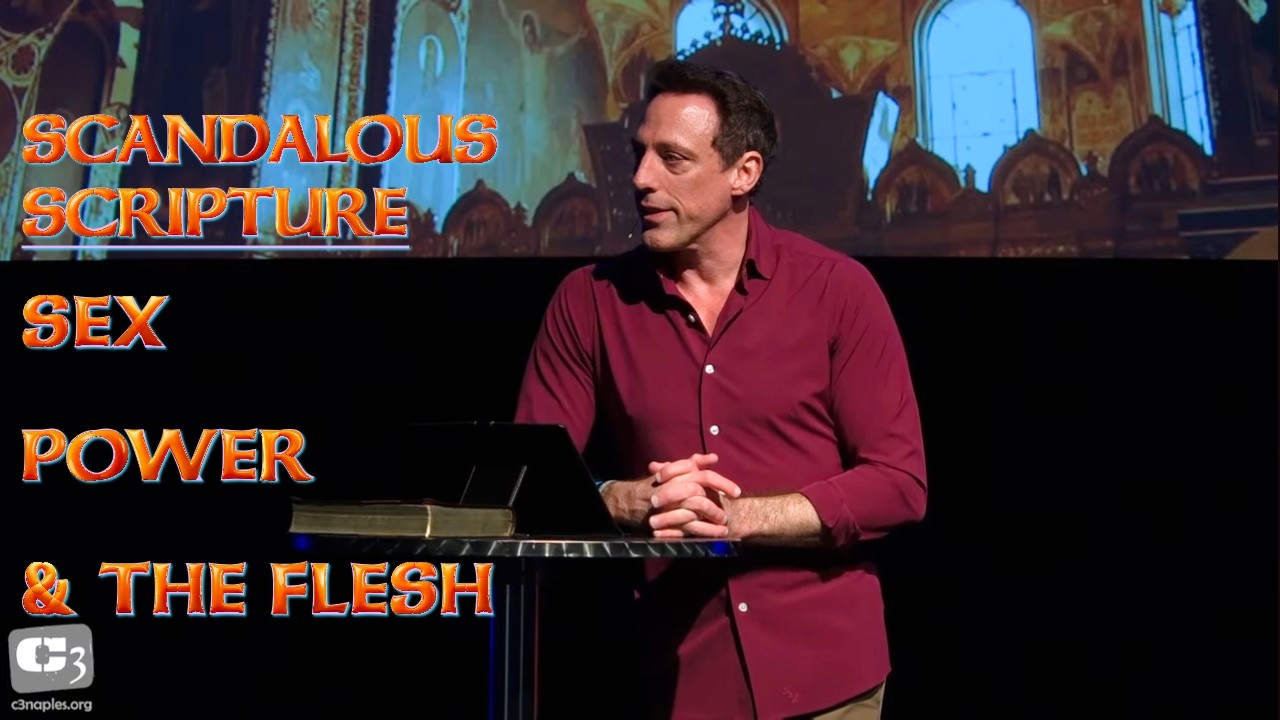
- Scandalous Scripture: The Bible We Don't Read in Church
- Part 3: Sex, Power, and the Flesh
- Sermon by Gene Simco | Reader's Version
- I heard a story about a wealthy man with a beautiful wife. He worked long hours and was looking for a chauffeur and bodyguard to take her where she needed to go during the day. But he was concerned about any man spending that much time with a woman so beautiful, so he came up with a test.
- He invited his final three applicants to his home, where there was a limo parked near a wall in the courtyard outside the front of his large house. He asked them how close they could parallel park alongside the wall without hitting it.
- The first one said, "Maybe about a foot." The second said, "I could probably get close to six inches." The third said, "Sir, there seems to be ample parking all over your driveway. With all this room, why take a chance?" The man said to the third driver, "You're hired."
- Indeed, we've seen that sin is crouching at the door, waiting for the opportunity—if we give it one.
- If you ever want to know if a church is committed to preaching the whole Bible, just look at how fast the pastor speed-reads or skips through the middle chapters of Genesis. Most of us grew up with the censored version of the Bible. But if you actually turned the patriarchs' lives into a Netflix series, most Christians would not be allowed to watch it.
- We are in a series called Scandalous Scripture. A scandal is an action that offends established moral conceptions and disgraces those associated with it. We are looking at the Bible we don't usually read in church.
- Part 1: We looked at The Blame Game. From Adam to Cain, humanity's default setting is to make excuses and point the finger.
- Part 2: We looked at The Lie. We saw how the pride of Babel confused our language, and how Abraham, Isaac, and Jacob turned deception into a family trait.
- Today we're going to have to double back. Last week we picked up at Genesis 11 and skipped through a few things to trace the family tree of lying. Today we're going to go back and look at the stories we skipped—that is, the ones we don't normally read in church.
- God designed sex as a beautiful, holy, "one-flesh" mystery inside the covenant of marriage. But right out of the gate, humanity perverted it, twisted it, and turned it into a weapon for power, survival, and revenge.
- Now, we are skipping through the popular parts. Those are the stories we usually read in church. But this is the Bible we don't read in church, and that is exactly the point of this series.
- Lot’s Daughters: Justifying the Unthinkable (Genesis 19)
- If we go back to Abraham—or Abram at the time—we get his family tree at the end of Genesis 11. By Genesis 12, we find those very famous verses where God says, "I will bless those who bless you and curse those who curse you." Those have become very popular and highly politicized verses today.
- But Abraham has a nephew named Lot. Lot decides to pitch his tent near Sodom and Gomorrah—cities so entirely consumed by sexual violence and perversion that God destroys them with fire. Lot and his two daughters barely escape, and they hide in a cave. But watch what happens.
- You can take the family out of Sodom, but you can't take Sodom out of the family. The daughters panic, thinking they will never get married or have children.
- Genesis 19:31-33 (NLT)
- One day the older daughter said to her sister, “There are no men left anywhere in this entire area, so we can’t get married like everyone else. And our father will soon be too old to have children. Come, let’s get him drunk with wine, and then we will sleep with him. That way we will preserve our family line through our father.” So that night they got him drunk, and the older daughter went in and slept with her father.
- If you keep reading, the younger daughter does the exact same thing the next night.
- Now, there is an interesting connection here. These acts of incest produce two sons: Moab and Ben-Ammi. This is the birth of the Moabite and Ammonite nations. What is incredibly interesting about this is that later in the Bible, we find that Ruth is a Moabite, and she appears directly in the genealogy of Jesus! So, even in the midst of this darkness, there is a mini redemption story woven in.
- The Takeaway: The daughters used sex and incest as a twisted survival tactic. When we lose our trust in God's provision, we will justify absolute depravity to secure our own future.
- Dinah and the Massacre: Sex as Theft and Revenge (Genesis 34)
- If we fast forward ahead a little bit, we get to Dinah and the massacre, where we see sex used as theft and revenge.
- If we look at Jacob—who is now named Israel—we get the twelve sons of Israel. He has different wives and servants. We saw the two wives, Rachel (the favorite) and Leah (the older), along with their servants, Bilhah and Zilpah. Through them, we get Reuben, Simeon, Levi, and Judah. We have Gad and Asher, then Dan and Naphtali, followed by Issachar, Zebulun, and his only daughter, Dinah. Finally, Rachel conceives with Joseph and Benjamin. That family dynamic will become very important later on.
- Jacob has his one daughter, Dinah. She goes out to visit the local women in Canaan, and a local prince named Shechem sees her, takes her, and rapes her. But what happens next is incredibly scandalous.
- The prince decides he wants to marry her. Jacob's sons pretend to agree, but they weaponize God's holy covenant to get revenge.
- Genesis 34:13-15 (NLT)
- But Jacob’s sons demanded a deceitful reply to Shechem and his father, Hamor, because Shechem had defiled their sister, Dinah. They said, “We couldn’t possibly allow our sister to marry a man who isn’t circumcised. It would be a disgrace to us. We will accept your proposal only on this condition: Every male among you must be circumcised, just as we are.”
- If we go back a bit in Genesis, we see that the covenant of circumcision was established with Abraham. This involved the removal of a part of a male's genitalia. According to Jewish law, this was normally done when a baby was eight days old (though it was done later with Abraham and Ishmael). But for a fully grown male, this is going to be incredibly painful. Unlike a baby, a grown man still has to try to work and do things, which becomes very difficult with this kind of operation. It is going to leave these men incapacitated and bedridden.
- The men of the city agree to it, falling right into the trap.
- Genesis 34:25 (NLT)
- Three days later, while all the men of the city were still in pain, two of Jacob’s sons, Simeon and Levi, Dinah’s full brothers, took their swords, entered the city without opposition, and slaughtered every man there.
- The Takeaway: Shechem used sex to forcibly take what he wanted without a covenant. Dinah's brothers responded by weaponizing religion—using circumcision not as an act of worship, but as a biological trap to paralyze the town so they could commit a mass murder.
- A Quick Note on Pronunciation Contrary to the popular English pronunciation most of us grew up hearing (Dye-nah), the original biblical Hebrew name is actually pronounced Dee-nah (דִּינָה).
- Judah, Onan, and Tamar: Pleasure Without Commitment (Genesis 38)
- Next, we'll focus in on Judah. We move into the story of Joseph being sold into slavery by his brothers. Judah is one of Israel's sons—Reuben, Simeon, Levi, and then Judah. He is the fourth son in the line.
- Now, Joseph's account begins in Genesis chapter 37. We see that Joseph is Israel's absolute favorite son. He makes him a multicolored coat, and because of this, his brothers hate him. If you remember, Joseph and Benjamin were both born to Rachel. Rachel actually died in childbirth giving birth to Benjamin. She originally named him Ben-Oni, which means "son of my sorrow." So Jacob has these two favorite sons from his favorite wife at play, but in this account, Joseph is the absolute favorite.
- Joseph has two different dreams. The first is about his brothers' sheaves of grain bowing down to his. The next is about the sun, moon, and stars all bowing to him. That is the common theme: submission. He tells the first dream to his brothers, and they hate him even more. He tells the second to his brothers and his father. The father doesn't hate him for it, but the brothers certainly do.
- Soon, they find an opportunity. While they are tending to the sheep, they plot to kill him. But Reuben, the oldest brother, intercedes. He says, "Let's just throw him into this cistern." Reuben was actually planning to go back and rescue him later. But while Reuben is temporarily out of the picture, Judah steps in. Judah intercedes by saying, "Hey, let's not shed his blood. Let's sell him to these Ishmaelite (or Midianite) slave traders." And that is exactly what happens.
- Now, Judah is going to be very important here. Right in the middle of this narrative, we learn something critical about him. Joseph gets sold to the slave traders, ends up in Egypt, and is placed in Potiphar's house. But suddenly, the narrative completely shifts away from Joseph and focuses on a story about Judah.
- We will talk about this more next week, but Moses hits pause here to show us Judah's deep character flaws. He acts as a mediator for Joseph by selling him, but then we see a massive moral failure. However, if we hop forward to Genesis 43, we will see Judah step up again, this time offering himself as a surety (a substitute) for his youngest brother Benjamin. There is a profound foreshadowing of a Mediator going on in this account, and it comes straight from the line of Judah.
- But first, the character flaw. Judah's oldest son, Er, dies, leaving a widow named Tamar. According to the culture, the second son, Onan, was supposed to sleep with Tamar to give her a child to carry on his dead brother's name and provide for the widow. This is known as Levirate marriage (which later appears with more specific guidelines in the Law of Moses).
- Genesis 38:8-10 (NLT)
- Then Judah said to Onan, “Sleep with your brother’s widow. Fulfill your duty to her as a brother-in-law, and produce a child for your brother.” But Onan knew that the child would not be his. So whenever he slept with his brother’s widow, he spilled his semen on the ground to keep from producing a child for his brother. What he did was wicked in the Lord’s sight, so the Lord put him to death, too.
- The deception continues. Onan (which is where we get the clinical term onanism, an ancient form of birth control) used Tamar's body for his own sexual pleasure but flatly refused to give her the commitment of a child. He wanted the physical benefit without the covenant responsibility. After God strikes him dead for his wickedness, Judah promises Tamar his youngest son, Shelah. But Judah backs out and abandons her.
- So, Tamar takes matters into her own hands. She pretends to be a prostitute to seduce her father-in-law, Judah.
- Genesis 38:15-16, 18 (NLT)
- When Judah saw her, he thought she was a prostitute, because she had covered her face. Not realizing it was his daughter-in-law, he went over to her and said, “Come on, let me sleep with you.” ... “What guarantee do you want?” he asked. “Give me your identification seal and its cord, and the walking stick you are carrying,” she replied.
- This is truly scandalous. Tamar convinces her father-in-law to sleep with her. Again, this would be a Netflix documentary we wouldn't be allowed to watch!
- The Takeaway: Judah abandons his widowed daughter-in-law, then hypocritically sleeps with her when she dresses as a prostitute. Sex is completely divorced from love and weaponized as a transactional tool.
- The placement of this story is fascinating. It outlines Judah's broken character so that when we fast forward to Genesis 43 and see him offer himself as a surety for Benjamin, we see a powerful redemption arc. We will talk about this fulfillment in our next installment. Next, if we hop back into the Joseph account, we see this...
- Potiphar’s Wife: The Weapon of Rejection (Genesis 39)
- Meanwhile, down in Egypt, Joseph is actually doing the right thing. He is managing the household of Potiphar, a high-ranking official in Egypt. There are some very interesting parallels to Daniel here—both men are working for foreign rulers, doing an excellent job, and navigating the visions and interpretations of dreams.
- Now, Potiphar's wife tries to seduce Joseph day after day, but he refuses to sin against God. Finally, she traps him alone in the house.
- Genesis 39:11-14 (NLT)
- One day, however, no one else was around when he went in to do his work. She came and grabbed him by his cloak, demanding, “Come on, sleep with me!” Joseph tore himself away, but he left his cloak in her hand as he ran from the house. When she saw that she was holding his cloak and he had fled, she called out to her servants. “Look!” she said. “My husband has brought this Hebrew slave here to make fools of us! He came into my room to rape me, but I screamed."
- The Takeaway: When she couldn't use sex to conquer Joseph, she weaponized a false accusation of sexual assault to destroy his life.
- From Weapon to Worship
- From the caves of Lot to the bedroom of Potiphar's wife, the Old Testament reveals a heartbreaking reality: when humanity removes intimacy from God's protective covenant, it instantly becomes a weapon of manipulation, exploitation, and deep shame. We took a holy gift and turned it into a tool for our own destruction. But God refuses to leave us in this cycle of scandal.
- From Weapon to Worship: The New Testament Reality
- As we turn the page to the New Testament, we see God step directly into our mess with a radical, redemptive vision for our purity and our physical bodies.
- Now, the New Testament has quite a bit to say about sex between a man and a woman. In fact, it's how biblical marriage is completed—through consummation. We have the "one flesh" mystery, the gamos.
- When we look at the New Testament, both Jesus and the Apostle Paul point back to God's original design, reminding us that in marriage, the two will become one flesh. This is because a biblical marriage is actually completed and sealed through consummation, which God designed for both procreation and deep intimacy.
- The biblical Greek reflects this reality beautifully. The New Testament Greek word for marriage is gamos. The word doesn't just mean a legal contract or having a wedding ceremony; it carries the literal, historical connotation of a physical union. In fact, if we just change a couple of letters there, in modern Greek it becomes a profane word describing the sexual act lewdly. In God's eyes, the marriage covenant is profoundly physical and spiritual—it is fully realized when the two literally become one flesh.
- Guarding the Covenant
- Now, if we go to the book of 1 Corinthians, Paul is writing to answer their questions and address a lot of issues. When we get to chapters 5 through 7, he deals with issues like a man sleeping with his stepmother—really scandalous stuff. We also get to prostitution in chapter 6, which was a serious issue in Corinth at that time. Then, in chapter 7, he addresses marriage, divorce, and remarriage.
- Because of those problems, Paul writes this:
- 1 Corinthians 7:1-7 (NLT)
- Now regarding the questions you asked in your letter. Yes, it is good to abstain from sexual relations. But because there is so much sexual immorality, each man should have his own wife, and each woman should have her own husband. The husband should fulfill his wife’s sexual needs, and the wife should fulfill her husband’s needs. The wife gives authority over her body to her husband, and the husband gives authority over his body to his wife. Do not deprive each other of sexual relations, unless you both agree to refrain from sexual intimacy for a limited time so you can give yourselves more completely to prayer. Afterward, you should come together again so that Satan won’t be able to tempt you because of your lack of self-control. I say this as a concession, not as a command. But I wish everyone were single, just as I am. Yet each person has a special gift from God, of one kind or another.
- We see a few things at play here. Paul considers marriage as a concession. We've seen people take "be fruitful and multiply" out of context, whether it was Adam and Eve needing to populate the earth or Noah needing to repopulate it. The New Testament has a completely different view on this topic because they are waiting for Jesus to come back; there is no need to repopulate the earth at this point. So here, Paul sees marriage as a concession because of all the sexual problems they are having.
- We also see that fulfilling the sexual needs of someone's partner is a very vital part of a functioning biblical marriage. But we see the theme again: sin is crouching at the door, ready to take advantage of our lack of self-control.
- The Body is a Temple
- The Bible also warns us about using sex the wrong way. In the New Testament, the body is described as a temple. It doesn't just treat sex as a physical act, but as a profound spiritual reality.
- The Apostle Paul had to write to the church in Corinth (which was basically the Las Vegas of the ancient world) to get them to stop treating sex like a casual transaction. If we go back to chapter 6, we see this:
- 1 Corinthians 6:18-20 (NLT)
- Run from sexual sin! No other sin so clearly affects the body as this one does. For sexual immorality is a sin against your own body. Don’t you realize that your body is the temple of the Holy Spirit, who lives in you and was given to you by God? You do not belong to yourself, for God bought you with a high price. So you must honor God with your body.
- Paul weaves this theme throughout 1 Corinthians. In chapter 3, he gives a stern warning: whoever defiles and destroys that temple, God will destroy them. We see these types of very serious warnings all throughout the New Testament. In Galatians 5 and Ephesians 5, it says those who live this way will not inherit the Kingdom of God.
- If we back up just a little bit in 1 Corinthians 6, we see it spelled out:
- 1 Corinthians 6:9-10 (NLT)
- Don’t you realize that those who do wrong will not inherit the Kingdom of God? Don’t fool yourselves. Those who indulge in sexual sin, or who worship idols, or commit adultery, or are male prostitutes, or practice homosexuality, or are thieves, or greedy people, or drunkards, or are abusive, or cheat people—none of these will inherit the Kingdom of God.
- I want to make a note here. Most Christians focus on a couple of those sins, right? Homosexuality is one of the most popular places Christians go to when pointing out sin, and indeed, it is a sin outside of God's design. But we have to look at the whole list. Greedy people, thieves, drunkards, the abusive, and people who cheat others will also not inherit the Kingdom of God. We also have to look at adultery.
- Jesus says that the sin of adultery actually begins in your heart.
- Matthew 5:27-28 (NLT)
- “You have heard the commandment that says, ‘You must not commit adultery.’ But I say, anyone who even looks at a woman with lust has already committed adultery with her in his heart."
- This is where it all begins—in the desires of our hearts.
- Guarding Your Heart (The Parable of the Sower)
- If we look at the Parable of the Sower, this is how Jesus initiates His parables: by outlining the condition of people's hearts. He explains who will be receptive to hearing His message based entirely on the condition of their heart.
- As Jesus initiates this teaching, He simply tells the story of the sower. He says some seed lands on rocky paths, and a bird snatches it away. Some lands on shallow, rocky soil; it can't grow deep roots, so it withers. Some lands among thornbushes, and they choke it out so it doesn't produce a good crop. But some lands on fertile soil, and it produces fruit thirty, sixty, or a hundred times over.
- That is all He says to the crowd. Basically, in today's vernacular, He drops the mic and walks away. But later, He explains it to His disciples.
- He tells them that the seed is the Word of God, and the bird represents Satan. If the condition of someone's heart is hard like a rock, the truth can't land at all, and Satan takes it away. If their heart is like the shallow, rocky soil, they get excited at first, but when persecution or trouble comes, they fall away. Then, there are those who land among the thornbushes. Jesus points to these thorns as the worries of life or material wealth, and so they don't produce any fruit. But those who have a heart condition like fertile soil grow up and produce a crop.
- It is all about the condition of our heart and whether we are letting the Word get in there.
- Sin is Crouching
- This is why Proverbs 4:23 says, "Guard your heart above all else." We must be cautious about the things that tempt us. We must not leave the door open because sin is just crouching right there at the door.
- To the young: Between our influences and what society tells us to do when we're dating, you must be careful what you allow to happen. There are virtues in celibacy and massive dangers in sex outside of marriage that can lead to diseases and unplanned pregnancies that will change your entire life. Just as cars with low mileage hold their value, preserving the profound value of the gift God has given you honors your future covenant.
- Pornography: This is how we open the door. We peek in through our phones at times, thinking it's harmless. But Jesus says it's not. It is certainly not a victimless crime.
- Adultery: We open the door for this type of thing all the time, whether it be just flirting with someone or talking to someone a little bit longer than we should.
- All of these things have very serious consequences in our lives.
- The Ultimate Reversal: A New Legacy
- From Lot to Judah to Potiphar's wife, humanity used the body to manipulate, exploit, and shame others. But look at what Jesus did on the cross. He didn't exploit anyone. Instead, He allowed His own body to be broken. He was stripped naked, exposed, and publicly shamed to pay for all of our scandalous, hidden sins. He took the shame of our sexual brokenness so we could be washed, sanctified, and made new.
- So the question for us today is: which weapon might we be using?
- We read these ancient stories and cringe, but the enemy still tries to get us to misuse God's design today. Sin is always crouching at the door. We must not leave that door open. Let's examine our hearts to see if we're falling into these ancient traps.
- Which Ancient Weapons Are We Using?
- So the question is, which weapon might you be using? Let's examine our hearts to see if we're falling into these ancient traps.
- The Lot’s Daughters Method (Justifying Sin): Are you convinced that God won't provide for you, so you compromise your sexual integrity out of loneliness or fear of the future? Do you justify stepping outside God's boundaries because you think it's the only way to get what you need?
- The Shechem Method (Taking Without Covenant): Shechem used sex to forcefully take what he wanted without a covenant. Are you taking the physical privileges of marriage without the holy commitment of the marriage covenant?
- The Onan and Judah Method (Pleasure Without Commitment): Onan used Tamar's body for his own sexual pleasure but flatly refused to give her the commitment of a child. Later, Judah hypocritically slept with his daughter-in-law when she dressed as a prostitute, divorcing sex completely from love and weaponizing it as a transactional tool. Are you treating people as commodities? Whether it's through pornography, hookup culture, or stringing someone along, are you using someone else's body or image for your temporary pleasure while refusing the biblical weight of the covenant and the commitment?
- The Tamar Method (Deception for Justice): When Judah backed out of his promise, Tamar took matters into her own hands by dressing as a prostitute and demanding his identification seal and cord as a guarantee to trick him. Are you resorting to deception, manipulation, or sexual compromise because you feel you've been treated unfairly? Do you justify sinful behavior because you're trying to secure a future or get something you believe that you are rightfully owed?
- The Potiphar’s Wife Method (Manipulation and Accusation): When Potiphar's wife could not use sex to conquer Joseph, she weaponized a false accusation of sexual assault to destroy his life. We see this happen all the time, and as we already kind of addressed opening the door for it, this is why we must be very careful in our daily lives.
- A Pastoral Note on Protection: We must set up practical boundaries so as not to fall into the trap of accusation. This means adopting strict personal rules, like not going to lunch or dinner alone with someone of the opposite sex, leaving office doors open during meetings, and keeping your text messages accountable. This applies at work, and especially in church.
- Within Marriage: Furthermore, do you use intimacy as a bargaining chip in your marriage? Do you withhold it to punish your spouse or offer it to get your way? The Apostle Paul warned about this in 1 Corinthians 7; that is taking a holy gift and turning it into a weapon of manipulation.
- The Ultimate Reversal: A New Legacy
- God is not a prude; He invented sex. But He knows that outside the protective boundaries of a marriage covenant, it destroys us. Whether you're a young person navigating the virtues and dangers of dating, or an adult battling with the silent traps of pornography and adultery (as Jesus warned about in Matthew 5), the consequences are severe.
- But here's the hope and redemption: bring your shame out of the shadows today. Jesus paid a high price for your body, and we must honor Him in it.
- Even the genealogy of Jesus speaks volumes of this redemption. When you open the Gospel of Matthew, the New Testament begins with the family tree of Jesus Christ. In the ancient world, genealogies were essentially PR documents—they highlighted the heroes, hid the scandals, and rarely ever mentioned women. But God does the exact opposite. He intentionally lists women in His lineage whose stories were marked by sexual brokenness, foreign blood, and cultural disgrace.
- We see Tamar listed right there in Matthew 1:3. The scandalous, transactional union between her and her father-in-law, Judah, produced a son named Perez. God didn’t erase that dark chapter from Genesis 38; He redeemed it, placing Perez directly in the Messianic bloodline.
- Just two verses later in Matthew 1:5, we read the name of Ruth. Ruth was a Moabite. Where did the nation of Moab come from? They were the descendants of that horrific night in the cave where Lot’s older daughter got him drunk and committed incest to preserve their family line. The Moabites were a nation born out of absolute depravity and generational trauma, and they grew up to be the bitter enemies of Israel. Yet, God takes a Moabite widow named Ruth, brings her into His protective covenant, and makes her the great-grandmother of King David.
- This is one of the immense benefits of looking at the Bible that we don’t read in church. Because within these messy, R-rated stories, we see a beautiful, unfolding promise: the grace of Jesus Christ reverses our deepest disgrace.
- By writing Tamar and Ruth into His own family tree, Jesus is declaring that His grace is bigger than your scandal. No matter your past, no matter your sexual brokenness, and no matter your family's generational trauma, you are welcome in the family of God. Your history does not disqualify you from His redemption. Jesus paid a high price for your body, so we must honor Him with it.
- We spent some time today looking at some of the most scandalous parts of human history. And if we're honest, the enemy wants you to look at your own history—your mistakes, your lust, your compromise—and believe that you're forever defined by them.
- But you are not defined by the weapons you used in the past! You are not defined by the traps you fell into, the boundaries you've crossed, or the things that you've done in the dark. You are defined now by the blood of the Lamb!
- When Jesus went to the cross, He didn't just pay for our lies; He took the full weight of our sexual brokenness and shame so that you could be washed, sanctified, and made entirely new.
- Sin is always crouching, so do not leave the door open for the enemy another second. Step out of the shadows and bring your hidden shame to the cross today, because while the enemy wants to trap you, the door for freedom is wide open.
- Jesus is standing right there, ready to give you a pure heart, a clean slate, and a restored legacy. Your body is a temple of the Holy Spirit, bought at an incredibly high price. So honor Him with your life today, and let the cycle of shame be broken forever!
- ________________________________________
- ©️Copyright 2026 Gene Simco Most Scripture quotations are taken from the Holy Bible, New Living Translation, copyright ©1996, 2004, 2015 by Tyndale House Foundation. Used by permission of Tyndale House Publishers, Carol Stream, Illinois 60188. All rights reserved. Scriptures in brackets reflect the original Biblical languages.