Reader's Version
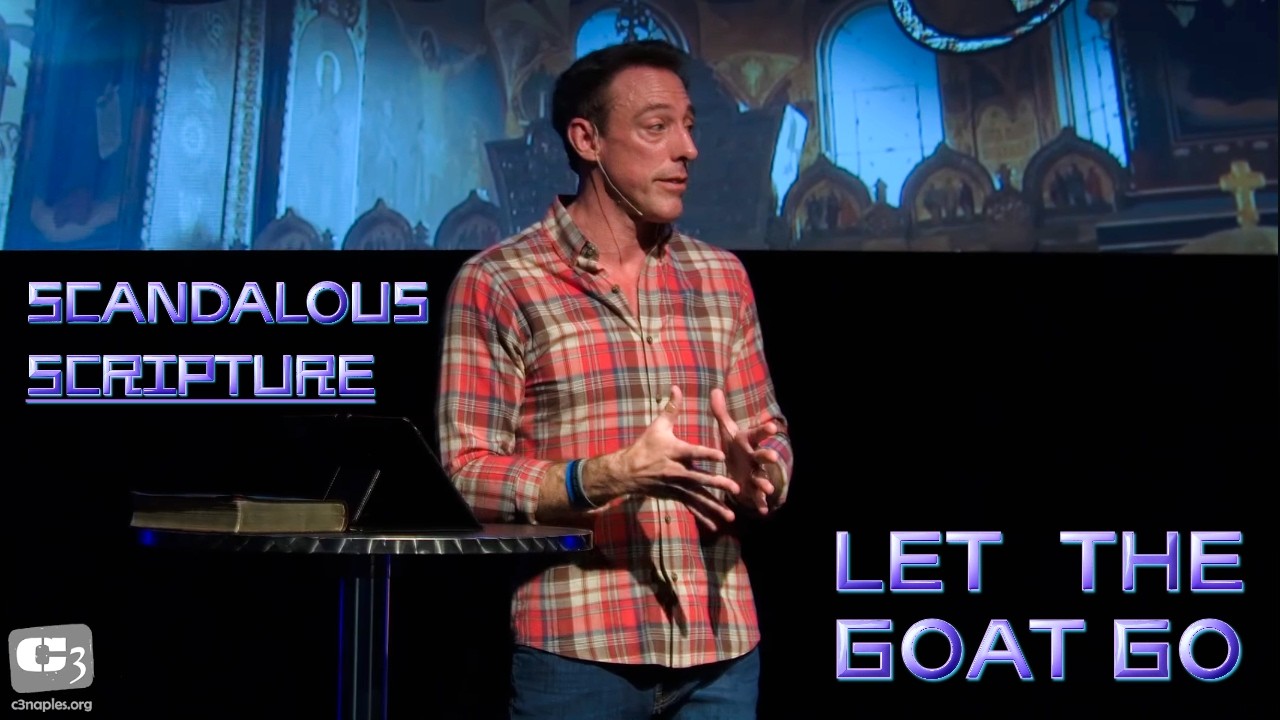
- Let the Goat Go
- Scandalous Scripture, Part Six: The Bible We Don’t Read in Church
- By Gene Simco
- The Original Scapegoat
- If you grew up with siblings, you already understand the modern definition of a scapegoat. Something breaks, Mom walks into the room and asks, “Who did this?” Everybody immediately looks for the sibling who is not there. If everyone happens to be present, blame the youngest one—or the dog. The dog cannot testify.
- That is basically how we use the word scapegoat today. Somebody gets blamed for something somebody else did. Politics has scapegoats. Families have scapegoats. Businesses have scapegoats. Even churches have scapegoats. But have you ever stopped to think about what a ridiculous word it actually is? Scapegoat. What does a goat have to do with blaming someone?
- The answer is buried in one of the strangest ceremonies in the Bible, and once we understand the original scapegoat, our modern definition almost misses the point.
- As we continue through Scandalous Scripture, we are intentionally passing over—pun intended—some of the stories that receive the most attention in church and slowing down at passages that are frequently ignored. The point is not that the familiar stories are unimportant. It is that the strange, uncomfortable, or neglected passages often provide crucial connective tissue for understanding the larger biblical story.
- Last time, the question was what happens to the calf. Israel had built the Golden Calf, Moses destroyed it, judgment followed, and the covenant had to be renewed. But Leviticus raises a harder question: What happens to the sin of the people who built it?
- Destroying the idol did not erase what Israel had done. People died. The covenant had been violated. Moses had to intercede. God showed mercy and renewed the covenant, but the guilt and impurity created by Israel’s rebellion still had to be dealt with. How can a perfectly holy God continue living in the middle of people like this?
- That is where Leviticus begins.
- And He Called
- The end of Exodus is magnificent. The Tabernacle is completed, the cloud covers it, and the glory of the LORD fills it so completely that even Moses cannot enter. The presence of God remains visible to Israel as cloud by day and fire by night. God has moved into the middle of His people.
- That sounds wonderful—until we remember who these people are.
- A holy God has just taken up residence in the middle of a camp filled with sinful human beings. That tension becomes one of the great questions driving Leviticus. Exodus largely answers the question, How does God rescue His people? Leviticus asks, How can rescued people live in the presence of a holy God?
- The book opens simply: “The LORD called to Moses from the Tabernacle and spoke to him” (Leviticus 1:1).
- The Hebrew begins with וַיִּקְרָא — Vayyiqraʾ, meaning “And He called.” Jewish tradition uses that opening word as the Hebrew title of the book. There is something beautiful about the transition. Exodus ends with God moving into the Tabernacle, and Leviticus begins with God calling Moses from within it.
- God moves in, and then God calls.
- The familiar English title Leviticus comes to us through the Greek and Latin tradition. The Septuagint, the ancient Greek translation of the Hebrew Scriptures, calls the book Λευιτικόν — Leuitikon, referring broadly to Levitical or priestly matters. Our familiar titles Genesis, Exodus, and Leviticus all come through this Greek naming tradition. The early Christian movement lived in a world in which the Greek Scriptures were enormously influential, and New Testament writers frequently quote wording that corresponds closely to the Septuagint.
- That should be stated carefully, however. It would be too broad to say that the early Church had only a Greek Bible and not Hebrew Scripture. Hebrew and Aramaic texts remained part of Jewish life, and the biblical authors were operating within a multilingual world. But for Greek-speaking Jews and Christians throughout the Mediterranean, the Septuagint became extraordinarily important, which is why its vocabulary and wording appear so frequently in the New Testament.
- The Hebrew title nevertheless gives us the more striking theological introduction: And He called.
- The God whose glory has just filled the Tabernacle calls Moses near.
- Yet that invitation immediately creates another question. How do sinful human beings draw near to holiness without being destroyed by it?
- That is what Leviticus is largely about.
- The Book Where Bible Reading Plans Go to Die
- Leviticus has an unfortunate reputation among Christians. Genesis gives us creation, Noah, Abraham, Jacob, and Joseph. Exodus gives us Pharaoh, the plagues, Passover, the Red Sea, Mount Sinai, and the Golden Calf. Then we reach Leviticus and suddenly find sacrifices, skin diseases, bodily discharges, priestly regulations, animals that may or may not be eaten, things that may or may not be touched, and eventually goats disappearing into the wilderness.
- For many people, Leviticus is where the annual Bible reading plan quietly dies.
- But Leviticus is not a random collection of bizarre religious regulations. Its central concern is holiness. God is holy, and this holy God now dwells among Israel. Therefore, Israel must learn distinctions that modern readers often collapse: holy and common, clean and unclean, life and death, and what may or may not enter sacred space.
- The purpose is not to create a people terrified of arbitrary religious rules. God is teaching Israel how life in His presence works.
- This is also why we have to be careful with the word unclean. In Leviticus, unclean does not automatically mean morally sinful.
- A woman becomes ceremonially unclean following childbirth, but giving birth is not a sin. A person can become unclean through bodily discharges, certain skin conditions, contact with a corpse, or other circumstances associated with mortality and bodily life. These conditions affect ritual status and access to sacred space, but they are not all moral transgressions.
- Leviticus 12 makes this especially clear. A woman who has given birth undergoes a prescribed period of purification and is later declared clean. The issue is not that childbirth itself requires moral repentance. The category is ritual purity.
- This distinction matters because Leviticus deals with more than one problem at once. It addresses moral rebellion, but it also addresses ritual impurity. Those categories overlap at points, but they are not identical.
- Why does any of this matter?
- Because the holy God now dwells in the middle of the camp.
- Leviticus is teaching Israel what it means for mortal, imperfect, sometimes rebellious people to live near the presence of One who is completely holy. And eventually all of those sacrifices, priests, boundaries, cleansings, and strange rituals will converge in one extraordinary day when Israel’s sin is not merely acknowledged or covered.
- It is carried away.
- From Sacrifice to Atonement
- Before we reach the strange ceremony at the center of this chapter, it helps to see how Leviticus gets us there. The first fifteen chapters are not random material; they gradually build the categories Israel will need in order to understand the Day of Atonement.
- Leviticus 1 describes the burnt offering, in which the offering is given entirely to God. Leviticus 2 introduces the grain offering, associated with tribute, thanksgiving, and dedication. Leviticus 3 describes the peace offering and the fellowship associated with it. Chapters 4 and 5 deal with purification or sin offerings, addressing both sin and impurity, while chapters 5 through 7 include guilt or reparation offerings and additional sacrificial instructions. One of the important lessons there is that wrongdoing may require more than simply saying, “I am sorry.” In certain cases, repentance included restitution.
- Leviticus 8 and 9 then turn to the priesthood. Aaron and his sons are ordained and begin their service, picking up the consecration themes we saw earlier in Exodus. Then we arrive at Leviticus 10, probably the best-known narrative in the book: the deaths of Nadab and Abihu.
- Aaron’s sons take their incense burners, place fire and incense in them, and offer what Leviticus describes as unauthorized or “strange” fire before the LORD—something He had not commanded. Fire comes out from the presence of God, and they die before Him.
- Moses then tells Aaron that this is what God meant when He said He would display His holiness through those who come near Him.
- It is one of the most scandalous scenes in Leviticus, and ordinarily it becomes the main story people remember from the book. But for our purposes, Nadab and Abihu are important because Leviticus 16 deliberately brings their deaths back into view.
- The chapters between those two scenes continue developing Israel’s understanding of holiness and impurity. Leviticus 11 deals with clean and unclean animals. Leviticus 12 addresses purification following childbirth. Chapters 13 and 14 deal with serious skin conditions, diagnosis, exclusion from the camp, and eventual restoration. Leviticus 15 addresses bodily discharges and ritual purity.
- Then, finally, we arrive at Leviticus 16 and the Day of Atonement.
- The Day of Atonement Begins With Two Dead Priests
- Leviticus 16 does not begin the Day of Atonement instructions in isolation. The chapter opens by reminding the reader that Aaron’s sons have already died for approaching God improperly.
- That framing matters.
- Nadab and Abihu came into the presence of a holy God on their own terms and died. Now God explains to Aaron how the high priest may enter the Most Holy Place without suffering the same fate.
- Aaron cannot simply walk behind the veil whenever he feels particularly spiritual. He cannot appeal to his position and say, “I am the high priest. I work here.”
- God establishes the terms of approach.
- Aaron must come when God says, and he must come how God says.
- The Day of Atonement is therefore about much more than killing animals to compensate for bad behavior. It is about access to the presence of God.
- Aaron must first bathe and put on sacred linen garments. Before he can deal with the sins of Israel, he must offer a bull for himself and his household. The high priest is not morally above the people for whom he serves. He also needs purification and atonement.
- Only then does he turn to the two goats supplied by the congregation.
- He presents them before the LORD at the entrance of the Tabernacle and casts lots. One goat is designated for YHWH. The other is designated for Azazel.
- One will die.
- The other will live.
- Together, they form two complementary pictures of what God is doing with Israel’s sin.
- Yom Kippur and the Cleansing of Sacred Space
- This annual observance becomes known as the Day of Atonement, traditionally called Yom Kippur. The Hebrew word yom means “day,” while kippur is related to the Hebrew root כפר — k-p-r, the family of words used throughout Leviticus for making atonement, purging, or effecting cleansing.
- That language deserves some attention because the Day of Atonement is not merely about an individual sinner needing forgiveness. The sanctuary itself has been standing in the middle of a sinful and ritually unclean people. Leviticus 16 describes purification being made for the Most Holy Place, the Tabernacle, the altar, the priests, and the people.
- In other words, Israel’s sin and impurity have affected the sacred environment in which God dwells among them.
- The Day of Atonement cleans house.
- That is why Leviticus 16 can speak about purifying the Most Holy Place “because of the defiling sin and rebellion of the Israelites.” Sin is not treated as merely an internal feeling of guilt. It disrupts communion with a holy God and contaminates the sacred space in which He has chosen to dwell among His people.
- The Goat for the LORD
- The first goat, the one designated for the LORD, becomes a purification offering for the people. Aaron slaughters it and carries its blood behind the inner curtain into the Most Holy Place. He sprinkles the blood on and in front of the atonement cover and then uses the blood in the purification of the sanctuary and altar.
- This brings us back to a theme we have already followed throughout Exodus: blood matters.
- Blood marked the doorposts at Passover. Blood sealed the covenant at Sinai. Blood consecrated the priests. Now blood is again involved in cleansing sacred space from the effects of Israel’s sin and impurity.
- But Leviticus 16 adds another image that we have not yet explored.
- The question is no longer simply, What dies because of sin?
- Now we are asked:
- Where does the sin go?
- The Living Goat
- After Aaron has completed the purification of the Most Holy Place, the Tabernacle, and the altar, he brings forward the second goat—the one that remains alive.
- He places both hands on the animal’s head and confesses over it all the iniquities, rebellious acts, and sins of Israel. The language is comprehensive. Nothing is being minimized or renamed. Israel’s wrongdoing is spoken over the goat, and the goat becomes the symbolic bearer of what the people have done.
- Then a man specifically appointed for the task leads the animal away from the camp and into the wilderness.
- Leviticus says that the goat will bear the people’s iniquities into a remote land. The Hebrew verb is נָשָׂא — nāśāʾ, “to lift,” “bear,” or “carry.”
- The image is wonderfully concrete. Sin has become a burden, and the burden is being carried away from the people and away from the holy dwelling of God.
- The sacrificed goat shows us purification and atonement.
- The living goat shows us removal.
- That distinction will become extremely important when we eventually turn to Isaiah and the New Testament.
- Why Is It Called a Scapegoat?
- This is also where we get one of the strangest words in the English language: scapegoat.
- The Hebrew text does not actually call the animal a “scapegoat.” The expression comes from William Tyndale’s sixteenth-century English translation of Leviticus. Tyndale rendered the difficult Hebrew terminology with an expression that essentially conveyed the idea of the goat that escapes or is sent away. Over time, “escape goat” developed into the English word scapegoat.
- Centuries later, the word took on the meaning we normally give it today: an innocent person who is unfairly blamed for someone else’s wrongdoing.
- That modern definition can actually obscure what happens in Leviticus 16.
- The living goat is not simply an innocent party randomly accused because Israel needs someone convenient to blame. God Himself establishes the ritual. Aaron deliberately confesses Israel’s actual sins over the goat. The animal then symbolically bears those sins away from the community.
- The striking irony is that the goat we now call the “scapegoat” is actually the goat that gets away alive, while the other goat is the one that dies.
- The biblical emphasis is therefore not merely that someone else received the blame.
- The emphasis is that the sin left the camp.
- That is the picture we need to remember. Israel does not merely hear that its sin has been acknowledged. The people are given something visible to watch. The goat carrying their confessed iniquities is led away from the Tabernacle, away from the congregation, and eventually out of sight.
- The sin is being sent somewhere.
- And that raises the strange question at the heart of the next part of the story:
- Where exactly is the goat going—and who or what is Azazel?
- Azazel and the World Behind the Text
- The Septuagint makes the mystery of Azazel even more interesting. The Hebrew text says that one lot is “for YHWH” and the other לַעֲזָאזֵל — laʿAzazel, “for Azazel.” Centuries before the New Testament, however, the Greek translators did not simply preserve Azazel as an unexplained proper name. In Leviticus 16:8 they rendered it with τῷ ἀποπομπαίῳ — tō apopompaiō, from ἀποπομπαῖος — apopompaios, language associated with sending away, averting, or carrying away. Verse 10 continues the same idea by speaking of sending the goat into the ἀποπομπή — apopompē, the “sending away,” and releasing it into the wilderness.
- Whatever else the translators thought Azazel meant, they clearly understood the ritual in terms of removal. That is significant because the Septuagint was already centuries old by the time of Jesus and the apostles and had become enormously influential throughout the Greek-speaking Jewish world. Its vocabulary repeatedly appears behind the language and quotations of the New Testament. Here, the ancient Greek translation emphasizes exactly what the ritual visibly accomplishes: something is being sent away.
- The Hebrew text itself leaves us with the harder question: Who, or what, is Azazel?
- There has never been a completely uncontested answer. One interpretation understands the word functionally as referring to the goat that departs, essentially the understanding that eventually produced the English scapegoat. Another ancient interpretation associates Azazel with the rugged or remote wilderness location to which the animal was sent. Rabbinic tradition eventually connected the ritual with a precipitous wilderness location, and later Jewish descriptions of the Day of Atonement say that the goat was pushed from a cliff so that it could not return.
- That cliff, however, belongs to later Jewish practice, not to the instructions of Leviticus itself. Leviticus simply commands that the goat be led alive into the wilderness and released into a remote land. The Mishnah preserves a later practice in which a crimson thread was attached to the goat and, once it reached the wilderness, part of the thread was tied to a rock and part remained between the animal’s horns before it was pushed down the cliff. This later development ensured a final and irreversible removal, but we should distinguish it from what the Torah itself actually commands.
- A third interpretation is stranger but has very ancient roots: Azazel is the name of a supernatural being associated with the wilderness. The grammar makes this possibility difficult to dismiss casually. The lots are presented in parallel form: one for YHWH, the other for Azazel. That sounds more personal than saying that one belongs to God while the other belongs to a geographical feature. Yet Leviticus never stops to explain Azazel’s identity, so we should resist the temptation to turn a debated interpretation into an explicit statement of Scripture.
- Then we enter the world of ancient Jewish literature, and things become considerably stranger.
- To understand that background, we have to return briefly to Genesis 6. The text describes the “sons of God” seeing the daughters of humanity, taking women for themselves, and producing the figures associated with the Nephilim. We have previously examined the ancient supernatural interpretation of this passage: the “sons of God” were understood as heavenly beings who crossed a boundary established by God and participated in the corruption that preceded the Flood.
- There is one translation issue in Genesis 6:3 worth clearing up along the way. Some English translations can sound as though God is establishing 120 years as the new maximum human lifespan. That interpretation creates an obvious difficulty because people after the Flood—including Abraham—live well beyond 120 years. Another longstanding interpretation, and in my view the better one, understands the 120 years as the period remaining before divine judgment in the Flood. The text says that humanity’s “days” will be 120 years. It is therefore better understood as a countdown of 120 years, not 120 days, and not necessarily as an immediate biological limit on every subsequent human life.
- The supernatural interpretation of Genesis 6 became highly developed in ancient Jewish literature, particularly in 1 Enoch, and this is where Azazel enters the story.
- First Enoch is not part of the biblical canon for most Christian traditions, so we do not establish doctrine simply because Enoch says something. It is nevertheless enormously valuable for understanding the interpretive world surrounding the New Testament. It shows us how significant groups of Jewish readers in the centuries before and around the time of the apostles understood passages such as Genesis 6.
- In the section commonly called the Book of the Watchers, Azazel is associated with the rebellious heavenly beings who transgressed the proper boundary between heaven and humanity. He becomes especially associated with transmitting forbidden knowledge. Humanity learns the manufacture of weapons, the working of metals, ornaments, and other arts that, within the story, contribute to escalating violence, seduction, and corruption.
- The point is not that metalworking itself is inherently demonic. We have just encountered Bezalel being filled with the Spirit of God to work with gold, silver, bronze, stone, and wood. The contrast is actually fascinating. Skill and knowledge can be directed toward holy purposes or toward corruption. Once again, the problem is not simply what is in human hands, but what spirit and purpose are directing those hands.
- In 1 Enoch, God eventually commands the angel Raphael to bind Azazel by his hands and feet and cast him into a desolate wilderness region called Dudael. He is covered in darkness and jagged stones there while awaiting judgment. The text places extraordinary blame upon Azazel for the corruption spread through humanity, culminating in the striking declaration that the earth had been corrupted through the works taught by Azazel and that sin was to be ascribed to him.
- Now return to Leviticus 16.
- Israel’s sins are confessed. They are symbolically placed upon a goat. The goat is designated “for Azazel.” Then the goat is driven away from the holy camp and into the wilderness.
- That does not prove that every detail of 1 Enoch represents the original intended meaning of Leviticus 16. Enoch is later literature, and we should not read it backward into Moses as though Leviticus itself contained the entire Watchers story. What it does demonstrate is that by the Second Temple period, influential Jewish interpreters associated Azazel with the rebellious heavenly powers, human corruption, wilderness exile, and judgment.
- Seen against that background, the imagery becomes extraordinary. The corruption confessed by God’s people is driven away from His holy dwelling and sent toward the wilderness realm that later Jewish tradition associated with the very being blamed for helping corrupt humanity.
- That immediately raises another question. If Azazel is understood as some sort of demonic or rebellious spiritual being, is Israel offering a sacrifice to a demon?
- No.
- That distinction is crucial.
- The goat for Azazel is never slaughtered as an offering to Azazel. Leviticus specifically says that the living goat is first presented before YHWH. It remains under God’s authority throughout the ceremony. Then it is sent away. The direction of the ritual is not toward a second deity who must be appeased. It is away from the holy dwelling of God.
- The sin leaves the camp.
- Within the later Enochic worldview, the irony becomes even stronger: the realm associated with corruption becomes the destination toward which confessed corruption is expelled. It is being sent away from God’s people to where it belongs.
- At this point someone may reasonably object, “But Pastor Gene, that comes from Enoch, not Leviticus.”
- Correct—and that is precisely why we distinguish the biblical text from the later interpretive tradition. Yet we also need to remember that the apostles themselves lived within this world of Jewish literature and interpretation. They occasionally use traditions that are not supplied directly by the Old Testament narrative.
- Paul gives us a familiar example. Exodus never names the Egyptian magicians who opposed Moses, but in 2 Timothy 3:8 Paul calls them Jannes and Jambres. Those names circulated in Jewish tradition. Paul's use of them does not mean that every story ever told about Jannes and Jambres became inspired Scripture. It simply demonstrates that an apostle could draw upon a familiar extra-biblical tradition when it served his argument.
- Jude provides an even clearer example. Jude 6 speaks of angels who did not keep their proper domain but abandoned their proper dwelling and are now kept in bonds awaiting judgment. Later, in Jude 14–15, Jude explicitly attributes a prophecy to “Enoch, the seventh from Adam,” using language closely corresponding to 1 Enoch 1:9. The literary relationship is difficult to deny. Jude can use Enochic material truthfully without requiring us to conclude that he intended to canonize the entire collection known as 1 Enoch.
- Paul does something similar when he quotes pagan poets. Quoting a source does not make everything in that source Scripture. It simply means truth may be recognized and employed wherever it appears.
- Second Peter gives us another fascinating connection. In 2 Peter 2:4, Peter speaks of “angels who sinned” and uses the extraordinary Greek verb ταρταρόω — tartaroō. It appears only here in the New Testament and refers to casting them into Tartarus, a term drawn from the Greek conception of the deep place of imprisonment reserved for rebellious supernatural beings. Peter immediately moves from these imprisoned angels to Noah and the Flood. That sequence fits remarkably well with the ancient Watchers interpretation of Genesis 6: rebellious heavenly beings, divine imprisonment, Noah, and judgment by water.
- There is even a possible echo in 1 Corinthians 11. Paul’s enigmatic statement that a woman should have authority upon her head “because of the angels” has puzzled interpreters for centuries. One very ancient explanation connected those angels with the Genesis 6 Watchers. Tertullian explicitly read Paul's statement that way, understanding the passage against the tradition of heavenly beings being enticed by human women.
- That interpretation is intriguing, particularly because Paul is discussing men, women, creation order, prayer, prophecy, and angels in the same passage. But we should not say that Paul is certainly or even necessarily referring to the Watchers. Another longstanding interpretation understands the angels as holy angels present as witnesses to Christian worship. The phrase is simply too brief for dogmatism. The Watchers reading belongs in the conversation because it is ancient and fits a recognizable Jewish thought-world, but it should remain an Easter egg rather than the foundation of an argument.
- Taken together, however, Genesis 6, 1 Enoch, Jude, 2 Peter, and these broader Jewish traditions demonstrate something important. The biblical world included a much richer understanding of heavenly rebellion and corruption than many modern Christians encounter in ordinary Sunday School treatments.
- That brings us back to the goat standing outside the Tabernacle.
- The Levitical text itself gives us the truth we must not lose beneath all the fascinating background: Israel’s confessed sin is being carried away. Whether Azazel is understood as a descriptive term, a remote place, or a supernatural wilderness being, the direction of the ceremony remains unmistakable.
- Sin does not stay in the camp.
- It is sent away.
- Goat-Demons and the Corruption of Worship
- The placement of the next passage in Leviticus makes the Azazel discussion even more interesting. We leave the goat “for Azazel” disappearing into the wilderness at the end of Leviticus 16, and almost immediately Leviticus 17 addresses another form of worship involving goats.
- God commands that Israel’s sacrifices be brought to the entrance of the Tabernacle rather than offered independently in the open fields. The purpose is explicitly stated in Leviticus 17:7: the Israelites are no longer to offer sacrifices to the שְׂעִירִים — seʿirim, after whom they had been acting unfaithfully toward the LORD.
- The Hebrew word seʿirim comes from a word associated with being hairy or shaggy and ordinarily can refer to male goats. In this context, however, the objects receiving Israel’s sacrifices are clearly more than ordinary animals. Major translations therefore render the word with expressions such as “goat-demons,” “demons,” or “satyrs.” Israel had been participating in some form of false worship associated with these goat-like supernatural beings.
- That means the demonic or supernatural background surrounding goat imagery in Leviticus is not merely something later interpreters invented out of thin air. The Torah itself acknowledges that Israel had been sacrificing to beings described with goat terminology. This does not prove that Azazel in Leviticus 16 is one of the seʿirim of Leviticus 17, but it certainly makes the proximity of the passages difficult to ignore.
- Once again, the Septuagint gives us an interesting window into how ancient Jewish translators understood the passage. Rather than reproducing the Hebrew goat imagery directly, the Greek text says that Israel must no longer offer sacrifices τοῖς ματαίοις — tois mataiois, literally to “the vain things,” “worthless things,” or “empty things.” It then preserves the Hebrew prostitution imagery by describing Israel as prostituting themselves after these objects of worship.
- That is a remarkably effective description of idolatry. The things people chase as though they possess divine power eventually reveal themselves to be empty things. They promise something substantial but cannot deliver it, while the pursuit itself corrupts the worshiper.
- This brings us back to the question of Azazel. Is Azazel one of these goat-demons? Possibly, but Scripture never explicitly makes that identification. Leviticus 17 demonstrates that Israel knew and practiced a form of sacrifice directed toward supernatural beings described through goat imagery. First Enoch later identifies Azazel as one of the rebellious heavenly beings associated with the corruption of humanity and with wilderness judgment. Those ideas sit remarkably close together, but responsible interpretation requires that we resist collapsing them into a statement the biblical text itself never makes.
- What we can say confidently is that the world surrounding Leviticus is considerably stranger than the sanitized version many of us encountered growing up. The biblical writers assume a spiritual world populated not only by God and human beings but by other heavenly beings, including rebellious ones, and Israel is repeatedly forbidden from directing worship toward them.
- Once we step back from the individual details, a larger theme becomes visible. Genesis 6 describes humanity descending into profound corruption. The later Watchers tradition portrays rebellious heavenly beings as contributing to that corruption by crossing divinely established boundaries and teaching humanity destructive practices. Leviticus, by contrast, is concerned with God forming a holy people in the middle of a corrupt world.
- That is why the book continually establishes distinctions. There is holy and common, clean and unclean, life and death, the presence of God and that which cannot remain in His presence. These categories are not arbitrary religious trivia. They teach Israel that the God who now dwells among them is fundamentally different from the surrounding gods and that His people cannot simply absorb the worship, morality, and spiritual practices of the cultures around them.
- The Day of Atonement brings all of those concerns together. Sin is confessed rather than hidden. Sin is dealt with rather than normalized. Sin is carried away rather than allowed to remain in the middle of God’s holy dwelling. The sacrificed goat addresses purification and atonement, while the living goat becomes the visible image of removal.
- The rest of Leviticus continues developing what life as this holy people should look like. Leviticus 17 regulates blood and sacrifice, insisting that worship belongs to the LORD rather than to the spiritual powers Israel had pursued in the fields. Leviticus 18 establishes sexual boundaries and repeatedly warns Israel not to imitate the practices of Egypt, from which they had come, or Canaan, into which they were going. Leviticus 19 moves holiness into ordinary life through commands concerning justice, generosity, honesty, treatment of the poor, and love of neighbor. It is here that we find the command Jesus later identifies as the second great commandment: “You shall love your neighbor as yourself.”
- Leviticus 20 continues with serious penalties for covenant rebellion, while chapters 21 and 22 focus particularly on the holiness expected of the priesthood and the offerings brought before God. Leviticus 23 lays out Israel’s appointed sacred times, including Passover and Unleavened Bread, the Feast of Weeks—known later by its Greek name, Pentecost—and the Feast of Booths, along with the other appointed observances that structured Israel’s year around the acts and presence of God.
- Leviticus 24 returns to the sanctuary itself with the lamp and the bread of the Presence before moving into the disturbing account concerning blasphemy and the holiness of God’s name. Leviticus 25 introduces the Sabbath year and Jubilee, extending holiness into land, economics, debt, servitude, freedom, and restoration. Leviticus 26 then concludes the covenant framework with blessings for faithfulness and curses for rebellion.
- There is some exceptionally scandalous material in those covenant curses—material that deserves more than a passing reference. We will save it until we reach the conclusion of Deuteronomy, where the covenant curses are developed even more fully and where the later history of Israel will allow us to see just how seriously those warnings were eventually fulfilled.
- Leviticus 27 closes with vows, valuations, and things specially devoted to God. By the end of the book, holiness has touched almost every conceivable area of Israelite life: worship, food, bodies, sexuality, economics, time, land, relationships, justice, priesthood, and even the handling of guilt itself.
- But for our purposes, the theological center remains the strange scene in Leviticus 16. Israel’s corruption cannot simply be tolerated because God is gracious. Grace provides a way for it to be dealt with.
- The sin is confessed.
- The sin is atoned for.
- And the sin is carried away.
- The Shadow and the Substance
- When we turn forward to the New Testament, the writer of Hebrews looks directly back at the system we have been examining in Leviticus. The Day of Atonement did not happen once and then disappear into Israel’s history. It had to be repeated year after year. There was another high priest, more blood, another confession, another sacrifice, and another goat sent away into the wilderness. The repetition itself became part of the message.
- Hebrews 9 explains that the priests regularly entered the outer portion of the Tabernacle to perform their duties, but the Most Holy Place was different. Only the high priest entered there, and only once each year. Even then, he could not enter without blood, and before he could represent the people he first had to deal with his own sin. This takes us directly back to the warning that followed the deaths of Nadab and Abihu. The high priest did not enter God’s presence whenever he wished or however he wished. Access remained restricted.
- The writer of Hebrews says that the Holy Spirit was revealing something through this arrangement. As long as that earthly sanctuary and the system surrounding it remained in operation, unrestricted access into the Most Holy Place had not yet been opened. The sacrifices and purification rituals could address ceremonial impurity and maintain Israel’s covenant worship, but they could not bring the human conscience to the final cleansing toward which the entire system pointed.
- Then Hebrews introduces Christ.
- Jesus does not enter the earthly sanctuary carrying the blood of another creature. He enters what Hebrews describes as the greater and more perfect Tabernacle, one “not made with hands.” The Greek expression is οὐ χειροποιήτου — ou cheiropoiētou. The word χειροποίητος — cheiropoiētos means something made by human hands. We have encountered that idea before. Human hands fashioned the Golden Calf. Spirit-directed human hands constructed the Tabernacle according to God’s command. Yet even the Tabernacle could never contain the God who created heaven and earth. Now Hebrews says Christ ministers in a reality that is not the product of human construction at all.
- Most importantly, He enters with His own blood rather than the blood of goats and calves, and He does so once for all.
- That phrase is one of the great theological refrains of Hebrews. The Greek word ἐφάπαξ — ephapax carries the sense of something accomplished once, decisively and conclusively. The Day of Atonement had to appear on Israel’s calendar every year because the ritual itself was never the final reality. Christ does not repeat His sacrifice annually. He secures redemption through an act that does not need to be performed again.
- Hebrews 10 develops the point even further by calling the Law a shadow of the good things to come. The Greek word is σκιά — skia, a shadow rather than the ultimate form of the thing itself. A shadow is real. It tells you something about the object casting it. But you do not embrace the shadow once the person casting it has arrived.
- That is how Hebrews understands the repeated sacrifices. They mattered, and God Himself commanded them, but their very repetition demonstrated that they could not accomplish the final removal of sin. If the worshipers had been brought to complete and permanent cleansing through those sacrifices alone, there would have been no reason to keep offering them. Instead, the Day of Atonement returned every year and, in doing so, continually reminded Israel that the problem of sin had not yet reached its final resolution.
- Then Hebrews makes the startling statement that the blood of bulls and goats cannot ultimately take away sins.
- This does not mean the Old Testament sacrificial system was fraudulent or useless. God instituted it. Within the covenant, those sacrifices really did provide purification, forgiveness, and restored access according to the terms God had established. The point of Hebrews is that animal blood was never the ultimate substance toward which the system pointed. The sacrifices were divinely appointed shadows anticipating a greater act of atonement.
- At this point Hebrews quotes Psalm 40, and there is a wonderful Septuagint connection that is easy to miss in most English Bibles. The Hebrew form of Psalm 40:6 speaks of God opening or digging ears for His servant. The Septuagint renders the line differently: “a body You prepared for me.” Hebrews follows that Greek wording: “You did not desire sacrifice and offering, but a body You prepared for Me.”
- This is one of those places where knowing the Septuagint matters enormously. The writer of Hebrews is not randomly changing the Old Testament. He is quoting the Greek form of the Psalm familiar throughout the Greek-speaking Jewish and Christian world. That wording becomes perfectly suited to his argument: the endless succession of animal bodies gives way to the body of Christ Himself, offered in obedient submission to the will of God.
- Christ comes to do what the repeated sacrifices could never finally accomplish.
- There is another visual contrast in Hebrews 10 that is easy to read past. The Old Covenant priest stands day after day, ministering and repeatedly offering sacrifices. His posture itself reflects unfinished work. There is always another sacrifice to offer.
- Jesus offers one sacrifice for sins and then sits down at the right hand of God.
- The priest stands because the work continues.
- Christ sits because His sacrifice does not need repeating.
- The point is not that Jesus ceases His priestly ministry or stops interceding for His people. Hebrews itself continues to describe Him as our living High Priest. The point is that the sacrificial offering for sin is complete. Nothing needs to be added to it. Nothing needs to be repeated beside it.
- The shadow has reached its substance.
- The repeated sacrifice has reached the once-for-all sacrifice.
- The earthly priest has given way to the greater High Priest.
- And the yearly reminder of sin has given way to the One who deals with it decisively.
- Hebrews then gives us one more remarkable connection to Leviticus 16. Under the Day of Atonement ritual, the blood of the purification offerings was brought into the sanctuary, but the carcasses of those animals were taken outside the camp and burned. Hebrews 13 deliberately draws attention to this geography and says that Jesus likewise suffered outside the city gate in order to sanctify His people through His own blood.
- We should make an important distinction here. Hebrews 13 is not explicitly identifying Jesus with the living goat sent to Azazel. The animals mentioned in Hebrews are the sacrificed purification offerings whose bodies were burned outside the camp. That is the specific Levitical ritual the author is invoking.
- Even so, the larger geography of Leviticus is difficult to miss. What is associated with sin, impurity, exclusion, and reproach moves outside the holy camp. The sacrificed animals go outside. The living goat carries Israel’s iniquities into the wilderness. And Jesus Himself is taken outside the city gate and crucified in the place of shame.
- The place of exclusion becomes the place where God provides sanctification.
- The place of disgrace becomes the place where the Messiah gives Himself for His people.
- Leviticus has been giving us a collection of pictures. The sacrificed goat speaks of atonement and purification. The living goat speaks of removal. The cleansed sanctuary speaks of restored access to God’s presence. The high priest speaks of mediation. The wilderness pictures sin carried away from the holy camp.
- Jesus gathers those shadows together and brings them to their intended completion.
- He does not merely come to tell people who built golden calves that they need to behave better next time. He deals with the guilt of the people who already built them.
- That brings the entire discussion out of the ancient wilderness and directly into our own lives. If Christ has provided the final sacrifice, if sin can truly be confessed and carried away, and if access to God has genuinely been opened, then a very practical question remains:
- What do we do with the goat?
- Let the Goat Go
- Now we finally bring the argument home. In the previous chapter, the practical question was, What are you building? The Golden Calf forced us to examine what we do with the things God has placed in our hands. We were called to destroy the idol, consecrate what God has given us, and follow His presence rather than the crowd. Leviticus, however, confronts us with another problem. You can destroy the calf and still remember that you built it. You can genuinely repent and still carry the guilt of what you did. You can stop the sin and yet continue asking yourself what to do with the past.
- That is why the opening words of Leviticus matter so much: “And He called.”
- Consider whom God is calling. These are the people who have just built the Golden Calf. They broke the covenant almost immediately after promising to obey it. Judgment fell, people died, Moses had to intercede for them, and the covenant had to be renewed. Yet the next book does not begin, “And God abandoned them.” It begins with God calling.
- Because God is holy, Israel cannot approach Him however they please. Much of Leviticus is devoted to explaining the terms under which sinful and unclean people may draw near to His presence. Yet underneath all of those boundaries remains something remarkable: God still desires His people to come near.
- The New Testament carries that invitation into its fulfillment. Hebrews 10:19–22 tells believers that because of the blood of Jesus, we may now enter the Most Holy Place with confidence. Christ has opened a new and living way through the curtain, and because we have a great High Priest over the house of God, we are invited to draw near with sincere hearts and full assurance of faith.
- The first response to sin, therefore, is not to run farther from God. It is to answer His call.
- That pattern runs throughout Scripture. Adam sinned and hid. Aaron sinned and made excuses. Human beings instinctively move toward concealment when confronted with guilt. The Gospel moves us in the opposite direction. Because of Christ, conviction is an invitation to come into the light rather than disappear into the shadows.
- God's call is not permission to remain unchanged. Grace is not God shrugging at our rebellion. He calls us near so that we may be cleansed, restored, transformed, and made holy. The answer to guilt is therefore not hiding from God until we somehow feel worthy enough to return. We come because Christ has made the way.
- And when we come, we confess.
- The contrast with Aaron is almost humorous. When Moses confronted him about the Golden Calf, Aaron blamed the people, minimized his own participation, and finally offered the absurd explanation that he threw the gold into the fire and somehow a calf came out. The Day of Atonement presents a radically different response to sin. Aaron places both hands on the living goat and confesses over it the wickedness, rebellion, and sins of Israel. There is no attempt to rename what happened. No insistence that everyone does it. No appeal to circumstances. No claim that this is simply who they are.
- Biblical confession requires honesty. The Greek word used in 1 John 1:9 is ὁμολογέω — homologeō, built from words carrying the idea of saying or acknowledging the same thing. In confession, we stop arguing with God about the nature of our sin and agree with Him about it. We do not have to exaggerate it, but neither do we minimize it. We call it what God calls it.
- You cannot send away what you refuse to name.
- John promises that when we confess our sins, God is faithful and righteous to forgive us and cleanse us from unrighteousness. Confession is therefore not an exercise in humiliation for humiliation's sake. It brings sin into the light so that grace can deal with it honestly.
- That honesty also means making right what we can. Forgiveness before God does not magically erase every earthly consequence of our behavior. Leviticus itself recognizes this through its laws of restitution. If someone had taken what belonged to another person, repentance could require giving it back. If we have lied about someone, repentance may require correcting the falsehood. If we have wounded another person, repentance may require an apology. If trust has been destroyed, forgiveness does not mean the injured person must pretend trust was never broken.
- Atonement is not permission to say, “Jesus forgave me, so nobody else is allowed to be affected by what I did.” Grace produces honesty and responsibility. We cannot change yesterday, but where obedience allows us to repair something today, we should repair it. Where the past cannot be changed, we can still learn from it, change our behavior, and refuse to repeat it.
- Then we have to let the goat go.
- This is where many Christians become trapped. They confess the sin. They repent. They make changes. They believe, at least doctrinally, that Jesus died for their sins. Yet they spend the next ten years punishing themselves as though enough suffering on their part might finally prove how sorry they are.
- At some point, that ceases to be repentance and becomes a form of self-atonement.
- Christianity leaves no room for a second sacrifice beside Jesus. Hebrews repeatedly insists that Christ offered Himself once for all. We do not honor His sacrifice by attempting to supplement it with years of self-condemnation.
- Repentance says, “I did it.”
- Grace says, “Christ dealt with it.”
- Shame says, “What I did must remain who I am.”
- The Gospel says something very different.
- This does not mean that every lingering feeling of guilt is automatically sinful or that someone who continues struggling emotionally with a painful past is somehow rejecting Christ. Conscience can take time to heal, and serious wounds may need patient pastoral care, wise counsel, restitution, and repeated reminders of the Gospel. Neither should repeated confession be confused with unbelief when a sin has actually been repeated. If I commit the sin again, I should confess it again.
- The problem arises when we begin treating a sin that has been confessed, repented of, and forgiven as though Christ's sacrifice somehow remained incomplete.
- We should also examine why we sometimes cling to our guilt. Self-condemnation can masquerade as humility. There can be a strange form of self-focus even in constantly rehearsing how terrible we are, because our attention remains fixed on ourselves rather than on the sufficiency of Christ. Sometimes continuing to punish ourselves gives us the illusion of control: if I can suffer enough, perhaps I can balance the scales myself.
- But that is precisely what the Gospel will not allow us to do.
- The scales are not balanced by our suffering. They are dealt with through Christ.
- Picture the Day of Atonement again. Aaron confesses the sins over the living goat. A designated man takes it from the camp and leads it deep into the wilderness. Eventually the goat disappears from sight.
- Now imagine that several hours later somebody asks, “Does anyone know where the goat went?”
- Why?
- “I've been thinking. I want it back.”
- No. That was the entire point.
- The goat was sent away.
- Yet some of us spend years wandering mentally back into the wilderness looking for a goat God sent away. We confessed the sin. We repented. We turned from it. Christ dealt with it. But every few weeks we drag it back into the camp, set it down in front of ourselves, and begin prosecuting the case all over again.
- This is one reason we should be careful about a spirituality built around repeatedly recreating the same crisis of repentance. There may be times for public response, prayer, confession, and coming forward for help. But no ritual, altar call, emotional moment, or repeated confession adds anything to the sacrifice of Christ. If the sin is new, confess it. If repentance has been false, genuinely repent. If restitution remains undone, make it right. But if Christ has forgiven what has genuinely been confessed and forsaken, we should not behave as though Jesus must die again every Sunday before we can go home clean.
- There is another dimension to Leviticus that remains important here. The book is deeply concerned with holiness and corruption. We should therefore continue asking what we allow into our lives and communities that gradually reshapes our faith until it resembles the surrounding culture more than Christ. Politics can do this. Tribal loyalties can do it. Entertainment can do it. Religious subcultures can do it. We may believe we are carrying Christianity into these environments when, without realizing it, they are carrying their spirit into us.
- Run Toward Christ
- Letting the goat go does not mean standing still. Christianity is not merely a faith of release; it is also a faith of pursuit. Once the burden has been carried away, we have somewhere—and Someone—new to go after.
- We have Jesus.
- The problem is that we cannot pursue Christ while simultaneously running back into the wilderness after the thing that was sent away. Those are opposite directions. One path keeps our attention fixed on guilt, failure, shame, and the person we used to be. The other fixes our attention on Christ and the person He is making us to become.
- Hebrews uses the image of a race immediately after recounting the long history of faithful men and women in chapter 11. Because we are surrounded by this great cloud of witnesses, Hebrews 12:1–3 tells us to strip away every weight that slows us down, especially the sin that so easily entangles us, and to run with endurance the race God has placed before us. The key to running that race is not endless examination of the ground behind us. We run by fixing our eyes on Jesus, the One who begins and perfects our faith. He endured the cross, disregarded its shame because of the joy set before Him, and is now seated at the right hand of God.
- That picture adds another dimension to the Day of Atonement. The goat is moving away from the camp carrying what has been confessed. The Christian is moving in another direction entirely, toward Christ.
- We cannot run toward Jesus while continually turning around to chase the goat.
- Running with endurance requires focus. Anyone who has seriously run a race understands this. You cannot spend the entire race looking backward without eventually slowing down, stumbling, or wandering off course. The writer of Hebrews therefore tells us where to look: Jesus.
- When Christ remains in focus, everything else is put into perspective. We remember not only what we have done but what He has done. We remember that our salvation rests on His sacrifice rather than our ability to punish ourselves sufficiently for the past. We continue moving toward the goal rather than repeatedly returning to the place from which grace has already called us forward.
- Paul understood this tension personally.
- If anyone had goats he could have kept chasing into the wilderness, Paul did. Before becoming an apostle of Jesus Christ, he had zealously persecuted the Church. Acts depicts him approving of Stephen’s death and attempting to destroy the Christian movement. He entered houses, dragged believers away, imprisoned them, and became someone whose name Christians had good reason to fear.
- Yet Paul also carried a very different kind of past: religious pride.
- In Philippians 3, he lists the credentials that once defined his identity. He was circumcised on the eighth day, an Israelite from the tribe of Benjamin, a Hebrew of Hebrews, and a Pharisee who belonged to one of Judaism’s strictest movements. His zeal was so intense that he persecuted the Church, and with respect to righteousness measured by the Law, he could describe himself as blameless.
- Paul therefore had failures he might have been tempted to obsess over and achievements he might have been tempted to cling to. He had shame behind him and pride behind him.
- In Christ, he had to release both.
- Everything that once gave him confidence in himself became loss compared with the surpassing value of knowing Christ. Even his religious accomplishments could not become something he dragged forward as the basis of his identity. Paul wanted something greater than either his worst failures or his greatest credentials. He wanted to know Christ, to experience the power of His resurrection, to share in His sufferings, and ultimately to participate in the resurrection from the dead.
- That is why his words later in Philippians 3 are so important. Paul openly admits that he has not already arrived. He has not reached perfection. His Christian life is still a race in progress. But rather than becoming paralyzed by everything behind him, he says that he presses forward toward that for which Christ has taken hold of him.
- Then he describes his focus in memorable language: forgetting what lies behind and reaching forward to what lies ahead, he presses toward the goal for the prize of the upward call of God in Christ Jesus.
- And He called.
- Paul is not claiming that he somehow developed amnesia. He obviously remembered his past; he wrote about it repeatedly. Forgetting what lies behind means refusing to allow the past to determine the direction of the race.
- That includes both kinds of past.
- We cannot live forever defined by the evil we once committed, and we cannot live forever depending upon the accomplishments that once made us proud. Neither our worst failures nor our best religious résumé gets to become our identity.
- Christ does.
- This is the positive side of letting the goat go. We are not merely told to stop looking backward. We are given Someone worth looking toward.
- Hebrews tells us to fix our eyes on Jesus.
- Paul tells us to press forward toward Christ.
- The Day of Atonement gives us the picture of sin disappearing into the wilderness, while the New Testament turns our attention in the opposite direction. The burden moves away. The believer moves forward.
- So let the goat disappear.
- Do not spend the race wondering how far into the wilderness it traveled. Do not stop every few miles and go looking for it again. Do not allow yesterday’s failure to become today’s identity.
- Fix your eyes on Jesus.
- Run with endurance.
- Press forward.
- There is a prize ahead of you that is infinitely greater than anything you left behind, and the goal of the Christian life is not to become increasingly fascinated with the goat.
- It is to know Christ.
- In the imagery of this chapter, we might ask whether we are bringing back into the camp things that belong outside it. The point is not that politics, entertainment, or culture are literally “Azazel.” It is that holiness requires discernment about what should and should not be allowed to form the people among whom God dwells.
- Still, that is not the central image of the Day of Atonement. The central image is the goat leaving.
- Imagine standing in the camp and watching it disappear. You know what Aaron has confessed over it: rebellion, failure, guilt, everything Israel has done. The goat grows smaller as it moves farther into the wilderness until eventually there is nothing left to see.
- The picture is simple.
- It has been carried away.
- Yet even that goat was only a shadow. The following year Israel had to do it again. Another high priest. Another sacrifice. Another confession. Another goat. Another Day of Atonement.
- Then Jesus comes.
- Hebrews says His offering was once for all. He does not temporarily manage the problem until next year. He accomplishes what the repeated shadows could never finally complete. Jesus goes outside the gate, bears the shame, and gives Himself once for all. Because of Him, forgiven sin does not have to be carried back into the camp.
- The Christian life is not pretending we never built a calf. It is trusting the One who dealt with the guilt of the people who did.
- So confess what needs to be confessed. Make right what can be made right. Learn from what cannot be changed. Walk differently. Pursue holiness.
- And then let the goat go.
- Leviticus begins with the words, “And He called,” and by the time we reach the New Testament, Christ is still calling His people forward. The call is no longer merely to approach the Tabernacle under the old system, but to press toward the heavenly prize found in Christ Jesus. So answer the call. Leave the goat behind, fix your eyes on Jesus, and keep moving forward. Let the goat go—and go after Jesus.
- ________________________________________
- ©️Copyright 2026 Gene Simco Most Scripture quotations are taken from the Holy Bible, New Living Translation, copyright ©1996, 2004, 2015 by Tyndale House Foundation. Used by permission of Tyndale House Publishers, Carol Stream, Illinois 60188. All rights reserved. Scriptures in brackets reflect the original Biblical languages.