Mark: The Immediate Kingdom
Mark’s Gospel shows Jesus on the move — acting, healing, calling, and confronting darkness immediately. There’s no slow buildup, no long introduction. The Kingdom breaks in fast, and Jesus invites His disciples to respond with the same urgency.
In this message, we see how Mark sets Jesus apart from the other Gospel writers, why the Greek word εὐθύς (“immediately”) defines the entire book, and how the Servant-King advances an unstoppable Kingdom. We explore what immediate obedience looks like, why Jesus didn’t waste time with the unwilling, and how the biblical pattern of “shaking the dust” protects the mission and redirects us to the people who are ready.
This message will challenge you to follow Jesus without hesitation and to step into the mission God has for you — now, not later.
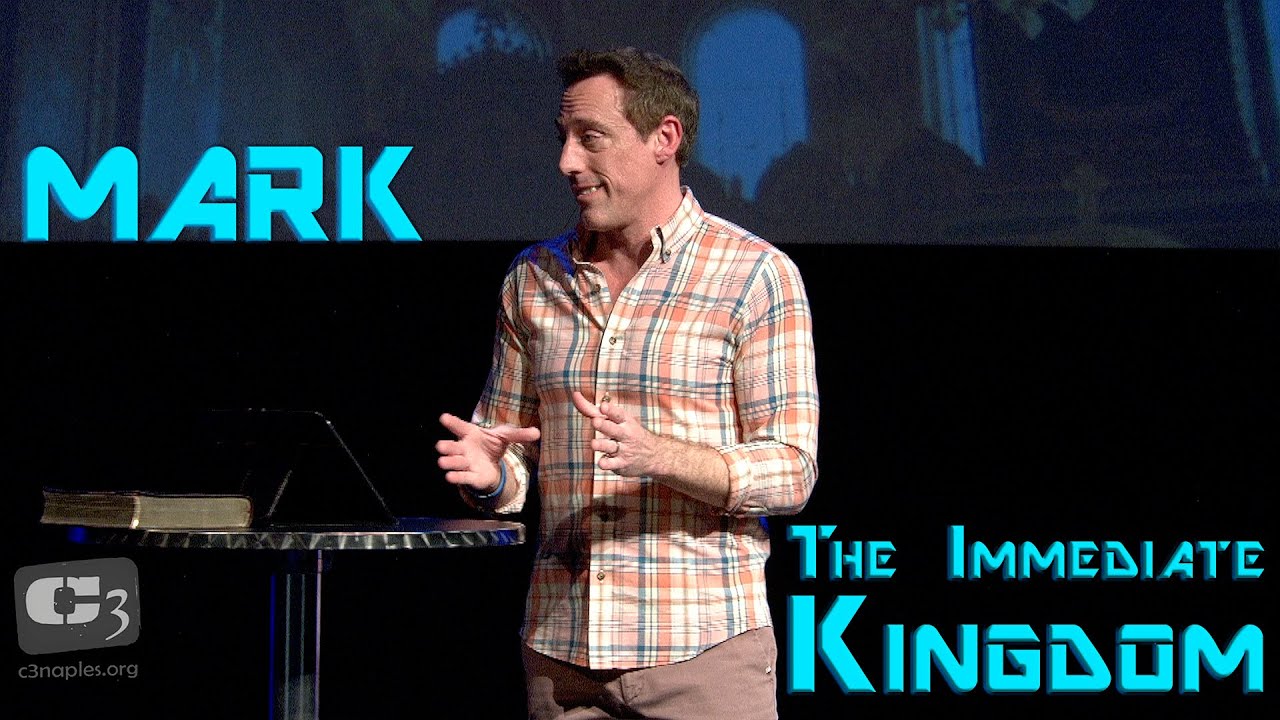
Video can’t be displayed
Reader's Version
- Mark: The Immediate Kingdom Sermon by Gene Simco Reader’s Version I want to begin this morning by thanking Ed, who delivered a great message last week on the topic of division—staying undivided—not just as a church, but in how we relate to other people throughout the holiday season. As we’ll see today, when we look at the Gospel of Mark, the disciples—and Jesus Himself—often withdraw to quiet places, stepping away from ministry for a time. My family and I did something similar.
- We actually found ourselves at Florida amusement parks. That’s where we spent part of our time away. And if you’ve ever been to an amusement park, you know it gives you plenty of time to think—because you end up waiting in a lot of lines. So there I was, standing in lines, thinking and reflecting on my message from two weeks earlier, when we looked at the Gospel of Matthew. That message was about the kingdom that couldn’t be canceled. As part of that application, I talked about the canceling voice—how to cancel the canceling voice. The phrase I used quite often when certain thoughts intruded was simply, “Stop.” I would just tell it to stop. But as I thought about it more theologically, I realized something. We’re not fighting a war against flesh-and-blood enemies. Scripture tells us that clearly. This is a spiritual battle. We know that Satan is the god of this world, and so what we’re dealing with is a spiritual war being waged against us.
- That’s when it hit me: the most theologically accurate phrase to use is the one Jesus Himself used when He rebuked the enemy. Jesus said, “Get away from me, Satan!” That’s how He confronted the lies. So I started thinking it through in real time. An intrusive thought comes in—maybe you’re not good enough. “Get away from me, Satan!” You can’t accomplish that. “Get away from me, Satan!” You’re going to have a bad day today. “Get away from me, Satan!” You’re going to get sick. “Get away from me, Satan!” The past says you messed up and you’re going to mess up again. “Get away from me, Satan!” Just rebuking the thought as it comes. Then there was one more: you ate too much ice cream. Well… maybe that one was my fault. I did discover something, though. If you practice this out loud while standing in line at a Florida amusement park, you can get to the front of that line really fast. We now find ourselves in the Gospel of Mark. We’ve already looked at Matthew. There are four Gospels in total—three of them are synoptic: Matthew, Mark, and Luke. John is a little different. Together, they give us different angles on the same account.
- Mark is the most succinct of the four. It’s only sixteen chapters long, and it moves very quickly through Jesus’ ministry. There are no birth narratives here. Mark skips all of that and goes straight into the action.
- Before we go any further, it helps to understand who Mark actually is, because the man behind the Gospel explains so much about the message itself. Mark is not one of the Twelve, and he is not an eyewitness in the way Peter or John were. And yet, his Gospel has an urgency, honesty, and rawness that feels deeply personal. That’s because Mark’s story is woven into the story of the early Church itself.
- Mark is first introduced to us in the book of Acts as John Mark. He is the cousin of Barnabas, and early on he becomes a companion of Paul and Barnabas on their missionary journey. But in Acts 15, we learn something important about Mark—he quits. Luke tells us that Mark had left them earlier in the mission, and when it came time to go out again, Paul refused to take him along. The disagreement became so sharp that Paul and Barnabas separated over it (Acts 15:37–39). That’s not a small detail. Mark is a man who starts well, fails publicly, and is written off by one of the greatest apostles in history.
- And yet, that is not the end of Mark’s story.
- Years later, near the end of Paul’s life, writing from prison, Paul says something remarkable. In 2 Timothy 4:11, Paul tells Timothy, “Bring Mark with you when you come, for he will be helpful to me in my ministry.” The man who once abandoned the mission is now considered useful, trustworthy, and valuable. Mark is restored. He is no longer the quitter. He is a proven servant.
- At the same time, Mark has a deep and enduring relationship with Peter. In 1 Peter 5:13, Peter refers to Mark affectionately as “my son.” This is not biological language—it is discipleship language. Mark is Peter’s spiritual son. That’s why the early Church unanimously understood Mark’s Gospel to reflect Peter’s preaching and eyewitness testimony. Mark writes what Peter preached. The urgency, the bluntness, the focus on action, the lack of polish—it all sounds like Peter because it is Peter’s story, told through Mark.
- And then there is the most haunting detail of all. In Mark 14:51–52, there is a strange, easily overlooked moment during Jesus’ arrest. Mark alone tells us about a young man who follows Jesus, wearing nothing but a linen garment. When the soldiers try to seize him, he slips out of the garment and runs away naked into the night. No name is given. No explanation is offered. But from the earliest days of the Church, many have understood this to be Mark himself. If that’s true—and there’s good reason to think it is—then Mark records his own moment of cowardice and failure without comment or defense.
- Put all of that together, and suddenly the Gospel of Mark makes sense. Mark knows what it is to fail. He knows what it is to flee. He knows what it is to be restored. And he writes a Gospel that moves fast, not because he is careless, but because he knows time matters. Obedience matters. Following Jesus matters now.
- Mark writes about disciples who run away, a Messiah who suffers, and a Kingdom that keeps moving forward even when people stumble. That’s not theory for him. That’s biography. Mark’s Gospel is not written from the comfort of success, but from the mercy of restoration. And that’s why his Gospel doesn’t slow down, doesn’t soften the edges, and doesn’t clean up the failures.
- Because Mark knows firsthand that the Kingdom doesn’t wait for perfect people. It moves forward with redeemed ones. Because of that, in seminary or pastoral training, students are often encouraged to read the entire Gospel of Mark in one sitting—sixteen chapters in a day—over and over again. The goal is to lock in the major movements, the key moments, and the essential features of Jesus’ ministry. That’s something I did for a couple of years, so I’m pretty familiar with Mark for that reason.
- For all of this, Mark is often called the Gospel of immediately. The Greek word translated “immediately” is εὐθύς, and it carries the sense of “straight away,” “at once,” “without delay.” Mark uses this word more than forty times—more than Matthew, Luke, and John combined. That alone tells you something about his emphasis. Right away in the first chapter, you see it over and over again. Mark 1:10. Mark 1:12. Mark 1:18. Mark 1:20. Mark 1:21. Mark 1:28. Mark 1:29, 30. Mark 1:42. Mark 1:43. This idea of “immediately” just keeps coming at you.
- Now, Matthew showed us the King who cannot be canceled. Mark shows us something slightly different. Mark shows us the King who refuses to slow down. Where Matthew gives us genealogy, prophecy, and royal identity, Mark hits the ground running. There’s no birth story, no warm-up—just Jesus stepping onto the field and the Kingdom moving immediately.
- Why does Mark do this? Because Mark is written to a church under pressure. It’s written to people who needed to see Jesus acting, not just explaining. Mark wants you to feel the urgency of the mission and the unstoppable momentum of the Kingdom. Matthew told us who Jesus is. Mark shows us how He moves. And He moves fast. He moves with authority. He moves to serve. He moves to save. The King who cannot be canceled is also the King who won’t wait. That’s where we are, and that’s why Mark matters. So as we hop into our first movement here, Mark wastes no time. He skips the genealogies and the birth stories in the background because he wants you to feel the speed and urgency of the Kingdom from the very first sentence. Jesus arrives already in motion—the Servant-King stepping directly into the mission. Mark’s Gospel moves fast because the Kingdom moves fast.
- Mark opens with action, not background. Right away he declares, “This is the Good News about Jesus the Messiah, the Son of God” (Mark 1:1). Mark doesn’t ease you in. He declares the identity of Jesus up front. This isn’t an introduction; it’s a proclamation. The Kingdom begins with certainty, not suspense. Next, remember Malachi. We see John the Baptist introduced immediately in Mark 1:2–3: “Look, I am sending my messenger ahead of you, and he will prepare your way. He is a voice shouting in the wilderness, ‘Prepare the way for the Lord’s coming! Clear the road for him!’”
- This quotation is often attributed to Isaiah, but we also find it in Malachi. It’s a deliberate mash-up of the two. Mark uniquely links Malachi and Isaiah to show that Jesus isn’t just a King—He is a Servant-King, walking the path the prophets promised. This is not the slow march of royalty; it’s the fast advance of rescue. Next we see the baptism of Jesus, and then the Spirit impels Him into the wilderness. Mark tells us, “The Spirit then compelled Jesus to go into the wilderness. He was there for forty days, tempted by Satan. He was out among the wild animals, and angels took care of him” (Mark 1:12–13).
- Matthew explains the temptations in detail. Mark emphasizes urgency. The Spirit doesn’t gently lead Jesus; He drives Him. Right from the first chapter, the Kingdom pushes forward—even under attack. The temptations aren’t detailed here as they are in Matthew and Luke, which is a good reminder of why we have four Gospels. Each one shows us something different. The point here is clear: the King doesn’t wait, and the Kingdom doesn’t pause. Jesus arrives in motion, and His Church is called to move with Him.
- Next we see the Kingdom announced with urgency. Mark writes, “Later on, after John was arrested, Jesus went into Galilee, where he preached God’s Good News. ‘The time promised by God has come at last!’ he announced. ‘The Kingdom of God is near! Repent of your sins and believe the Good News!’” (Mark 1:14–15). Mark stresses that the Kingdom is not a distant future event. It is breaking in now. Jesus doesn’t announce possibilities; He announces reality—and with that reality comes the urgency of repentance. And when we see the disciples being called, what stands out immediately is that discipleship happens without delay. There is no hesitation. Simon Peter and Andrew are called first in Mark 1:17–18. Jesus calls out to them, “Come, follow me, and I will show you how to fish for people.” And Mark tells us, “And they left their nets at once and followed him.” Immediate obedience.
- The same thing happens with James and John—again, at once. Mark alone emphasizes the speed of their response. There is no backstory, no emotional processing, no internal debate. Just instant obedience. The Kingdom moves quickly, and discipleship begins in motion.
- Next, we see that the Servant King confronts darkness head-on. Jesus casts out an evil spirit. The demons know exactly who He is, but He tells them to be quiet. Mark 1:27 says, “Amazement gripped the audience, and they began to discuss what had happened. ‘What sort of new teaching is this?’ they asked excitedly. ‘It has such authority! Even evil spirits obey his orders!’”
- Mark focuses on Jesus’ raw authority more intensely than any other Gospel. This is not merely teaching—it is confrontation. Jesus speaks, and demons respond faster than the crowds do.
- Then we see that Jesus touches the untouchable. Peter’s mother-in-law is healed. Many people are healed. Once again, the demons are silenced. Jesus withdraws to an isolated place to pray, but then He encounters a man with leprosy—and He heals him.
- In Mark 1:42–44, *“Instantly the leprosy disappeared, and the man was healed. Then Jesus sent him on his way with a stern warning: ‘Don’t tell anyone about this. Instead, go to the priest and let him examine you. Take along the offering required in the law of Moses for those who have been healed of leprosy. This will be a public testimony that you have been cleansed”
- Mark highlights Jesus’ compassion and action. The Servant King does not stay above the broken; He moves toward them immediately. Now there are a couple of things happening here. Mark condenses Jesus’ early teaching and miracles into a rapid sequence that highlights two important themes that are distinctive in this Gospel.
- First, while not completely unique to Mark, we see the concept often called the Messianic Secret. Jesus repeatedly tells people—especially demons and those He heals—not to reveal who He is. This restraint is intentional. The identity of Jesus cannot be fully understood apart from the cross.
- Second, we see a glimpse of this same idea echoed elsewhere in the Gospels, including Jesus’ interaction with His mother Mary, where He says that His time has not yet come. Revelation is purposeful, not premature.
- All of this unfolds at a pace so fast that the crowds can barely react. Miracles, confrontations, teaching—one after another. Mark wants you to see a King who reveals truth selectively and confronts opposition decisively, all while keeping the mission moving forward.
- In Mark 2–4, we see parables, power, and the Messianic Secret once again. Mark compresses conflict, teaching, and miracles into rapid succession. The Kingdom is not creeping in—it is breaking in. It immediately confronts religion, calls sinners, separates insiders from outsiders, and displays a power that unsettles even believers.
- First, Jesus heals a paralyzed man. His friends—four of them—tear open the roof and lower him down in faith, and Jesus heals him, displaying divine authority. He then calls Matthew, also known as Levi, and immediately there is controversy over Jesus associating with sinners and tax collectors. Questions arise about fasting, and Jesus declares that He is Lord of the Sabbath.
- Moving into chapter three—remembering there are no chapter breaks in the original text—Jesus heals a man with a withered hand on the Sabbath. Crowds continue to follow Him. Religious leaders accuse Him of being possessed, and Jesus responds by defining who His true family really is.
- In Mark 4, we encounter the parable of the sower, which marks the formal introduction of Jesus’ parables. This is followed by the parable of the lamp, the parable of the growing seed, and the parable of the mustard seed. Again and again we hear the phrase, “The Kingdom of God is like.” Then Jesus calms the storm—a scene with strong echoes of Jonah—revealing His authority over creation itself.
- Throughout this section, Mark repeatedly emphasizes Jesus’ immediate discernment. Mark 2:8 says, “Jesus knew immediately what they were thinking, so he asked them, ‘Why do you question this in your hearts?’” The Kingdom responds faster than human reasoning. Jesus discerns instantly what religion tries to hide.
- As part of this healing, Jesus says that He is acting “so you will know that the Son of Man has the authority on earth to forgive sins.” Then He proves it in real time. Mark 2:12 tells us, “And the man jumped up, grabbed his mat, and walked out through the stunned onlookers.” Jesus does not merely claim authority—He demonstrates it immediately by restoring the paralytic.
- In Mark 3, as soon as Jesus heals the man with the withered hand, resistance is activated. Mark 3:6 says, “At once the Pharisees went away and met with the supporters of Herod to plot how to kill Jesus.” The Kingdom moves forward, and the enemy moves quickly to oppose it.
- Within the parable of the sower, the word “immediately” appears repeatedly. Jesus tells the story plainly: a farmer scatters seed. Some falls on the footpath and the birds snatch it away. Some falls on rocky soil and sprouts quickly but has no depth. Some falls among thorns and is choked out. Some falls on good soil and produces a harvest—thirty, sixty, even a hundredfold.
- In Mark 4:5, Jesus says, “Other seed fell on shallow soil with underlying rock. The seed sprouted quickly because the soil was shallow.” Immediate excitement is not the same as lasting faith. Mark warns that speed without depth leads to collapse.
- In Mark 4:15, Jesus explains, “The seed that fell on the footpath represents those who hear the message, only to have Satan come at once and take it away.” As soon as truth is planted, spiritual resistance activates. Mark shows both the Kingdom and darkness moving with urgency.
- Then Jesus explains the rocky soil in Mark 4:16–17: *“The seed on the rocky soil represents those who hear the message and immediately receive it with joy. But since they don’t have deep roots, they don’t last long. They fall away as soon as they have problems or are persecuted for believing God’s word In Mark 5–6, we see authority over darkness and over all that is unclean. Mark reveals a Jesus who storms enemy territory. These chapters contain the longest exorcism narrative in the Gospels, the most vivid confrontations with darkness, and details no other Gospel preserves. Mark wants the reader to feel how unstoppable the Kingdom is—demons, disease, shame, and even death collapse immediately before Him.
- In Mark 5, Jesus heals the Gerasene demoniac. This is enemy territory. The man is possessed by a legion of demons, and even they must ask Jesus for permission. When Jesus allows them to enter the pigs—likely owned by Gentiles, since Jews had nothing to do with pigs—the cost is enormous. About two thousand pigs rush down the steep bank and drown. The Kingdom’s advance is decisive and disruptive. Darkness loses ground immediately.
- In the same chapter, we see Jesus healing in response to faith. A woman who had suffered from bleeding for twelve years reaches out and touches Him without asking permission. Mark 5:29 says, “Immediately the bleeding stopped, and she could feel in her body that she had been healed of her terrible condition.” The healing is instantaneous. The moment faith meets Jesus, brokenness reverses.
- At the same time, Jesus senses what has happened. Mark 5:30 tells us, “Jesus realized at once that healing power had gone out from him, so he turned around in the crowd and asked, ‘Who touched my robe?’” The immediacy is mutual. Faith activates His power instantly, and He responds instantly.
- This healing occurs on the way to Jairus’s house, whose twelve-year-old daughter is dying. The bleeding woman becomes an interruption in the story. When Jesus finally arrives, He enters a house filled with mourning, takes the girl by the hand, and speaks to her. Mark 5:42 says, “And the girl, who was twelve years old, immediately stood up and walked around. They were overwhelmed and totally amazed.” Mark highlights the instantaneous nature of resurrection. Death yields without hesitation.
- In Mark 6, Jesus is rejected in Nazareth. A prophet, Mark reminds us, is not without honor except in his own hometown. Jesus then sends out the twelve disciples, echoing what we also see in Matthew 10. Their mission is immediately followed by a flashback to the death of John the Baptist.
- John had openly criticized King Herod for taking his brother’s wife, Herodias. When Herodias’s daughter—likely Salome—dances for Herod, he makes a reckless vow, echoing language we hear in Esther: he offers her anything she wants, up to half his kingdom. Prompted by her mother, she asks for John’s head. Mark 6:25 says, “So she hurried back to the king and said, ‘I want the head of John the Baptist on a tray right now.’” Mark exposes the immediacy of evil decisions—impulsive, destructive, and unrestrained.
- After the disciples return from their mission, Jesus redirects them and gives them rest. This moment becomes important. The feeding of the five thousand follows, very similar to the account in Matthew. When the crowds attempt to seize the moment and push their own agenda, Jesus intervenes. Mark 6:45–46 tells us, “Immediately after this, Jesus insisted that his disciples get back into the boat and head across the lake to Bethsaida… After telling everyone goodbye, he went up into the hills by himself to pray.” Jesus immediately removes the disciples from the crowd’s momentum. His Kingdom does not follow human expectations. Later, when Jesus walks on the water, the disciples are terrified. Mark 6:50 says, “They were all terrified when they saw him. But Jesus spoke to them at once. ‘Don’t be afraid,’ he said. ‘Take courage. I am here!’” Fear rises immediately, but Jesus answers immediately. His presence is instant reassurance.
- Across this movement, Mark presents a King whose power is not gradual but immediate. Demons obey instantly. Disease flees instantly. Death yields instantly. Fear is answered instantly. The advance of the Kingdom cannot be slowed, delayed, or resisted.
- In Mark 7–8, we see revelation, resistance, and recognition. Mark now shows Jesus confronting deeper spiritual blindness—not only in the Pharisees, but increasingly in His own disciples. These chapters expose the heart, reveal the true source of defilement, highlight the faith of outsiders, and begin a decisive shift from public miracles toward the revelation of the cross.
- While Matthew expands teaching and Luke emphasizes inclusion, Mark tightens the narrative to show a Kingdom advancing with purpose. This section marks a critical turning point. Jesus begins moving His disciples toward the next phase of His mission.
- Jesus first teaches about inner purity, confronting the traditions of men versus the condition of the human heart. This parallels what we also see in Matthew 15. Defilement, Jesus explains, does not come from external practices but from within—from the heart itself. Religion that polishes the outside while ignoring the inside is exposed.
- Next, we encounter the faith of a Gentile woman—the Syrophoenician woman. The interaction is striking. Jesus makes the well-known statement about not feeding the children’s bread to dogs, reflecting Israel’s priority in the mission, consistent with what He had earlier instructed in Matthew 10 when He sent the disciples only to the lost sheep of Israel. Samaritans and Gentiles were considered outsiders.
- Yet the woman responds, “Even the dogs eat the crumbs that fall from the table.” Her humility and persistence reveal genuine faith, and Jesus heals her daughter. Mark highlights that faith—not lineage—opens the door to the Kingdom.
- Jesus then heals a deaf man, further demonstrating His authority to restore what is broken. In Mark 8, Jesus feeds four thousand—not five thousand—again displaying provision in a largely Gentile context. Immediately after, religious leaders demand a sign, revealing hardened unbelief even in the face of repeated miracles.
- Soon after, the disciples realize they forgot to bring bread. Jesus warns them, “Beware of the yeast of the Pharisees and Herod.” What follows is almost a spiritual diagnostic. Jesus questions their lack of understanding, pressing them about their hardened hearts. He asks them to remember the numbers: when He fed the five thousand, there were twelve baskets left over; when He fed the four thousand, there were seven baskets left over. The question is not math—it is perception. They still do not see.
- Next, Jesus heals a blind man—uniquely, in stages. At first, the man sees people like trees walking around. Then his sight is fully restored. This partial healing functions as a living parable. The disciples see Jesus—but only partially. Full clarity has not yet come.
- Immediately following this, Peter makes his declaration: “You are the Christ.” Recognition has begun, but understanding is still incomplete. Jesus then predicts His suffering and death. Peter rebukes Him, and Jesus responds sharply, “Get behind me, Satan.” The conflict is no longer about power—it is about purpose.
- After feeding the four thousand, Jesus signals a transition. Mark 8:10 tells us, “Immediately he got into a boat with his disciples and crossed over to the region of Dalmanutha.” Public miracles begin to give way to private revelation. Jesus is moving His disciples rapidly toward the necessity of the cross.
- Calling the crowd to Himself, Jesus lays out the cost of discipleship: “If anyone wants to follow me, he must deny himself, take up his cross, and follow me.” He asks the piercing question, “What does it profit a man to gain the whole world and forfeit his soul?” Urgency now centers on decision.
- Mark presents a Jesus who will not allow confusion, crowds, or conflict to derail the mission. He purifies the heart, reveals Himself to the humble, confronts unbelief, and moves immediately toward the cross. The Kingdom does not drift into its purpose—it advances.
- In Mark 9–10, we see glory revealed and greatness refined. Jesus reshapes His disciples’ understanding of glory, authority, and what it means to be great in the Kingdom. While Matthew and Luke include much of this material, Mark consistently emphasizes urgency and forward movement as Jesus heads toward Jerusalem and the cross.
- These chapters include the Transfiguration, where Jesus appears in glory with Moses and Elijah, confirming His identity and mission. Jesus then heals a demon-possessed boy and rebukes His disciples for their inability to cast the demon out. He laments, “O unbelieving generation, how long must I be with you? How long must I put up with you?” When paired with Matthew’s account, it becomes clear that their failure is rooted in a lack of faith.
- This moment becomes especially important when we address a dangerous and deeply unbiblical idea that still circulates in parts of the modern Church—the claim that sickness, suffering, or unanswered prayer is always the result of a lack of faith on the part of the one suffering. In Word-of-Faith and prosperity teaching, the blame almost always lands on the victim. You weren’t healed because you didn’t believe enough. You’re still sick because your faith wasn’t strong enough. Scripture does not support that conclusion.
- In this passage, Jesus does rebuke unbelief, but the unbelief is not found in the suffering child or in his desperate father. The rebuke is directed at the disciples—the would-be healers. When Jesus says, “O unbelieving generation, how long must I be with you? How long must I put up with you?” He is not condemning the afflicted. He is confronting those who were entrusted with spiritual authority but failed to walk in dependence on God. When Matthew records the same event, Jesus makes it even clearer that the issue was not the victim’s faith, but the disciples’ failure to trust God fully in that moment.
- That distinction matters, because it exposes a critical flaw in prosperity theology. The Bible repeatedly shows faithful people who suffer, remain unhealed, or endure weakness—not because of deficient faith, but because of God’s sovereign purposes.
- The apostle Paul is the clearest example. In 2 Corinthians 12, Paul speaks openly about a “thorn in the flesh” that he begged the Lord to remove. He prayed repeatedly. He had faith. He had authority. And yet God said no. Paul explains that the thorn was allowed because of pride, not unbelief—“to keep me from becoming proud.” The answer was not healing, but grace. God’s power, Paul says, is made perfect in weakness.
- Timothy provides another example. In 1 Timothy 5:23, Paul advises him to take a little wine for his stomach and frequent illnesses. There is no rebuke. No accusation of weak faith. No call to “declare healing.” Just practical care for a faithful servant who struggled physically while serving God.
- Taken together, these passages dismantle the simplistic—and harmful—idea that faith guarantees physical healing. They also turn the prosperity accusation on its head. If blame is going to be assigned, Scripture more often places responsibility on the one claiming spiritual authority, not the one suffering. In Mark 9, Jesus does not tell the father, “You didn’t believe hard enough.” He confronts the disciples for failing to rely fully on God.
- This means that when modern faith healers tell suffering people, “You weren’t healed because you didn’t have enough faith,” they are not echoing Jesus. They are contradicting Him. They are repeating the same error Jesus corrected—placing the burden on the broken instead of humbling themselves before God.
- The biblical pattern is clear. Faith is not a force we wield to control outcomes. It is trust in God regardless of the outcome. Sometimes God heals instantly. Sometimes He heals slowly. Sometimes He does not heal at all—because He is doing something deeper, more eternal, and more transformative than physical relief.
- The Gospel does not promise a pain-free life. It promises a faithful God whose grace is sufficient in every weakness. Jesus again predicts His death, and the disciples respond not with understanding, but with arguments over who is the greatest in the Kingdom. Jesus counters by redefining greatness through humility, servanthood, and childlike dependence.
- Warnings follow about misusing His name, causing others to stumble, and the seriousness of sin. The Kingdom Jesus is ushering in does not mirror worldly ambition—it inverts it. Greatness is measured not by power seized, but by lives surrendered.
- Throughout these chapters, Mark shows Jesus pressing forward with urgency. Revelation deepens, misunderstanding lingers, and the road to the cross becomes unavoidable. In Mark 10, the theme of urgency continues as Jesus addresses marriage, discipleship, ambition, and the cost of following Him. The Kingdom presses forward, and Jesus repeatedly confronts misplaced priorities and shallow understandings of greatness.
- Jesus begins with a discussion on divorce and marriage, grounding His teaching not in cultural debate but in God’s original design. Immediately after, He blesses children, using them as a living illustration of the posture required to enter the Kingdom—humble, dependent, and trusting.
- Next comes the well-known encounter with the rich young man. He approaches Jesus urgently with the question, “What must I do to inherit eternal life?” Jesus exposes the man’s true obstacle. Knowing where his heart is bound, Jesus tells him to sell his possessions and follow Him. The man walks away sorrowful because he cannot surrender what holds him. Mark presents this as another moment of urgency—the Kingdom is offered, but hesitation costs everything.
- Jesus again predicts His death, reinforcing that the path forward leads to suffering before glory. Immediately after, the disciples reveal how little they understand. James and John ask for positions of honor at Jesus’ right and left hand. Once again, the question of greatness surfaces.
- Jesus responds by redefining leadership in the Kingdom. Authority is not about position but service. He declares that the Son of Man did not come to be served, but to serve, and to give His life as a ransom for many.
- The chapter closes with the healing of blind Bartimaeus. As Jesus leaves Jericho, Bartimaeus cries out for mercy. The crowd attempts to silence him, but he persists. Jesus calls him forward, and Mark 10:52 tells us, “Instantly the man could see, and he followed Jesus down the road.” The miracle is immediate, but Mark emphasizes something even more important than restored physical sight.
- Bartimaeus responds with immediate obedience. Once his eyes are opened, he follows Jesus—down the road toward Jerusalem and the cross. Mark highlights that when Jesus opens blind eyes, the proper response is not delay, debate, or hesitation, but immediate surrender and faithful following. As Jesus moves closer to His crucifixion, Mark continues to show a Kingdom advancing urgently through revelation, correction, and transformation. Sight leads to surrender, and surrender leads to the road of the cross. In Mark 11–13, the King enters Jerusalem, confronts corruption, and predicts judgment. The tone of Mark’s Gospel shifts sharply. The immediacy of the Kingdom now collides head-on with religious corruption, hardened hearts, and national unbelief. Jesus exposes the fruitlessness of Israel’s leadership, confronts every challenge thrown at Him, and announces judgment on the system that has rejected God’s Son.
- Mark’s pacing becomes deliberate and sharp. Every confrontation pushes Jesus closer to the cross, and every teaching presses His disciples toward readiness. In Mark 11, Jesus makes His triumphal entry into Jerusalem. The King arrives openly, deliberately, and publicly. Immediately after, Jesus curses a fig tree and then cleanses the temple. Later, the disciples notice that the fig tree has withered.
- This is not a contradiction with Matthew’s account, where the fig tree appears to wither immediately. Mark intentionally bookends the fig tree around the temple cleansing. Just as he did earlier with the two-stage healing of the blind man, Mark uses structure to make a theological point. The fig tree represents Israel’s leadership—full of leaves, but barren of fruit. The problem is not delay; it is diagnosis. Israel looks alive, but it is spiritually unfruitful.
- As the narrative moves into Mark 12, Jesus’ authority is relentlessly challenged. He responds with the parable of the evil farmers, revealing Israel’s history of rejecting God’s messengers and, ultimately, His Son. The rejected stone, Jesus declares, has become the cornerstone.
- What follows are three direct challenges. First, the Pharisees question Jesus about paying taxes to Caesar. Jesus famously responds, “Give to Caesar what belongs to Caesar, and to God what belongs to God.” Next, the Sadducees attempt to trap Him with a question about the resurrection, only to be exposed for their misunderstanding of Scripture and the power of God. Then the scribes ask which commandment is the most important, and Jesus affirms the primacy of loving God and loving neighbor.
- Jesus then turns the tables, asking whose son the Messiah truly is, exposing shallow messianic expectations. He sharply criticizes the religious leaders, echoing the woes more fully recorded in Matthew 23. The chapter closes with the account of the widow’s offering, highlighting true devotion contrasted against religious display—a theme we revisited in Malachi.
- In Mark 13, Jesus delivers a condensed version of what Matthew expands in chapters 24–25. He foretells coming judgment, describes events preceding the end, speaks of the coming of the Son of Man, and teaches the lesson of the fig tree. Yet the emphasis is unmistakable: no one knows the day or the hour. This chapter is not written to fuel end-times speculation. It is written to produce end-times readiness. Jesus’ focus is urgency, watchfulness, and faithfulness under pressure. Mark 13:33 summarizes the message: “And since you don’t know when that time will come, be on guard! Stay alert!”
- Mark’s Olivet Discourse is shorter and sharper than Matthew’s. The goal is not decoding signs, but living prepared. Faithfulness over fascination. Obedience over obsession. Staying awake rather than drifting. Watching rather than being distracted.
- Mark drives the point home with images of the fig tree, repeated warnings, and the final parable of the doorkeeper waiting for his master. The King could return immediately. Be found obedient—not asleep, not drifting, not distracted—when He comes. In the final movement, Mark 14–16, we see betrayal, crucifixion, and the risen King. The Gospel that has been rushing forward now slows into a solemn, deliberate march toward the cross. Yet even here, Mark retains his signature sense of urgency. Events unfold rapidly and relentlessly—betrayal, arrest, denial, condemnation, crucifixion, burial, and resurrection. Mark’s emphasis is not on polished narrative, but on raw testimony. The King is betrayed, killed, and raised, and nothing can stop His mission. In this section, Jesus is anointed at Bethany. Judas agrees to betray Him. The Last Supper is shared, and Jesus predicts Peter’s denial. He prays in Gethsemane in agony, submitting His will fully to the Father. Even as He prays, the machinery of betrayal is already moving.
- Jesus is betrayed and arrested. He stands before the council. Peter denies Him. In Mark 15, Jesus is tried before Pilate, mocked by soldiers, crucified, dies, and is buried. The narrative moves quickly, almost breathlessly, as Mark presses the reader toward the climax of the Gospel.
- In Mark 16, the women discover the empty tomb. They are told that Jesus has risen and that He is going ahead of them to Galilee. Even resurrection is framed as movement—Jesus is already ahead of His disciples.
- One verse captures Mark’s urgency with particular force. Mark 14:43 says, “Immediately, even as Jesus said this, Judas, one of the twelve disciples, arrived with a crowd of men armed with swords and clubs.” The betrayal does not creep toward Jesus. It strikes without delay. Yet even the immediate arrival of darkness does not derail the mission. Betrayal becomes the doorway to the cross, and the cross becomes the doorway to resurrection.
- Mark’s Gospel contains a well-known discussion regarding its ending. Some manuscripts include a longer ending that summarizes post-resurrection events similar to what we later see in Acts. These verses are not found in the earliest manuscripts, but they reflect truths consistent with the broader testimony of Scripture about what Jesus did after His resurrection. It is likely that some early scribes, uncomfortable with the abrupt ending, supplied a conclusion that mirrored the continuing story of the Church.
- Mark, however, ends where he began—with movement. Jesus is betrayed immediately, arrested immediately, condemned swiftly, crucified publicly, and raised triumphantly. The Kingdom never stops advancing—not in Gethsemane, not before Pilate, not at Golgotha, not at the sealed tomb. Even in betrayal, the Gospel is still moving forward. Even in death, the King is still unstoppable. The risen Jesus is already going ahead of His disciples, calling them—and us—to follow Him immediately. ALPHA & OMEGA: THE SERVANT KING PROMISED AND FULFILLED Before moving into application, Mark wants us to see something crucial. Jesus didn't just start a new mission—He fulfilled an ancient one. Every step Jesus takes is tied to promises God made long before His arrival. Mark intentionally connects the story of Jesus to the story God has been writing since the beginning. This brings us to the Alpha and Omega fulfillments, where the Scriptures point forward to the Servant King and where Mark shows those promises coming true in real time. Mark opens his Gospel by grounding Jesus firmly in Isaiah’s prophecy. Isaiah 40:3 declares, “Listen! It’s the voice of someone shouting, ‘Clear the way through the wilderness for the Lord! Make a straight highway through the wasteland for our God!’” Mark explicitly applies this to Jesus in Mark 1:2–3. There is no genealogy, no birth narrative, no slow buildup. Just a prophetic voice—and Jesus is already moving. Isaiah 40 is not background information; it is ignition. Mark fires the starting pistol, and the Kingdom arrives immediately.
- Isaiah also foretold the signs that would accompany God’s arrival. Isaiah 35:5–6 promises, “And when he comes, he will open the eyes of the blind and unplug the ears of the deaf. The lame will leap like a deer, and those who cannot speak will sing for joy.” Mark does not treat this as abstract theology. He shows it happening. In Mark 7:32–35, a deaf man with a speech impediment is brought to Jesus. Looking up to heaven, Jesus sighs and says “Ephphatha,” which means “Be opened!” Mark tells us that instantly the man could hear perfectly, and his tongue was freed so he could speak plainly. Isaiah promised that when God comes, the deaf will hear and the mute will speak. Mark gives us the exact miracle Isaiah described—a deaf man, a bound tongue, and immediate restoration. This is not general fulfillment; it is precise. The Kingdom breaks in on broken bodies and bound tongues exactly as promised.
- Mark then anchors Jesus’ identity in Daniel’s vision of the Son of Man. Daniel 7:13–14 says, “I saw someone like a son of man coming with the clouds of heaven. He was given authority, honor, and sovereignty over all the nations of the world.” Jesus directly claims this identity in Mark 14:62 when He stands before the high priest and says, “I am. And you will see the Son of Man seated in the place of power at God’s right hand and coming on the clouds of heaven.”
- This is the most explicit self-identification of Jesus with Daniel’s Son of Man in any Gospel. Under oath, facing condemnation, Jesus declares exactly who He is and exactly where His authority comes from.
- Mark then does something uniquely powerful. When Jesus dies on the cross, a Roman centurion—standing directly in front of Him—makes the clearest human confession in the entire Gospel. Mark 15:39 says, “When the Roman officer who stood facing him saw how he had died, he exclaimed, ‘This man truly was the Son of God!’”
- Daniel saw the Son of Man exalted, receiving authority from God. Mark shows us that this authority is revealed most clearly through suffering. The first person to confess Jesus correctly, out loud, is not Peter, not a priest, not a disciple—but a Gentile soldier watching Him die. The Kingdom is already reaching the nations. This is pure Mark. Authority revealed through suffering. Glory seen at the cross. The Servant King fulfills the promises made at the beginning and carries them all the way to the end. Alpha and Omega meet in Jesus—the promised King who arrives immediately and reigns through the cross. APPLICATION: IMMEDIATE KINGDOM, IMMEDIATE RESPONSE Mark’s Gospel confronts us with one unavoidable truth: the Kingdom moves immediately, and disciples of the King must move immediately. A Kingdom that cannot be canceled does not wait for perfect conditions, better moods, or ideal circumstances. When Jesus calls, delay is not neutral—delay is disobedience.
- Mark 1 gives the disciples no warm-up lap. Jesus says, “Follow me,” and they leave everything at once. Immediately. The Kingdom is now. Later, Jesus will say in Mark 13—a truth Matthew expands in chapters 24–25—that time is short and the stakes are eternal. The repeated call is the same: be ready, be faithful, be found working—not waiting.
- So let’s bring this down to real life.
- If we serve a King who moves immediately, then faith must move immediately.
- First, we must receive immediately. You have heard the Gospel. Jesus died for your sins, and through Him alone you are offered eternal life. He is coming again—as we saw in Mark 14:62—to judge the living and the dead. The call is not delayed belief, but immediate repentance and trust. Do not wait to respond until life settles down. Obedience is not the reward for freedom; obedience is the path to freedom.
- Second, we must serve immediately. Do not wait for a perfect schedule or convenient season. Ministry almost never arrives at convenient moments. If the Kingdom is moving, disciples cannot remain stationary.
- Third, we must forgive immediately. If someone has something against you—or if you are holding something against someone else—release it. Jesus ties faith and forgiveness together in Mark 11. The disciples are amazed by the withered fig tree and the power of faith that moves mountains, yet Jesus immediately anchors that power to forgiveness. Unforgiveness stalls what faith is meant to release.
- Fourth, we must share Jesus immediately. Someone needs to hear today—not when the conversation feels perfectly scripted. The Kingdom advances through obedience, not polish.
- This is how the Kingdom moves forward. It is not complicated. It is committed. The Gospel of Mark leaves us no room for spectators. The King has moved. The question is whether His disciples will move with Him. On the other side of immediate obedience, we also need immediate discernment. We must know when to stop wasting the time God has entrusted to us, and this is where honesty matters.
- We often say, “I’m really working on this person.” Sometimes that is noble, and sometimes it is necessary. But sometimes—if we are honest—it is an excuse. There are people God has already prepared. People who will listen. People who are ready. And meanwhile, our time, energy, and emotional bandwidth are being drained by someone who has no interest in Jesus, no intention of change, and no desire for the truth.
- This brings us to a popular half-truth. You have probably heard it said, “Jesus hung out with sinners.” And yes—He did. But the rest of the truth matters. Jesus never stayed in sinful environments, and He never instructed His disciples to remain indefinitely with people who rejected His message.
- Jesus did not stay with the resistant. Mark 1:38 records His own words: “We must go on to other towns as well, and I will preach to them, too. That is why I came.” Jesus moves on because the mission must move on. He does not camp where faith is absent or hostility is entrenched.
- Jesus also did not instruct His apostles to stay where the message was rejected. Mark 6:11 says, “But if any place refuses to welcome you or listen to you, shake its dust from your feet as you leave, to show that you have abandoned those people to their fate.” Shaking the dust was a public, cultural declaration: you have rejected the message, and we will not waste the mission. This is not bitterness—it is clarity.
- Jesus did not chase time-wasters. He was compassionate, but never codependent. He ministered to the willing. He corrected the resistant. He moved on from hostility. That is not unloving—it is how the Kingdom advances.
- Paul follows the same pattern. Acts 13:50–51 tells us, “So they shook the dust from their feet as a sign of rejection and went to the town of Iconium.” Later, in Acts 18:5–6, we read, “But when they opposed and insulted him, Paul shook the dust from his clothes and said, ‘Your blood is on your own heads—I am innocent. From now on I will go preach to the Gentiles.’”
- Paul does not chase rejection. He does not stay where people simply claim they need more time. He does not allow one resistant person to steal attention meant for willing listeners. This is not harsh—it is biblical.
- The popular half-truth says Jesus hung out with sinners. The full truth is that Jesus called sinners, but He did not linger with those who rejected Him. He taught His disciples to shake the dust and move forward. Paul does the same repeatedly. The mission is too urgent and the time too short to exhaust energy on those who refuse the King.
- Paul’s language in Acts also echoes the imagery of Ezekiel 3 and 33—the watchman on the wall. If the watchman sees danger coming and warns the people, the blood is not on his hands. But if he fails to warn them, he bears responsibility. Paul draws directly from this principle when he says he is innocent of others’ blood. Once the message is faithfully delivered, responsibility shifts to the hearer.
- Your role is not to drag people into a salvation they do not want. Your role is to speak the truth faithfully. And we must remember this clearly: you are not the Savior—you are an ambassador. Second Corinthians 5 reminds us that reconciliation belongs to God. You cannot change everyone. Only He can. In fact, in real ministry experience, pastors and leaders sometimes get in the way. We unintentionally block critical prodigal moments. Sometimes people need to hit bottom.
- Jesus’ parable of the prodigal son shows this clearly. The son takes the inheritance, squanders it, and ends up starving—unable even to eat the food given to pigs. That moment of desperation becomes the turning point. Only then does he say, “Father, I have sinned against heaven and you. I am no longer worthy to be called your son.”
- This pattern appears elsewhere in Scripture. In First Corinthians 5, Paul warns that unchecked sin spreads like yeast through dough. One unrepentant life affects the entire community. So Paul gives a shocking instruction in First Corinthians 5:5: “Then you must throw this man out and hand him over to Satan so that his sinful nature will be destroyed and he himself will be saved on the day the Lord returns.”
- Similarly, in First Timothy 1:19–20, Paul writes, *“Cling to your faith in Christ and keep your conscience clear. For some people have deliberately violated their consciences; as a result, their faith has been shipwrecked. Hymenaeus and Alexander are two examples. I threw them out and handed them over to Satan so they might learn not to blaspheme God.”
- Sometimes, if we do not let people go, we actually block their prodigal moment. Paul calls this “handing them over to Satan.” That sounds harsh, but it is not cruelty—it is clarity. It means that if they will not learn through godly counsel, they may have to learn through consequences. In some cases, the environment we have created is too comfortable for repentance. Comfort can delay change.
- Paul also reminds us that there is a responsibility to protect our own spiritual health and the health of the community. He repeatedly uses the illustration of yeast, because unchecked sin spreads. It affects not only the individual, but everyone around them.
- This is why Paul gives a clear warning in 1 Corinthians 15:33: “Don’t be fooled by those who say such things, for ‘bad company corrupts good character.’” In that context, people were denying the resurrection, and Paul makes it clear that prolonged exposure to false teaching and hardened rebellion does damage. At that point, it is no longer ministry—it is compromise. We are not God. We are not the Savior. When someone’s influence begins to erode your obedience, your conscience, or your faithfulness, wisdom says it is time to move on. If the people you are calling “ministry” are dragging you down instead of you pulling them up, the ministry has ended and foolishness has begun. Galatians 6:1 is totally clear: “Dear brothers and sisters, if another believer is overcome by some sin, you who are godly should gently and humbly help that person back onto the right path. And be careful not to fall into the same temptation yourself.”
- Restore gently—but be careful. Do not be arrogant, and do not assume you are invincible.
- If you have struggled with something or know you are susceptible to something, wisdom says you should stay away from certain people and places. If you have had a problem with alcoholism, the bar is probably not the place for you to spend your time. You may need distance from party friends. If drugs were part of your past, going back to the places and people connected to that life is not ministry—it is temptation.
- The same principle applies to sexual sin. If you keep surrounding yourself with people who pull you toward compromise, you are not being courageous—you are flirting with disaster. Sometimes we are not called to be yoked to unbelievers, especially when their influence actively draws us away from obedience. At that point, it is no longer ministry, and it is not even a healthy friendship.
- And we must be honest: we tend to focus on the dramatic sins—sex, drugs, alcohol—but Scripture names many others we ignore. In Galatians 5, Paul lists jealousy, outbursts of anger, division, and dissension alongside sexual immorality and drunkenness. These are not lesser sins. If certain people or environments provoke these behaviors in you, you are participating in them, not merely observing them.
- The moment an influence begins to darken your witness, distract your mission, or erode your walk with Jesus, it is time to step back. Remember, you are not the Savior—you are an ambassador. Deliver the message faithfully, then move where God is moving.
- This requires discernment between friendship and ministry. People who are not Christians are ministry. And sometimes Christians you require rest from are also ministry. That distinction matters.
- Jesus Himself modeled rest. Mark 6:31–32 tells us that Jesus said, “Let’s go off by ourselves to a quiet place and rest awhile,” because the demands were so constant they did not even have time to eat. If Jesus rested, so should we.
- Although we are not under the Law of Moses, the Ten Commandments still reflect wisdom—and the Sabbath may be the one command Christians are most proud to ignore. If God rested, so should we. Like an oxygen mask on an airplane, you must tend to your own spiritual health first, or you will eventually be of help to no one. So we balance urgency with rest. In Mark’s Gospel, the Kingdom moves fast, the King acts decisively, and the mission does not stall. The call of discipleship is simple: move when Jesus moves, speak when the Spirit prompts, serve when the need arises, and stop wasting time where there is no fruit. The Kingdom that cannot be canceled calls us to live with urgency, clarity, and obedience—immediately.
- Act on the first conviction, not the fifteenth reminder. When the Holy Spirit brings something to mind—repentance, forgiveness, obedience—respond the same day. Delayed obedience is disobedience. Take the step as soon as God says, “Move.”
- Replace long-term projects with short-term obedience. Share the Gospel clearly. Follow up briefly. Then move toward people who are spiritually open. Do not let time drains stall Kingdom assignments.
- Schedule your service. Do not wait to feel ready. Pick one tangible act of obedience this week—serve, encourage, pray, help—and put it on the calendar. Jesus did not wait for emotional readiness. He acted.
- Make forgiveness immediate and practical. Forgiveness is not a feeling; it is a decision. Say it out loud. Release the debt. Then take one step that proves it—pray, bless, or stop rehearsing the wound.
- Set boundaries where necessary. If a relationship is dragging you down, corrupting your morals, or distracting your mission, follow the pattern of Mark’s Gospel. Set the boundary immediately. Protect your witness. Protect your soul.
- Share Jesus with one person this week—briefly and clearly. Not an argument. Not a seminar. Simply testify to what Jesus has done in your life. Speak the truth, then trust God with the results.
- Ask God each morning one simple question: “What do You want me to do right now?” Not next month. Not someday. Right now. That question aligns your day with the urgency of the Kingdom.
- So live in a way that honors the speed of the Gospel. Respond quickly. Serve quickly. Forgive quickly. Move on quickly when the Spirit releases you. Above all, follow Jesus immediately. Take heart. The Jesus we meet in Mark is not slow, distant, or hard to find. He is the King who moves immediately—and He calls you to respond the same way. If you are not a believer, hear this clearly: Jesus does not wait for you to clean yourself up. He simply says, “Follow me.” And the moment you turn to Him, grace meets you, forgiveness covers you, and new life begins—today.
- If you are a believer who has grown hesitant, distracted, or complacent, Jesus has not moved on without you. He is still calling, still leading, still inviting you back into a life of purpose and obedience. You do not need to drift another day or delay another step. The King is moving. Respond immediately. Follow Him boldly, and watch how quickly He can change your life when you stop waiting and start walking.
- ________________________________________
- ©️ Copyright 2025 Gene Simco Most Scripture quotations are taken from the Holy Bible, New Living Translation, copyright ©1996, 2004, 2015 by Tyndale House Foundation. Used by permission of Tyndale House Publishers, Carol Stream, Illinois 60188. All rights reserved. Scriptures in brackets reflect the original Biblical languages.