Jeremiah - Trust In The Mud
Jeremiah was called before he was born, yet his ministry led to rejection, persecution, and watching his nation fall. The people clung to false prophets and misused God's promises like Jeremiah 29:11. Through warnings, judgment, and laments—even involving starvation and cannibalism—Jeremiah pointed ahead to a righteous King, a new covenant, and a Temple not made with hands. This study reminds us that trusting God doesn't mean earthly ease but eternal purpose.
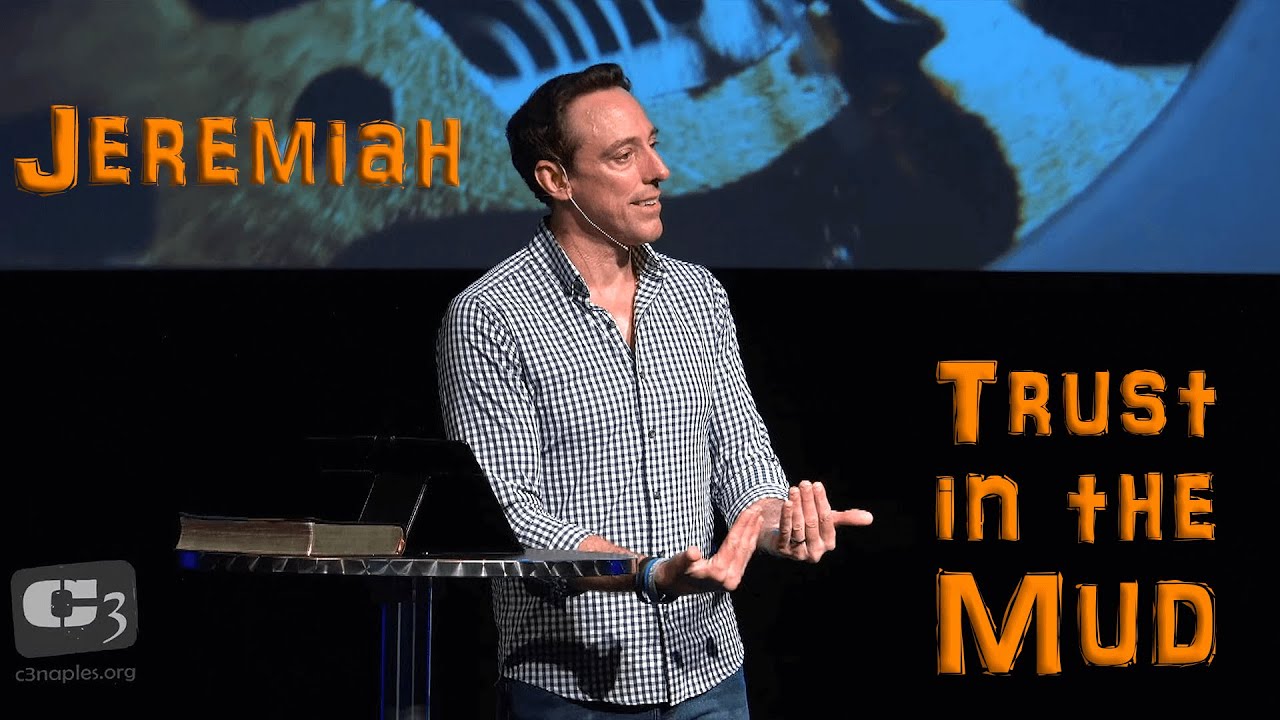
Video can’t be displayed
Reader's Version
Jeremiah: Trust In The Mud
Sermon by Gene Simco
Reader’s Version
It was one of those cold, rainy nights where nothing goes right. A young man, driving a pickup down a backcountry road, lost control in the mud. The truck slid sideways, fishtailed once or twice, and then tipped over into the ditch. It didn’t roll. It just laid there on its side—half sunken in the soft ground, headlights still on, tires spinning like they were as confused as he was.
He crawled out through the window, covered in mud, and did what any determined, pride-filled guy would do: he tried everything. Rocking it. Digging it. Pushing it. Praying for a miracle while pretending he didn’t need one. But the more he tried, the deeper he sank—and not just the truck.
Eventually, an old farmer pulled up in a rusted-out truck and watched the scene for a moment. Then, with the kind of calm only experience gives, he offered the young man something better than a tow strap.
“Why don’t you come over for dinner?” he asked.
The young man shook his head. “My dad won’t like that.”
“It’s raining,” the farmer said, matter-of-fact. “You’re soaked and covered in mud. Come on. I’ll help you in the morning.”
Again: “My dad won’t like that.”
Eventually, the young man agreed. It was warm inside. Dry. Food was on the table. And when the farmer offered a place to sleep and promised they’d pull the truck out in the morning with the tractor, he repeated, “My dad won’t like that.”
The young man finally agreed.
Sure enough, the next morning, the rain had stopped, the sun came out, and the mud began to firm up. The old farmer fired up his tractor and drove out with the young man to help him recover the truck.
As they approached the overturned vehicle, the farmer glanced over and asked casually, “By the way—where is your dad?”
The young man pointed at the truck. “He’s still in there.”
Introduction The Alpha & Omega of Obedience
It’s the last chapter of Isaiah that prepares the stage: “Has not my hand made all these things, and so they came into being?” declares the Lord. “These are the ones I look on with favor: those who are humble and contrite in spirit, and who tremble at my word.” (Isaiah 66:2)
Now enter Jeremiah—a man who didn’t just tremble at God’s word, but suffered for speaking it. He’s often called the “weeping prophet,” but that’s not a sentimental nickname. It’s a scar. His entire ministry was soaked in rejection, betrayal, and the long, slow heartbreak of watching a nation collapse under its own stubbornness. He preached faithfully while others lied beautifully—and in return, he was hated, beaten, imprisoned, and thrown into a cistern. Meanwhile, the false prophets were getting invited to banquets.
Jeremiah spoke the truth, and they threw him into a pit. They spoke lies, and they got applause. That contrast still preaches today.
This message tells the raw, painful story of what it looks like to be obedient when no one wants obedience. It’s about trusting God’s timing when everything around you screams that He’s late. It’s for the seasons where you feel buried up to your neck in the mud of delay, opposition, or unanswered prayer—and you're tempted to believe the ones promising quick exits and easy answers.
Chronologically, Jeremiah’s ministry stretches across the final decades of Judah before its exile. He prophesied during the reigns of five kings—Josiah, Jehoahaz, Jehoiakim, Jehoiachin, and Zedekiah—as recorded in 2 Kings 22–25 and 2 Chronicles 34–36. He saw it all: from Josiah’s flicker of reform to the full-blown national catastrophe of Jerusalem’s destruction in 586 BC. He warned them for over forty years—and they still didn’t listen.
But Jeremiah didn’t just speak. He wrote. And we’ll be looking beyond just the traditional book of Jeremiah. We’ll include Lamentations—a poetic cry of grief traditionally attributed to him, capturing the devastation after Jerusalem’s fall. We'll also examine the Letter of Jeremiah (sometimes called the Epistle of Jeremiah) and the writings of Baruch, his faithful scribe. These texts appear in the Septuagint, the Greek Old Testament, which was the Bible of the early Church—the Scriptures the apostles quoted, the version the early Christians believed and preached.
Let’s be clear: these books were included in every major Christian Bible for the first 1,800 years of Church history. That includes the original King James Version, which contained them in its Old Testament, positioned between the Hebrew Bible and the New Testament. If you’re wondering why some Bibles have more books than others—or how and when these texts were removed—we’ve prepared a helpful beginner’s article that explains the history and process. You can find that resource on our website:
https://c3naples.org/apocrypha-septuagint/
These writings were part of the church’s Bible for over a thousand years before they were later removed by Protestant reformers. But make no mistake—they were revered as Scripture by the early Christians, and they provide prophetic clarity and theological depth we need today, especially when it comes to discerning truth from noise, faith from fakes, and obedience from empty religion.
So in this message, we’re not just looking at a man weeping in the rubble. We’re looking at a preview of Jesus—a greater prophet, a suffering servant, and the true Word made flesh. We’re going to see Christ in Jeremiah’s courage, His rejection, His perseverance, and ultimately in the New Covenant that Jeremiah foretold and Jesus fulfilled.
Let’s step into the mud.
Telling the Story: Movements in Chronological Order
The book of Jeremiah is not arranged chronologically—it’s more like a prophetic scrapbook than a tidy journal. Chapters jump back and forth across different kings and time periods, sometimes with no warning. One moment, Jeremiah is rebuking Jehoiakim; the next, he’s weeping over Zedekiah. Then suddenly, we’re back in Josiah’s day, or fast-forwarded to Babylon.
That’s because Jeremiah’s scrolls weren’t stitched together in a linear fashion. They were written across decades, often under duress, preserved by his faithful scribe Baruch, and later compiled into their current form. But that doesn’t mean the story is random—it just means we have to do a little work to follow the timeline.
So instead of walking through the book chapter-by-chapter, we’ll walk through it event-by-event, in historical order. We’ll follow the reigns of kings, the waves of Babylonian attacks, and Jeremiah’s faithful ministry through it all—placing Lamentations, Baruch, and the Letter of Jeremiah in their proper slots.
This will help us hear the message the way the original audience lived it—in real time, through national crisis, failed leadership, exile, and divine hope.
The Call in the Days of Josiah Jeremiah 1–6 | 2 Kings 22–23 | 2 Chronicles 34–35
Jeremiah’s ministry began during the reign of King Josiah—a time that looked like revival on the outside. The idols were torn down, the temple was repaired, the Law was rediscovered, and the people went through all the motions of national repentance. But that’s all it was—motions. God wasn’t fooled.
He said of Judah, “Even now, you pretend to return to me.” (Jeremiah 3:10) They were dressing up rebellion with religious language. The smell of incense couldn’t cover the stench of idolatry.
But even before that, God had already called Jeremiah.
Shape
Jeremiah 1:5 “I knew you before I formed you in your mother’s womb. Before you were born I set you apart and appointed you as my prophet to the nations.”
Jeremiah 3:10 “But despite all this, her [Israel’s] faithless sister Judah has never sincerely returned to me. She has only pretended to be sorry. I, the Lord, have spoken!”
Shape
God didn’t just know Jeremiah—He appointed him. Not to lead a revival, but to preach through rejection. To announce judgment when everyone wanted happy endings. And God didn’t downplay it. He told Jeremiah from day one that this would be hard.
Shape
Jeremiah 1:9–10 Then the Lord reached out and touched my mouth and said, “Look, I have put my words in your mouth! Today I appoint you to stand up against nations and kingdoms. Some you must uproot and tear down, destroy and overthrow. Others you must build up and plant.”
Shape
This wasn’t a call to comfort—it was a commission to confront. And it came at a time when the nation was pretending to repent. Jeremiah’s voice would be ignored, mocked, and opposed—but God made it clear: preach anyway.
A Note on Jeremiah 1:5 and the Misuse of Scripture
Let’s pause on something here. Jeremiah 1:5 is often used in modern debates about abortion—and while the verse does show God’s knowledge and care in the womb, that’s not its primary message. This isn’t a universal statement about unborn life—it’s about prophetic calling.
This is not a cute verse for a baby shower card. It’s God saying, “I’ve chosen you to tear down kingdoms.”
And if you keep reading, it gets even more sobering.
Shape
Jeremiah 18:21 “So let their children starve. Let them die by the sword. Let their wives become childless widows. Let their old men die in a plague, and let their young men be killed in battle!”
Shape
This is the same Jeremiah who was formed in the womb by God—and now he’s praying for judgment on entire families, including children.
Now, let’s be very clear: this isn’t a contradiction. It’s the complexity of God’s justice. Yes—life in the womb matters deeply to God. But no—Jeremiah 1:5 isn’t a prooftext for pro-life policy. It's about a prophet called to speak God's judgment to a rebellious people.
The lesson? Don’t cherry-pick comforting verses and weaponize them without understanding their context. It’s like quoting a single line from a Holocaust film to make a point about modern politics—it’s reckless and insensitive. Jeremiah’s story is a full narrative, and it includes both the beauty of God's creative design and the brutality of His righteous judgment.
If you want a verse that supports unborn life without pulling it out of context, try Luke 1—where John the Baptist leaps in the womb, filled with the Holy Spirit. That’s a more theologically accurate picture.
Here’s the tension:
Yes, God forms life in the womb.
Yes, He appoints and calls from the womb.
But yes, He also brings judgment—and it often impacts generations.
God is not a slogan. He is holy. And when a nation rebels long enough, even its children feel the consequence.
Jeremiah didn’t preach to win friends. He preached to warn a kingdom teetering on the edge of destruction. And his message begins with this: God appoints prophets, not to coddle, but to confront.
2. The Burning Scroll and the Broken Reformation
Jeremiah 7–20 (most of), 26, 36 2 Kings 23–24 | 2 Chronicles 36:1–5 Prophets Active Around This Time: Nahum, Habakkuk, Zephaniah
By the time Josiah’s reforms were in full swing, the people of Judah had already begun turning religion into superstition. They thought the presence of the temple guaranteed protection. They had the building—but not the fear of God. The scrolls were read, but not obeyed. They chanted familiar phrases like magical incantations, as if saying “The Lord’s Temple is here!” three times would keep Babylon at bay.
Jeremiah saw through it all. He preached boldly against this temple-confidence in Jeremiah 7—a sermon so offensive, it nearly got him killed. By chapter 26, the priests and prophets are calling for his death in the very house of the Lord.
This section also introduces us to Baruch, Jeremiah’s loyal scribe, who helps preserve the prophet’s messages. In a time when kings were literally destroying the Word of God, Baruch was the one writing it down—again and again.
Jehoiakim, Josiah’s son, took the scroll that contained Jeremiah’s prophecies, sliced it into pieces with a knife, and threw it into the fire one column at a time. But God wasn’t finished. He told Jeremiah to rewrite it—with additions.
This is what judgment sounds like when God’s people harden their hearts: the Word is rejected, the prophet is silenced, and the scroll goes up in flames. But the fire of God’s truth still burns brighter.
Jeremiah 7:4 “But don’t be fooled by those who promise you safety simply because the Lord’s Temple is here. They chant, ‘The Lord’s Temple is here! The Lord’s Temple is here!’”
Jeremiah 26:11 “The priests and prophets presented their case to the officials and the people. ‘This man should die!’ they said. ‘You have heard with your own ears what a traitor he is, for he has prophesied against this city.’”
Jeremiah 36:28 “Get another scroll, and write everything again just as you did on the scroll King Jehoiakim burned.”
3. False Prosperity Prophets and Misused Promises
Jeremiah 21–29 2 Kings 24:6–17 | 2 Chronicles 36:6–10
This next phase of Jeremiah’s ministry is one of the most theologically loaded—and one of the most misquoted.
The nation has begun to fall apart. Jehoiakim is dead, and his son Jehoiachin reigns for only three months before Babylon storms Jerusalem and carries him away. This begins the first wave of deportations, detailed in 2 Kings 24 and 2 Chronicles 36. Ezekiel and Daniel are among those taken. The spiritual crisis intensifies. And so does the deception.
While God is warning of seventy long years in exile, the popular prophets are selling a quick comeback. One of them, Hananiah, even goes toe-to-toe with Jeremiah in the temple courtyard. He tears the wooden yoke off Jeremiah’s neck, boldly claiming that Babylon will fall within two years.
God strikes him dead.
This was a theological showdown: truth versus comfort, discipline versus denial. And the people—unsurprisingly—prefer the lie. The same crowd that applauded the temple sermon is now shouting “Amen!” to instant deliverance. But God’s Word isn’t swayed by popularity or applause.
Instead of a short exile, God sends word that they’ll be staying in Babylon for the long haul. Through a letter written by Jeremiah, He tells the exiles to settle down, build homes, plant gardens, marry, raise children, and even seek the welfare of the pagan city they now live in.
And then comes the verse. The verse.
Jeremiah 29:11.
The most quoted, coffee-mugged, bumper-stickered line in all of Jeremiah. And possibly the most misunderstood.
But before we dive into that, we need to grasp the context.
Jeremiah is not standing at a pep rally or leading a graduation ceremony when he says, “I know the plans I have for you…” He’s writing to a devastated, displaced people. They’ve been conquered. Their temple is in shambles. Their identity is shaken. And God tells them: You’re not going home soon. You’re not getting what you want. But My plans for you are still good—even if they take seventy years to unfold.
Jeremiah 28:15 Then Jeremiah the prophet said to Hananiah, “Listen, Hananiah! The Lord has not sent you, but the people believe your lies.”
Jeremiah 29:5–7 “Build homes, and plan to stay. Plant gardens, and eat the food they produce. Marry and have children. Then find spouses for them so that you may have many grandchildren. Multiply! Do not dwindle away! And work for the peace and prosperity of the city where I sent you into exile. Pray to the Lord for it, for its welfare will determine your welfare.”
Jeremiah 29:11 “For I know the plans I have for you,” says the Lord. “They are plans for good and not for disaster, to give you a future and a hope.”
Shape
Let’s talk about that last verse.
We’ve all seen it. Framed in graduation photos, printed on T-shirts, painted in calligraphy on wall art. But what we’ve rarely done is read the chapter it came from—or the decades of destruction that came before it.
Jeremiah 29:11 is not a personal promise of worldly success. It is not a shortcut to your dream job, a divine endorsement of your college application, or a magic verse that guarantees your business will thrive.
It was a word from God to a crushed and conquered people… and it came with a seventy-year waitlist.
This promise wasn’t about a painless tomorrow. It was about a faithful God walking with His people through the fire—even when the fire was their own fault.
And here’s where things get darker—and real.
In Jeremiah 19:9, God warned that things would get so horrific during the coming siege that people would eat their own children. You can’t spiritualize that. You can’t metaphor that into a tidy sermon illustration.
And it happened. Just as He said.
Jeremiah 19:9 “And I will make them eat the flesh of their sons and daughters, and everyone will eat the flesh of his neighbor during the siege and the distress imposed on them by their enemies who want to take their lives.”
Lamentations 2:20 “Should women eat their own children, the little ones they have cared for so tenderly? Should priests and prophets be killed within the Lord’s Temple?”
Lamentations 4:10 “Tenderhearted women have cooked their own children. They have eaten them to survive the siege.”
Shape
Let’s pause there.
Because this matters.
When we rip Jeremiah 29:11 out of its bloody, painful context, we’re not just doing bad exegesis. We’re insulting the ashes of Jerusalem.
Imagine watching a documentary on a catastrophic war, perhaps the holocaust—watching cities burn, families ripped apart, parents eat their own children—and then the takeaway being that God is going to make us prosperous just like those people!
It’s ignorant and insulting.
That’s how modern Christians often treat Jeremiah 29:11. We act like it’s divine frosting for our first-world frustrations—while ignoring the decades of despair that gave birth to the promise.
If we’re going to quote the verse, we’d better be willing to live through the exile. We’d better be able to trust God through the silence, through the disappointment, and even through the judgment.
And if we’re going to stand on a promise, let’s stand on the real one: Not that life will be easy—but that God will be faithful, even when we’re buried in Babylon.
This isn’t a prosperity promise. It’s a perseverance promise.
And it’s one we need more than ever.
4. The New Covenant in the Midst of Judgment
Jeremiah 30–33 (No Kings/Chronicles parallel – Prophetic insert)
This is the eye of the storm. Judgment is raging all around—sieges, betrayals, warnings—but then, suddenly, comes a burst of hope that breaks through the thunder. It’s not just a glimmer of relief—it’s a covenant.
These chapters are not in chronological order. They’re placed here intentionally, like a divine anchor in the middle of chaos. While the people are drowning in sin and consequences, God stops and speaks a future promise. A new kind of relationship. A new covenant.
Not another list of laws carved into stone.
Not another political rescue tied to kings and armies.
This time, God says He will write His instructions on their hearts.
He will change them from the inside out.
And unlike the old covenant—which the people repeatedly broke—this new one won’t depend on their strength or obedience. It will depend on His grace and His Spirit.
Here’s what He says:
Jeremiah 31:33 “But this is the new covenant I will make with the people of Israel after those days,” says the Lord. “I will put my instructions deep within them, and I will write them on their hearts. I will be their God, and they will be my people.”
Jeremiah 31:34 “And they will not need to teach their neighbors, nor will they need to teach their relatives, saying, ‘You should know the Lord.’ For everyone, from the least to the greatest, will know me already,” says the Lord. “And I will forgive their wickedness, and I will never again remember their sins.”
Shape
This is not just a poetic upgrade. It’s the heart of the gospel.
This promise is quoted verbatim in Hebrews 8–10, where the writer argues that Jesus is the fulfillment. He’s the high priest. He’s the once-for-all sacrifice. He’s the one who brings this covenant to life—not through tablets or temples, but through His own blood.
And Jesus knew exactly what He was doing when, on the night He was betrayed, He lifted the cup and said:
“This cup is the new covenant between God and His people—an agreement confirmed with my blood, which is poured out as a sacrifice for you.” (Luke 22:20)
Think about the weight of that. In the middle of impending crucifixion—betrayal, trial, and mockery—Jesus speaks hope. Just like Jeremiah did.
Same pattern. Same God. Same promise.
So when you read Jeremiah 30–33, don’t just read it as ancient poetry. Read it as your inheritance.
Because this is your covenant.
You don’t just carry a Bible—you carry a new heart.
You’re not just obeying commands—you’re being transformed.
And God doesn’t remember your sin anymore—not because He forgot—but because He chose to erase it in Christ.
This is the gospel… preached in Babylon, paid for on a cross.
Shape
5. The Fall of Jerusalem and the Mud of Obedience
Jeremiah 34–39, 52 2 Kings 25 | 2 Chronicles 36:11–21
We come now to the crash. The collapse. The moment Jeremiah saw coming for decades.
Zedekiah is the last king standing—and barely. He seeks Jeremiah’s counsel more than once, but always secretly. Always nervously. Always without obedience. It’s one thing to ask a prophet what God says. It’s another to act on it.
Zedekiah never does.
Meanwhile, Jeremiah continues to speak boldly—relentlessly—even though it costs him everything. The temple guards beat him. The officials imprison him. Eventually, they throw him into a cistern filled with mud, hoping he’ll sink and die.
He nearly does.
If it weren’t for Ebed-Melech, a foreign servant in the king’s palace—an Ethiopian eunuch, no less—Jeremiah might’ve drowned. But this unlikely ally steps up when no one else will. He pleads for the prophet’s life and lowers ropes to pull him out.
Sometimes, the people closest to power do the least. And the outcasts do the most.
Jeremiah survives, but not because obedience led to comfort. It led to mud.
Let’s be clear: faithfulness doesn’t always feel like victory. Sometimes, it feels like sludge.
Sometimes, you obey God and end up in a pit.
Sometimes, you do everything right—and everything still goes wrong.
But Jeremiah stays the course. He remains God’s voice to the very end.
Zedekiah, on the other hand, tries to run. After years of dithering and defiance, he attempts to escape during the Babylonian siege. He is captured. Forced to watch his sons executed. Then his eyes are gouged out—his final memory, the slaughter of his family.
That’s where rebellion leads. That’s where half-obedience ends up.
And then it happens. Jerusalem falls.
The walls are breached. The palace is burned. The temple—the very dwelling place of God—is reduced to ash.
Jeremiah 38:6 So the officials took Jeremiah from his cell and lowered him by ropes into an empty cistern in the prison yard. It belonged to Malkijah, a member of the royal family. There was no water in the cistern, but there was a thick layer of mud at the bottom, and Jeremiah sank down into it.
Jeremiah 52:12–13 On August 17 of that year, which was the nineteenth year of King Nebuchadnezzar’s reign, Nebuzaradan, the captain of the guard and an official of the Babylonian king, arrived in Jerusalem. He burned down the Temple of the Lord, the royal palace, and all the houses of Jerusalem. He destroyed all the important buildings in the city.
Lamentations 2:7–8 The Lord has rejected his own altar; he despises his own sanctuary. He has given Jerusalem’s palaces to her enemies. They shout in the Lord’s Temple as though it were a day of celebration. The Lord was determined to destroy the walls of beautiful Jerusalem. He made careful plans for their destruction, then did what he had planned. Therefore, the ramparts and walls have fallen down before him.
Shape
It’s devastating.
But it’s not a surprise.
God told them again and again. Through Jeremiah. Through the law. Through history.
But they didn’t listen.
Jeremiah walks through the rubble, heartbroken. His book ends not with celebration, but with ash. And yet—he never wavers. Even in chains. Even in mud. Even in exile.
Obedience doesn’t always end in reward. Sometimes, it ends in ruin.
But that doesn’t make it wrong.
Sometimes, the victory is being faithful even when everything falls apart.
Because while Zedekiah lost everything trying to save himself, Jeremiah gained everything by giving up control.
The prophet of tears becomes the prophet of the new covenant.
And the one who obeyed in the mud is remembered forever… while the king who disobeyed in luxury dies in chains.
6. The Remnant and the Rebellion in Egypt Jeremiah 40–44 | 2 Kings 25:22–26
After Jerusalem fell and Zedekiah was hauled off to Babylon with his eyes gouged out, a fragile remnant remained. Nebuchadnezzar appointed Gedaliah as governor—a decent man who had no illusions of rebellion. For a moment, things seemed calm. But calm didn’t last long in Judah.
Ishmael—one of the king’s relatives—assassinated Gedaliah in a politically motivated ambush. The people panicked. Fear overtook obedience. Instead of seeking God and staying put, they decided to run. They consulted Jeremiah—but it was all a show. They had already booked their tickets to Egypt.
Still, they asked for God’s word. And Jeremiah, worn and weathered but faithful, gave it to them straight: Don’t go. Trust the Lord. Stay in the land. He will protect you.
Their response? Classic.
“Whether we like it or not, we will obey the Lord our God to whom we are sending you with our plea.” (Jeremiah 42:6)
That was their promise. And here’s what they did next:
“We will not listen to your messages from the Lord!” (Jeremiah 44:16)
That’s the spiritual irony of Jeremiah 42–44: they said all the right things, but they had no intention of obeying. They treated God’s Word like a spiritual vending machine—insert prayer, get divine approval. But when it didn’t dispense the answer they wanted, they kicked the machine and ran to Egypt—dragging Jeremiah with them.
And even there—even there—Jeremiah preached. Even there, they rejected him.
They had survived the fall of Jerusalem, but they didn’t survive the fall of their own faithlessness. The remnant that fled to Egypt became a remnant in rebellion. They didn’t want God’s truth—they wanted confirmation for their decisions.
And before we’re too quick to judge, let’s be honest: how many times have we prayed for God’s direction, hoping He’ll rubber-stamp what we’ve already planned?
Shape
7. Baruch’s Writings and the Prophetic Epistle Baruch 1–6 (LXX); Epistle of Jeremiah (Baruch 6)
Baruch, Jeremiah’s scribe and faithful companion, doesn’t get a lot of airtime in modern Bibles. But in the Bible of the early Church—the Septuagint—his voice echoes with wisdom, grief, and hope.
Writing from exile, Baruch urges the people to seek what truly lasts. His words don’t comfort with clichés. They challenge with eternal perspective:
“Learn where there is wisdom, where there is strength, where there is understanding, so that you may also know where length of days and life are, where there is light for the eyes and peace.” (Baruch 3:14, LXX)
This isn’t about survival tips in Babylon. It’s about rediscovering the fear of the Lord. Baruch reminds the exiles (and us) that the key to peace is not in politics or position—it’s in wisdom that flows from God alone.
The Epistle of Jeremiah, included as Baruch 6 in the Greek tradition, is a scorched-earth polemic against idolatry. Line after line, it exposes the absurdity of trusting in lifeless statues:
“They are not gods; do not fear them.” (Baruch 6:56)
But tucked into Baruch’s scroll is one of the most astonishing lines in all the Old Testament Apocrypha—arguably one of the clearest Christophanies outside of Isaiah:
“Afterward he was seen on earth and lived among men.” (Baruch 3:38, LXX)
Let that land on you: He was seen on earth. He lived among men.
Centuries before Bethlehem, Baruch’s words pointed to the incarnation of Jesus Christ—the one who would not only come down into exile with His people, but would embody the wisdom they were told to seek.
Shape
Conclusion: When You’re Faithful and Forgotten
Faithfulness doesn’t always look like fruitfulness. And sometimes, obedience ends in obscurity.
Jeremiah’s ministry didn’t end with revival. It ended in rejection, exile, and silence. He was dragged to Egypt by a people who didn’t listen. His scrolls were burned. His warnings were ignored. His pain was unmatched.
But here’s the thing: God remembered him.
Though the world forgot Jeremiah, God did not. Though kings rejected his counsel, heaven recorded his words. Though his nation fell, his message stood.
He was thrown into mud—but not moved from his mission. He was cursed by men—but blessed by God. He was hated in his lifetime—but his writings would point generations to Christ.
This is the hard truth that Western Christianity often refuses to hear: sometimes, faithfulness costs everything and earns you nothing—except the smile of God.
Jesus, too, was faithful and rejected. He wept over Jerusalem. He was accused of blasphemy, beaten unjustly, and hung on a cross by the very people He came to save.
And like Jeremiah, His words were true. Like Jeremiah, His tears were real. But unlike Jeremiah, Jesus didn’t just warn of judgment—He bore it. He didn’t just point to the New Covenant—He became it.
So if you’re feeling forgotten, ignored, or dismissed, you’re in good company. Faithfulness has never been popular—but it has always been worth it.
Jeremiah was faithful. And because of that, we see Jesus more clearly.
Christophanies & Fulfillments: Alpha & Omega Tracing the shadow of Christ through the words of Jeremiah and Baruch
Shape
Ἄλφα – Called from the Womb Jeremiah 1:5 "I knew you before I formed you in your mother’s womb. Before you were born I set you apart and appointed you as my prophet to the nations."
Ὦμέγα – Galatians 1:15 "But even before I was born, God chose me and called me by His marvelous grace. Then it pleased Him…"
Ὦμέγα – Luke 1:31–33 "You will conceive and give birth to a son, and you will name Him Jesus. He will be very great and will be called the Son of the Most High. The Lord God will give Him the throne of His ancestor David. And He will reign over Israel forever; His Kingdom will never end!"
Explanation: Jeremiah was set apart before his birth—formed with purpose, appointed to confront kings, warn nations, and call God’s people to repentance. His very existence was prophetic. But his calling only prefigured the greater One to come. Jesus Christ, the eternal Son, was not only called from the womb—He entered the womb by divine initiative. Born of a virgin, He wasn’t just a prophet to the nations; He was the Word who formed the nations. The calling of Jeremiah was temporal. The calling of Christ was eternal. What Jeremiah hinted at, Jesus fulfilled in divine flesh.
Shape
Ἄλφα – A Covenant Written on Hearts Jeremiah 31:33–34 "But this is the new covenant I will make with the people of Israel after those days,” says the Lord. “I will put My instructions deep within them, and I will write them on their hearts. I will be their God, and they will be My people. And I will forgive their wickedness, and I will never again remember their sins."
Ὦμέγα – Luke 22:20 "After supper He took another cup of wine and said, ‘This cup is the new covenant between God and His people—an agreement confirmed with My blood, which is poured out as a sacrifice for you.’”
Ὦμέγα – Hebrews 8:10–12 "But this is the new covenant I will make with the people of Israel on that day, says the Lord: I will put my laws in their minds, and I will write them on their hearts. I will be their God, and they will be My people... And I will forgive their wickedness, and I will never again remember their sins."
Explanation: Jeremiah's vision pierced beyond exile, beyond the shattered covenant of Sinai, into something breathtakingly new. Not law on tablets—but law in hearts. Not sacrifices that cover sin—but blood that cleanses it. Jesus makes this prophecy real. In the Upper Room, He speaks Jeremiah’s words over the cup. At the cross, He seals them with His blood. The writer of Hebrews doesn't just reference Jeremiah—he repeats it almost word for word. The New Covenant isn’t symbolic. It is blood-soaked, heart-etched grace. And in 2 Corinthians 3, Paul adds a crucial lens: this isn’t just about new terms—it’s about a new kind of people formed by the Spirit, where the heart becomes the tablet and the gospel becomes the ink.
Shape
Ἄλφα – The Righteous Branch and the Good Shepherd Jeremiah 23:3–6 "But I will gather together the remnant of my flock from the countries where I have driven them. I will bring them back to their own sheepfold, and they will be fruitful and increase in number. Then I will appoint responsible shepherds who will care for them, and they will never be afraid again. Not a single one will be lost or missing. I, the Lord, have spoken! ‘For the time is coming,’ says the Lord, ‘when I will raise up a righteous descendant [branch] from King David’s line. He will be a King who rules with wisdom. He will do what is just and right throughout the land. And this will be His name: “The Lord Is Our Righteousness.”’”
Ὦμέγα – John 10:11 "I am the good shepherd. The good shepherd sacrifices His life for the sheep."
Ὦμέγα – John 15:1–5 "I am the true grapevine, and my Father is the gardener. He cuts off every branch of mine that doesn’t produce fruit, and He prunes the branches that do bear fruit so they will produce even more… Remain in Me, and I will remain in you. For a branch cannot produce fruit if it is severed from the vine, and you cannot be fruitful unless you remain in Me."
Explanation: Jeremiah’s “righteous Branch” was not a metaphor—it was a messianic blueprint. The failed kings of Judah had left the people scattered and afraid. God promised a Shepherd-King, both tender and righteous. Jesus fulfills this promise in three dimensions: as the Good Shepherd, He lays down His life to protect the flock; as the True Vine, He sustains the fruitfulness of those who remain in Him; as the Branch of David, He reigns in righteousness. And His name? The Lord Is Our Righteousness. Not our law. Not our effort. Him.
Shape
Ἄλφα – Jeremiah Warns of the Temple’s Destruction Jeremiah 7:4 "Do not be fooled by those who promise you safety simply because the Lord’s Temple is here. They chant, ‘The Lord’s Temple is here! The Lord’s Temple is here!’”
Jeremiah 7:14 "So just as I destroyed Shiloh, I will now destroy this Temple that bears My name—this Temple that you trust in…"
Lamentations 2:7 "The Lord has rejected His own altar; He despises His own sanctuary. He has given Jerusalem’s palaces to her enemies…"
Ὦμέγα – John 2:19–21 “Destroy this temple, and in three days I will raise it up,” Jesus replied. “What!” they exclaimed. “It has taken forty-six years to build this Temple, and You can rebuild it in three days?” But when Jesus said ‘this temple,’ He meant His own body.”
Ὦμέγα – Revelation 21:22 "I saw no temple in the city, for the Lord God Almighty and the Lamb are its temple."
Explanation: Jeremiah shattered the illusion that a building could protect a rebellious people. God’s presence wasn’t a mascot. He destroyed His own house when it became a monument to hypocrisy. But Jesus flips the paradigm. He is the new temple—God’s presence in flesh. He was destroyed like the temple of old… but raised in glory. And when all is made new? There won’t be another building. The Lamb is the temple. God won’t be in a place—we will be in Him.
Shape
Ἄλφα – God Appears and Dwells Among Men (Septuagint) Baruch 3:38 (LXX) "Afterward He was seen upon earth, and lived among men."
Ὦμέγα – John 1:14 "So the Word became human and made His home among us. He was full of unfailing love and faithfulness. And we have seen His glory, the glory of the Father’s one and only Son."
Explanation: It’s one of the most overlooked verses in the entire Greek Old Testament—but it may also be one of the most profound. Baruch, writing during exile, foresaw something radical: not just a return from Babylon, but the appearance of God on earth. He would be seen—He would live among men. That line doesn’t merely anticipate the Incarnation—it demands it. John echoes this truth explicitly: The Word became flesh. Early Christians didn’t just read this in hindsight—they read it in real time. Baruch 3:38 was part of their Bible. And through it, we see Jesus clearly: not just in the New Testament, but in the very exile scrolls of old.
Trusting God’s Timing—Even When You’re in the Mud
Last week, we explored what it means to respond to the call of God. Like Isaiah, we saw that when the Lord asks, “Whom shall I send?” the faithful answer is simple but courageous: “Here I am—send me.” But now comes the harder part: what happens after you say “yes”?
It’s one thing to respond to the call. It’s another to walk it out when everything goes dark, when no one listens, when obedience looks more like exile than elevation. The call is glorious. But the process? That’s where faith is tested—and trust in God's timing becomes essential.
You Are Called to Respond Immediately...
But That Doesn’t Mean the Plan Will Make Sense
This is the rub. God’s calling doesn’t come with a tracking number. We want immediate feedback, instant results—microwave blessings. But when you read Jeremiah, when you live the Christian life, you quickly realize that obedience and outcomes often don’t arrive on the same schedule. This is what Hebrews 11 means when it says:
“Faith shows the reality of what we hope for; it is the evidence of things we cannot see.” (Hebrews 11:1)
Faith is not about feeling good in the moment. It’s about trusting God even when you're standing waist-deep in the mud of a cistern.
Don’t Trust Your Feelings—Trust God
This is where our modern, consumerist version of Christianity becomes a serious liability. We’ve been sold a spiritual fast-food model: instant answers, quick fixes, feel-good messages on demand. But Jeremiah is the antidote to that lie. He didn’t get a breakthrough in three easy steps. He got beat up, locked up, and thrown in a well.
Yet he didn’t quit.
Why?
Because real faith clings to God even when the timeline feels unbearable.
Jeremiah 42 gives us one of the most ironic moments in Scripture. The people tell the prophet:
“Whether we like it or not, we will obey the Lord our God…” (Jeremiah 42:6)
And then two chapters later:
“We will not listen to your messages from the Lord!” (Jeremiah 44:16)
They said they wanted truth. But the moment truth demanded trust, they opted for comfort. That’s not obedience—it’s self-deception.
Discernment Over Emotion
That’s why discernment must always trump emotion. Don’t follow the Hananiahs—the smooth talkers who promise quick blessings and easy relief. They’re still out there, wearing smiles on stages, selling a gospel of shortcuts. They’ll tell you what you want to hear, not what God actually said.
Jeremiah stood alone and spoke the truth, even when it landed him in chains. Meanwhile, Hananiah told the people that the yoke of Babylon would be broken in two years—and everyone clapped. But he was dead within the year. God silenced the lie.
Crowds don’t validate truth. They often expose compromise. Remember, fast food is still the most popular food on earth—and it’s killing people. The same goes for McChurch. The fact that something is big and popular doesn’t mean it’s godly. It just means it’s appealing.
Jesus never said the path would be easy. He said it would be narrow.
Obedience Over Comfort
Let’s be honest—faithfulness might land you in the mud. But don’t mistake God’s silence for absence. He still sees. He still speaks. And He’s still sovereign, even when you feel buried.
The biblical idea of “comfort” has been hijacked by modern sensibilities. When we hear the word, we imagine soft couches, scented candles, and emotional affirmation. But that’s not how the Bible defines it. In Scripture, “comfort” is strength in the middle of suffering. It’s not a cushion—it’s a call to keep moving.
Greek Word Study: Comfort in Combat, Not Comfort on the Couch
In 2 Corinthians 1:3–7, Paul uses the Greek word παράκλησις (pronounced pa-RAHK-lee-sees)—often translated “comfort.” But its root meaning is so much richer:
παρά (para): beside, alongside
καλέω (kaleō): to call
Together, it paints the picture of someone coming alongside you to strengthen and exhort you in the middle of tribulation. It’s not emotional fluff—it’s a wartime pep talk. Paul uses it repeatedly:
“He comforts us in all our troubles [θλῖψις – thlipsis, tribulation], so that we can comfort others… When we are weighed down with troubles, it is for your comfort and salvation.” (2 Corinthians 1:4–6)
Here’s the theological irony: the more crushed we are, the more comfort we receive—and the more strength we’re equipped to give. The Holy Spirit is called παράκλητος (Paraklētos) in John 14:16—the “Comforter” or “Advocate.” Not someone handing out tissues, but a divine presence who defends, fortifies, and empowers.
Biblical Comfort Is Combat Encouragement
When Scripture speaks of comfort, it’s saying:
“Get up. I’m right here beside you. We’re going to make it through.”
It’s Jesus sweating blood in Gethsemane while heaven stands at the ready. It’s Paul in prison still singing. It’s Jeremiah still preaching with dirt in his beard.
Don’t Look for a Quick Fix—Look to Christ
We also need to stop looking for fast, monetary solutions or painless exits from trial. The Church isn’t a vending machine. The Bible is not a 5-minute devotional app. You don’t microwave maturity. You don’t TikTok your way to transformation.
There is no shortcut to Christlikeness.
Jeremiah 29:11 has become the bumper sticker of the prosperity crowd. But let’s be clear: It was written to people in exile, not people in ease.
“For I know the plans I have for you,” says the Lord… “They are plans for good and not for disaster, to give you a future and a hope.” (Jeremiah 29:11)
It’s a beautiful promise. But it’s not immediate. The context? Seventy years of waiting. Seventy years of trial. This wasn’t a verse for graduates—it was a word for the broken. Using it to promise instant blessings to the comfortable is not just irresponsible—it’s theological malpractice.
Let the Bible speak in context. Let it pierce you before it comforts you. Because true comfort only comes after true surrender.
Shape
Hope in Christ—Not in Circumstances
The hope Jeremiah saw wasn’t in the land. It wasn’t in a political regime or a religious ritual. It was in the New Covenant, the one Jesus inaugurated with His blood.
“This cup is the new covenant between God and His people—an agreement confirmed with My blood…” (Luke 22:20)
That’s where our hope lives—not in fast answers, but in a faithful Savior. When you’re tempted to quit, remember:
“Because of the joy awaiting Him, He endured the cross… Think of all the hostility He endured… then you won’t become weary and give up.” (Hebrews 12:2–3)
We look to Jesus not because it’s easy, but because He is faithful even when we are in the mud. And He’s the only One who can pull us out.
Shape
Practical Steps:
Stop misusing Jeremiah 29:11. Context matters. It’s a promise of future restoration through patient endurance—not instant prosperity.
Reject crowd-pleasing lies. If the message avoids repentance or pretends suffering doesn’t exist, it’s not from God.
Speak the truth anyway. Like Jeremiah, you may not be popular. You may be ignored or opposed. But speak.
Wait on God’s timing. Seventy years felt like silence. But it wasn’t. God was still working.
Live as New Covenant people. Our hope is eternal. We are being conformed to Christ—not catered to by comfort.
Encouragement: Don’t Let the Mud Win
We live in a culture that has made speed a virtue. Social media scrolls at the pace of dopamine. Instant gratification isn’t just expected—it’s demanded. Amazon Prime delivers in hours. Fast food is too slow unless it’s drive-thru. Even churches now advertise their sermons as “under 20 minutes.” We’ve been discipled by the stopwatch.
But biblical patience is not reactive. It is not passive. It is not lazy. It is grounded. It is focused. And it is anchored in eternity.
Patience is what kept Jeremiah speaking when no one listened. Patience is what kept Jesus silent before Pilate. And patience is what keeps you standing—even when you're neck-deep in spiritual mud.
Patience Looks Different Depending on Where You Are:
In relationships, patience prevents bitterness and promotes mercy. It creates space for the Spirit to work instead of demanding that people meet your expectations immediately.
In suffering, patience doesn’t numb the pain. It teaches trust. It forces dependence. It makes you cling to the One who holds the timeline in His hands.
In prayer, patience breaks the illusion of control. It reminds you that God's "not yet" is just as holy as His "yes."
In ministry, patience is the long obedience in the same direction. It shepherds people slowly. It doesn't demand results—it grows roots.
Jeremiah is our example—not because he got results, but because he stayed faithful when it looked like nothing was happening. He preached when they rolled their eyes. He wept when they shrugged. He obeyed when it cost him his reputation, his freedom, and nearly his life. But he kept going.
Jesus said it like this:
“God blesses you when people mock you and persecute you and lie about you and say all sorts of evil things against you because you are My followers. Be happy about it! Be very glad! For a great reward awaits you in heaven.” (Matthew 5:11–12)
You weren’t called to be liked. You were called to be faithful.
So when the accolades dry up… When you’re left alone with only your calling and your God… When it feels like you're stuck in the mud with no crowd and no comfort…
Remember: God is not done with you.
The mud does not define you. The silence does not disqualify you. Even there, He speaks. Even there, He is near.
“For we do not have a high priest who is unable to empathize with our weaknesses...” (Hebrews 4:15)
Your Savior has already walked through every kind of suffering imaginable—mockery, betrayal, exhaustion, abandonment, and death. He didn’t avoid the mud. He embraced it. And now, He walks through it with you.
So don’t let the mud win.
Don’t confuse affliction with absence. Don’t mistake pressure for punishment. Don’t let the speed of the world rob you of the strength of waiting.
God is still at work—especially in the silence.
You may not see the fruit yet. You may not feel the breakthrough. But if you are being faithful—you are not failing.
Keep standing. Keep praying. Keep planting. God is not finished—and neither are you.
________________________________________ ©️ Copyright 2025 Gene Simco Most Scripture quotations are taken from the Holy Bible, New Living Translation, copyright ©1996, 2004, 2015 by Tyndale House Foundation. Used by permission of Tyndale House Publishers, Carol Stream, Illinois 60188. All rights reserved. Scriptures in brackets reflect the original Biblical languages.
Sermon by Gene Simco
Reader’s Version
It was one of those cold, rainy nights where nothing goes right. A young man, driving a pickup down a backcountry road, lost control in the mud. The truck slid sideways, fishtailed once or twice, and then tipped over into the ditch. It didn’t roll. It just laid there on its side—half sunken in the soft ground, headlights still on, tires spinning like they were as confused as he was.
He crawled out through the window, covered in mud, and did what any determined, pride-filled guy would do: he tried everything. Rocking it. Digging it. Pushing it. Praying for a miracle while pretending he didn’t need one. But the more he tried, the deeper he sank—and not just the truck.
Eventually, an old farmer pulled up in a rusted-out truck and watched the scene for a moment. Then, with the kind of calm only experience gives, he offered the young man something better than a tow strap.
“Why don’t you come over for dinner?” he asked.
The young man shook his head. “My dad won’t like that.”
“It’s raining,” the farmer said, matter-of-fact. “You’re soaked and covered in mud. Come on. I’ll help you in the morning.”
Again: “My dad won’t like that.”
Eventually, the young man agreed. It was warm inside. Dry. Food was on the table. And when the farmer offered a place to sleep and promised they’d pull the truck out in the morning with the tractor, he repeated, “My dad won’t like that.”
The young man finally agreed.
Sure enough, the next morning, the rain had stopped, the sun came out, and the mud began to firm up. The old farmer fired up his tractor and drove out with the young man to help him recover the truck.
As they approached the overturned vehicle, the farmer glanced over and asked casually, “By the way—where is your dad?”
The young man pointed at the truck. “He’s still in there.”
Introduction The Alpha & Omega of Obedience
It’s the last chapter of Isaiah that prepares the stage: “Has not my hand made all these things, and so they came into being?” declares the Lord. “These are the ones I look on with favor: those who are humble and contrite in spirit, and who tremble at my word.” (Isaiah 66:2)
Now enter Jeremiah—a man who didn’t just tremble at God’s word, but suffered for speaking it. He’s often called the “weeping prophet,” but that’s not a sentimental nickname. It’s a scar. His entire ministry was soaked in rejection, betrayal, and the long, slow heartbreak of watching a nation collapse under its own stubbornness. He preached faithfully while others lied beautifully—and in return, he was hated, beaten, imprisoned, and thrown into a cistern. Meanwhile, the false prophets were getting invited to banquets.
Jeremiah spoke the truth, and they threw him into a pit. They spoke lies, and they got applause. That contrast still preaches today.
This message tells the raw, painful story of what it looks like to be obedient when no one wants obedience. It’s about trusting God’s timing when everything around you screams that He’s late. It’s for the seasons where you feel buried up to your neck in the mud of delay, opposition, or unanswered prayer—and you're tempted to believe the ones promising quick exits and easy answers.
Chronologically, Jeremiah’s ministry stretches across the final decades of Judah before its exile. He prophesied during the reigns of five kings—Josiah, Jehoahaz, Jehoiakim, Jehoiachin, and Zedekiah—as recorded in 2 Kings 22–25 and 2 Chronicles 34–36. He saw it all: from Josiah’s flicker of reform to the full-blown national catastrophe of Jerusalem’s destruction in 586 BC. He warned them for over forty years—and they still didn’t listen.
But Jeremiah didn’t just speak. He wrote. And we’ll be looking beyond just the traditional book of Jeremiah. We’ll include Lamentations—a poetic cry of grief traditionally attributed to him, capturing the devastation after Jerusalem’s fall. We'll also examine the Letter of Jeremiah (sometimes called the Epistle of Jeremiah) and the writings of Baruch, his faithful scribe. These texts appear in the Septuagint, the Greek Old Testament, which was the Bible of the early Church—the Scriptures the apostles quoted, the version the early Christians believed and preached.
Let’s be clear: these books were included in every major Christian Bible for the first 1,800 years of Church history. That includes the original King James Version, which contained them in its Old Testament, positioned between the Hebrew Bible and the New Testament. If you’re wondering why some Bibles have more books than others—or how and when these texts were removed—we’ve prepared a helpful beginner’s article that explains the history and process. You can find that resource on our website:
https://c3naples.org/apocrypha-septuagint/
These writings were part of the church’s Bible for over a thousand years before they were later removed by Protestant reformers. But make no mistake—they were revered as Scripture by the early Christians, and they provide prophetic clarity and theological depth we need today, especially when it comes to discerning truth from noise, faith from fakes, and obedience from empty religion.
So in this message, we’re not just looking at a man weeping in the rubble. We’re looking at a preview of Jesus—a greater prophet, a suffering servant, and the true Word made flesh. We’re going to see Christ in Jeremiah’s courage, His rejection, His perseverance, and ultimately in the New Covenant that Jeremiah foretold and Jesus fulfilled.
Let’s step into the mud.
Telling the Story: Movements in Chronological Order
The book of Jeremiah is not arranged chronologically—it’s more like a prophetic scrapbook than a tidy journal. Chapters jump back and forth across different kings and time periods, sometimes with no warning. One moment, Jeremiah is rebuking Jehoiakim; the next, he’s weeping over Zedekiah. Then suddenly, we’re back in Josiah’s day, or fast-forwarded to Babylon.
That’s because Jeremiah’s scrolls weren’t stitched together in a linear fashion. They were written across decades, often under duress, preserved by his faithful scribe Baruch, and later compiled into their current form. But that doesn’t mean the story is random—it just means we have to do a little work to follow the timeline.
So instead of walking through the book chapter-by-chapter, we’ll walk through it event-by-event, in historical order. We’ll follow the reigns of kings, the waves of Babylonian attacks, and Jeremiah’s faithful ministry through it all—placing Lamentations, Baruch, and the Letter of Jeremiah in their proper slots.
This will help us hear the message the way the original audience lived it—in real time, through national crisis, failed leadership, exile, and divine hope.
The Call in the Days of Josiah Jeremiah 1–6 | 2 Kings 22–23 | 2 Chronicles 34–35
Jeremiah’s ministry began during the reign of King Josiah—a time that looked like revival on the outside. The idols were torn down, the temple was repaired, the Law was rediscovered, and the people went through all the motions of national repentance. But that’s all it was—motions. God wasn’t fooled.
He said of Judah, “Even now, you pretend to return to me.” (Jeremiah 3:10) They were dressing up rebellion with religious language. The smell of incense couldn’t cover the stench of idolatry.
But even before that, God had already called Jeremiah.
Shape
Jeremiah 1:5 “I knew you before I formed you in your mother’s womb. Before you were born I set you apart and appointed you as my prophet to the nations.”
Jeremiah 3:10 “But despite all this, her [Israel’s] faithless sister Judah has never sincerely returned to me. She has only pretended to be sorry. I, the Lord, have spoken!”
Shape
God didn’t just know Jeremiah—He appointed him. Not to lead a revival, but to preach through rejection. To announce judgment when everyone wanted happy endings. And God didn’t downplay it. He told Jeremiah from day one that this would be hard.
Shape
Jeremiah 1:9–10 Then the Lord reached out and touched my mouth and said, “Look, I have put my words in your mouth! Today I appoint you to stand up against nations and kingdoms. Some you must uproot and tear down, destroy and overthrow. Others you must build up and plant.”
Shape
This wasn’t a call to comfort—it was a commission to confront. And it came at a time when the nation was pretending to repent. Jeremiah’s voice would be ignored, mocked, and opposed—but God made it clear: preach anyway.
A Note on Jeremiah 1:5 and the Misuse of Scripture
Let’s pause on something here. Jeremiah 1:5 is often used in modern debates about abortion—and while the verse does show God’s knowledge and care in the womb, that’s not its primary message. This isn’t a universal statement about unborn life—it’s about prophetic calling.
This is not a cute verse for a baby shower card. It’s God saying, “I’ve chosen you to tear down kingdoms.”
And if you keep reading, it gets even more sobering.
Shape
Jeremiah 18:21 “So let their children starve. Let them die by the sword. Let their wives become childless widows. Let their old men die in a plague, and let their young men be killed in battle!”
Shape
This is the same Jeremiah who was formed in the womb by God—and now he’s praying for judgment on entire families, including children.
Now, let’s be very clear: this isn’t a contradiction. It’s the complexity of God’s justice. Yes—life in the womb matters deeply to God. But no—Jeremiah 1:5 isn’t a prooftext for pro-life policy. It's about a prophet called to speak God's judgment to a rebellious people.
The lesson? Don’t cherry-pick comforting verses and weaponize them without understanding their context. It’s like quoting a single line from a Holocaust film to make a point about modern politics—it’s reckless and insensitive. Jeremiah’s story is a full narrative, and it includes both the beauty of God's creative design and the brutality of His righteous judgment.
If you want a verse that supports unborn life without pulling it out of context, try Luke 1—where John the Baptist leaps in the womb, filled with the Holy Spirit. That’s a more theologically accurate picture.
Here’s the tension:
Yes, God forms life in the womb.
Yes, He appoints and calls from the womb.
But yes, He also brings judgment—and it often impacts generations.
God is not a slogan. He is holy. And when a nation rebels long enough, even its children feel the consequence.
Jeremiah didn’t preach to win friends. He preached to warn a kingdom teetering on the edge of destruction. And his message begins with this: God appoints prophets, not to coddle, but to confront.
2. The Burning Scroll and the Broken Reformation
Jeremiah 7–20 (most of), 26, 36 2 Kings 23–24 | 2 Chronicles 36:1–5 Prophets Active Around This Time: Nahum, Habakkuk, Zephaniah
By the time Josiah’s reforms were in full swing, the people of Judah had already begun turning religion into superstition. They thought the presence of the temple guaranteed protection. They had the building—but not the fear of God. The scrolls were read, but not obeyed. They chanted familiar phrases like magical incantations, as if saying “The Lord’s Temple is here!” three times would keep Babylon at bay.
Jeremiah saw through it all. He preached boldly against this temple-confidence in Jeremiah 7—a sermon so offensive, it nearly got him killed. By chapter 26, the priests and prophets are calling for his death in the very house of the Lord.
This section also introduces us to Baruch, Jeremiah’s loyal scribe, who helps preserve the prophet’s messages. In a time when kings were literally destroying the Word of God, Baruch was the one writing it down—again and again.
Jehoiakim, Josiah’s son, took the scroll that contained Jeremiah’s prophecies, sliced it into pieces with a knife, and threw it into the fire one column at a time. But God wasn’t finished. He told Jeremiah to rewrite it—with additions.
This is what judgment sounds like when God’s people harden their hearts: the Word is rejected, the prophet is silenced, and the scroll goes up in flames. But the fire of God’s truth still burns brighter.
Jeremiah 7:4 “But don’t be fooled by those who promise you safety simply because the Lord’s Temple is here. They chant, ‘The Lord’s Temple is here! The Lord’s Temple is here!’”
Jeremiah 26:11 “The priests and prophets presented their case to the officials and the people. ‘This man should die!’ they said. ‘You have heard with your own ears what a traitor he is, for he has prophesied against this city.’”
Jeremiah 36:28 “Get another scroll, and write everything again just as you did on the scroll King Jehoiakim burned.”
3. False Prosperity Prophets and Misused Promises
Jeremiah 21–29 2 Kings 24:6–17 | 2 Chronicles 36:6–10
This next phase of Jeremiah’s ministry is one of the most theologically loaded—and one of the most misquoted.
The nation has begun to fall apart. Jehoiakim is dead, and his son Jehoiachin reigns for only three months before Babylon storms Jerusalem and carries him away. This begins the first wave of deportations, detailed in 2 Kings 24 and 2 Chronicles 36. Ezekiel and Daniel are among those taken. The spiritual crisis intensifies. And so does the deception.
While God is warning of seventy long years in exile, the popular prophets are selling a quick comeback. One of them, Hananiah, even goes toe-to-toe with Jeremiah in the temple courtyard. He tears the wooden yoke off Jeremiah’s neck, boldly claiming that Babylon will fall within two years.
God strikes him dead.
This was a theological showdown: truth versus comfort, discipline versus denial. And the people—unsurprisingly—prefer the lie. The same crowd that applauded the temple sermon is now shouting “Amen!” to instant deliverance. But God’s Word isn’t swayed by popularity or applause.
Instead of a short exile, God sends word that they’ll be staying in Babylon for the long haul. Through a letter written by Jeremiah, He tells the exiles to settle down, build homes, plant gardens, marry, raise children, and even seek the welfare of the pagan city they now live in.
And then comes the verse. The verse.
Jeremiah 29:11.
The most quoted, coffee-mugged, bumper-stickered line in all of Jeremiah. And possibly the most misunderstood.
But before we dive into that, we need to grasp the context.
Jeremiah is not standing at a pep rally or leading a graduation ceremony when he says, “I know the plans I have for you…” He’s writing to a devastated, displaced people. They’ve been conquered. Their temple is in shambles. Their identity is shaken. And God tells them: You’re not going home soon. You’re not getting what you want. But My plans for you are still good—even if they take seventy years to unfold.
Jeremiah 28:15 Then Jeremiah the prophet said to Hananiah, “Listen, Hananiah! The Lord has not sent you, but the people believe your lies.”
Jeremiah 29:5–7 “Build homes, and plan to stay. Plant gardens, and eat the food they produce. Marry and have children. Then find spouses for them so that you may have many grandchildren. Multiply! Do not dwindle away! And work for the peace and prosperity of the city where I sent you into exile. Pray to the Lord for it, for its welfare will determine your welfare.”
Jeremiah 29:11 “For I know the plans I have for you,” says the Lord. “They are plans for good and not for disaster, to give you a future and a hope.”
Shape
Let’s talk about that last verse.
We’ve all seen it. Framed in graduation photos, printed on T-shirts, painted in calligraphy on wall art. But what we’ve rarely done is read the chapter it came from—or the decades of destruction that came before it.
Jeremiah 29:11 is not a personal promise of worldly success. It is not a shortcut to your dream job, a divine endorsement of your college application, or a magic verse that guarantees your business will thrive.
It was a word from God to a crushed and conquered people… and it came with a seventy-year waitlist.
This promise wasn’t about a painless tomorrow. It was about a faithful God walking with His people through the fire—even when the fire was their own fault.
And here’s where things get darker—and real.
In Jeremiah 19:9, God warned that things would get so horrific during the coming siege that people would eat their own children. You can’t spiritualize that. You can’t metaphor that into a tidy sermon illustration.
And it happened. Just as He said.
Jeremiah 19:9 “And I will make them eat the flesh of their sons and daughters, and everyone will eat the flesh of his neighbor during the siege and the distress imposed on them by their enemies who want to take their lives.”
Lamentations 2:20 “Should women eat their own children, the little ones they have cared for so tenderly? Should priests and prophets be killed within the Lord’s Temple?”
Lamentations 4:10 “Tenderhearted women have cooked their own children. They have eaten them to survive the siege.”
Shape
Let’s pause there.
Because this matters.
When we rip Jeremiah 29:11 out of its bloody, painful context, we’re not just doing bad exegesis. We’re insulting the ashes of Jerusalem.
Imagine watching a documentary on a catastrophic war, perhaps the holocaust—watching cities burn, families ripped apart, parents eat their own children—and then the takeaway being that God is going to make us prosperous just like those people!
It’s ignorant and insulting.
That’s how modern Christians often treat Jeremiah 29:11. We act like it’s divine frosting for our first-world frustrations—while ignoring the decades of despair that gave birth to the promise.
If we’re going to quote the verse, we’d better be willing to live through the exile. We’d better be able to trust God through the silence, through the disappointment, and even through the judgment.
And if we’re going to stand on a promise, let’s stand on the real one: Not that life will be easy—but that God will be faithful, even when we’re buried in Babylon.
This isn’t a prosperity promise. It’s a perseverance promise.
And it’s one we need more than ever.
4. The New Covenant in the Midst of Judgment
Jeremiah 30–33 (No Kings/Chronicles parallel – Prophetic insert)
This is the eye of the storm. Judgment is raging all around—sieges, betrayals, warnings—but then, suddenly, comes a burst of hope that breaks through the thunder. It’s not just a glimmer of relief—it’s a covenant.
These chapters are not in chronological order. They’re placed here intentionally, like a divine anchor in the middle of chaos. While the people are drowning in sin and consequences, God stops and speaks a future promise. A new kind of relationship. A new covenant.
Not another list of laws carved into stone.
Not another political rescue tied to kings and armies.
This time, God says He will write His instructions on their hearts.
He will change them from the inside out.
And unlike the old covenant—which the people repeatedly broke—this new one won’t depend on their strength or obedience. It will depend on His grace and His Spirit.
Here’s what He says:
Jeremiah 31:33 “But this is the new covenant I will make with the people of Israel after those days,” says the Lord. “I will put my instructions deep within them, and I will write them on their hearts. I will be their God, and they will be my people.”
Jeremiah 31:34 “And they will not need to teach their neighbors, nor will they need to teach their relatives, saying, ‘You should know the Lord.’ For everyone, from the least to the greatest, will know me already,” says the Lord. “And I will forgive their wickedness, and I will never again remember their sins.”
Shape
This is not just a poetic upgrade. It’s the heart of the gospel.
This promise is quoted verbatim in Hebrews 8–10, where the writer argues that Jesus is the fulfillment. He’s the high priest. He’s the once-for-all sacrifice. He’s the one who brings this covenant to life—not through tablets or temples, but through His own blood.
And Jesus knew exactly what He was doing when, on the night He was betrayed, He lifted the cup and said:
“This cup is the new covenant between God and His people—an agreement confirmed with my blood, which is poured out as a sacrifice for you.” (Luke 22:20)
Think about the weight of that. In the middle of impending crucifixion—betrayal, trial, and mockery—Jesus speaks hope. Just like Jeremiah did.
Same pattern. Same God. Same promise.
So when you read Jeremiah 30–33, don’t just read it as ancient poetry. Read it as your inheritance.
Because this is your covenant.
You don’t just carry a Bible—you carry a new heart.
You’re not just obeying commands—you’re being transformed.
And God doesn’t remember your sin anymore—not because He forgot—but because He chose to erase it in Christ.
This is the gospel… preached in Babylon, paid for on a cross.
Shape
5. The Fall of Jerusalem and the Mud of Obedience
Jeremiah 34–39, 52 2 Kings 25 | 2 Chronicles 36:11–21
We come now to the crash. The collapse. The moment Jeremiah saw coming for decades.
Zedekiah is the last king standing—and barely. He seeks Jeremiah’s counsel more than once, but always secretly. Always nervously. Always without obedience. It’s one thing to ask a prophet what God says. It’s another to act on it.
Zedekiah never does.
Meanwhile, Jeremiah continues to speak boldly—relentlessly—even though it costs him everything. The temple guards beat him. The officials imprison him. Eventually, they throw him into a cistern filled with mud, hoping he’ll sink and die.
He nearly does.
If it weren’t for Ebed-Melech, a foreign servant in the king’s palace—an Ethiopian eunuch, no less—Jeremiah might’ve drowned. But this unlikely ally steps up when no one else will. He pleads for the prophet’s life and lowers ropes to pull him out.
Sometimes, the people closest to power do the least. And the outcasts do the most.
Jeremiah survives, but not because obedience led to comfort. It led to mud.
Let’s be clear: faithfulness doesn’t always feel like victory. Sometimes, it feels like sludge.
Sometimes, you obey God and end up in a pit.
Sometimes, you do everything right—and everything still goes wrong.
But Jeremiah stays the course. He remains God’s voice to the very end.
Zedekiah, on the other hand, tries to run. After years of dithering and defiance, he attempts to escape during the Babylonian siege. He is captured. Forced to watch his sons executed. Then his eyes are gouged out—his final memory, the slaughter of his family.
That’s where rebellion leads. That’s where half-obedience ends up.
And then it happens. Jerusalem falls.
The walls are breached. The palace is burned. The temple—the very dwelling place of God—is reduced to ash.
Jeremiah 38:6 So the officials took Jeremiah from his cell and lowered him by ropes into an empty cistern in the prison yard. It belonged to Malkijah, a member of the royal family. There was no water in the cistern, but there was a thick layer of mud at the bottom, and Jeremiah sank down into it.
Jeremiah 52:12–13 On August 17 of that year, which was the nineteenth year of King Nebuchadnezzar’s reign, Nebuzaradan, the captain of the guard and an official of the Babylonian king, arrived in Jerusalem. He burned down the Temple of the Lord, the royal palace, and all the houses of Jerusalem. He destroyed all the important buildings in the city.
Lamentations 2:7–8 The Lord has rejected his own altar; he despises his own sanctuary. He has given Jerusalem’s palaces to her enemies. They shout in the Lord’s Temple as though it were a day of celebration. The Lord was determined to destroy the walls of beautiful Jerusalem. He made careful plans for their destruction, then did what he had planned. Therefore, the ramparts and walls have fallen down before him.
Shape
It’s devastating.
But it’s not a surprise.
God told them again and again. Through Jeremiah. Through the law. Through history.
But they didn’t listen.
Jeremiah walks through the rubble, heartbroken. His book ends not with celebration, but with ash. And yet—he never wavers. Even in chains. Even in mud. Even in exile.
Obedience doesn’t always end in reward. Sometimes, it ends in ruin.
But that doesn’t make it wrong.
Sometimes, the victory is being faithful even when everything falls apart.
Because while Zedekiah lost everything trying to save himself, Jeremiah gained everything by giving up control.
The prophet of tears becomes the prophet of the new covenant.
And the one who obeyed in the mud is remembered forever… while the king who disobeyed in luxury dies in chains.
6. The Remnant and the Rebellion in Egypt Jeremiah 40–44 | 2 Kings 25:22–26
After Jerusalem fell and Zedekiah was hauled off to Babylon with his eyes gouged out, a fragile remnant remained. Nebuchadnezzar appointed Gedaliah as governor—a decent man who had no illusions of rebellion. For a moment, things seemed calm. But calm didn’t last long in Judah.
Ishmael—one of the king’s relatives—assassinated Gedaliah in a politically motivated ambush. The people panicked. Fear overtook obedience. Instead of seeking God and staying put, they decided to run. They consulted Jeremiah—but it was all a show. They had already booked their tickets to Egypt.
Still, they asked for God’s word. And Jeremiah, worn and weathered but faithful, gave it to them straight: Don’t go. Trust the Lord. Stay in the land. He will protect you.
Their response? Classic.
“Whether we like it or not, we will obey the Lord our God to whom we are sending you with our plea.” (Jeremiah 42:6)
That was their promise. And here’s what they did next:
“We will not listen to your messages from the Lord!” (Jeremiah 44:16)
That’s the spiritual irony of Jeremiah 42–44: they said all the right things, but they had no intention of obeying. They treated God’s Word like a spiritual vending machine—insert prayer, get divine approval. But when it didn’t dispense the answer they wanted, they kicked the machine and ran to Egypt—dragging Jeremiah with them.
And even there—even there—Jeremiah preached. Even there, they rejected him.
They had survived the fall of Jerusalem, but they didn’t survive the fall of their own faithlessness. The remnant that fled to Egypt became a remnant in rebellion. They didn’t want God’s truth—they wanted confirmation for their decisions.
And before we’re too quick to judge, let’s be honest: how many times have we prayed for God’s direction, hoping He’ll rubber-stamp what we’ve already planned?
Shape
7. Baruch’s Writings and the Prophetic Epistle Baruch 1–6 (LXX); Epistle of Jeremiah (Baruch 6)
Baruch, Jeremiah’s scribe and faithful companion, doesn’t get a lot of airtime in modern Bibles. But in the Bible of the early Church—the Septuagint—his voice echoes with wisdom, grief, and hope.
Writing from exile, Baruch urges the people to seek what truly lasts. His words don’t comfort with clichés. They challenge with eternal perspective:
“Learn where there is wisdom, where there is strength, where there is understanding, so that you may also know where length of days and life are, where there is light for the eyes and peace.” (Baruch 3:14, LXX)
This isn’t about survival tips in Babylon. It’s about rediscovering the fear of the Lord. Baruch reminds the exiles (and us) that the key to peace is not in politics or position—it’s in wisdom that flows from God alone.
The Epistle of Jeremiah, included as Baruch 6 in the Greek tradition, is a scorched-earth polemic against idolatry. Line after line, it exposes the absurdity of trusting in lifeless statues:
“They are not gods; do not fear them.” (Baruch 6:56)
But tucked into Baruch’s scroll is one of the most astonishing lines in all the Old Testament Apocrypha—arguably one of the clearest Christophanies outside of Isaiah:
“Afterward he was seen on earth and lived among men.” (Baruch 3:38, LXX)
Let that land on you: He was seen on earth. He lived among men.
Centuries before Bethlehem, Baruch’s words pointed to the incarnation of Jesus Christ—the one who would not only come down into exile with His people, but would embody the wisdom they were told to seek.
Shape
Conclusion: When You’re Faithful and Forgotten
Faithfulness doesn’t always look like fruitfulness. And sometimes, obedience ends in obscurity.
Jeremiah’s ministry didn’t end with revival. It ended in rejection, exile, and silence. He was dragged to Egypt by a people who didn’t listen. His scrolls were burned. His warnings were ignored. His pain was unmatched.
But here’s the thing: God remembered him.
Though the world forgot Jeremiah, God did not. Though kings rejected his counsel, heaven recorded his words. Though his nation fell, his message stood.
He was thrown into mud—but not moved from his mission. He was cursed by men—but blessed by God. He was hated in his lifetime—but his writings would point generations to Christ.
This is the hard truth that Western Christianity often refuses to hear: sometimes, faithfulness costs everything and earns you nothing—except the smile of God.
Jesus, too, was faithful and rejected. He wept over Jerusalem. He was accused of blasphemy, beaten unjustly, and hung on a cross by the very people He came to save.
And like Jeremiah, His words were true. Like Jeremiah, His tears were real. But unlike Jeremiah, Jesus didn’t just warn of judgment—He bore it. He didn’t just point to the New Covenant—He became it.
So if you’re feeling forgotten, ignored, or dismissed, you’re in good company. Faithfulness has never been popular—but it has always been worth it.
Jeremiah was faithful. And because of that, we see Jesus more clearly.
Christophanies & Fulfillments: Alpha & Omega Tracing the shadow of Christ through the words of Jeremiah and Baruch
Shape
Ἄλφα – Called from the Womb Jeremiah 1:5 "I knew you before I formed you in your mother’s womb. Before you were born I set you apart and appointed you as my prophet to the nations."
Ὦμέγα – Galatians 1:15 "But even before I was born, God chose me and called me by His marvelous grace. Then it pleased Him…"
Ὦμέγα – Luke 1:31–33 "You will conceive and give birth to a son, and you will name Him Jesus. He will be very great and will be called the Son of the Most High. The Lord God will give Him the throne of His ancestor David. And He will reign over Israel forever; His Kingdom will never end!"
Explanation: Jeremiah was set apart before his birth—formed with purpose, appointed to confront kings, warn nations, and call God’s people to repentance. His very existence was prophetic. But his calling only prefigured the greater One to come. Jesus Christ, the eternal Son, was not only called from the womb—He entered the womb by divine initiative. Born of a virgin, He wasn’t just a prophet to the nations; He was the Word who formed the nations. The calling of Jeremiah was temporal. The calling of Christ was eternal. What Jeremiah hinted at, Jesus fulfilled in divine flesh.
Shape
Ἄλφα – A Covenant Written on Hearts Jeremiah 31:33–34 "But this is the new covenant I will make with the people of Israel after those days,” says the Lord. “I will put My instructions deep within them, and I will write them on their hearts. I will be their God, and they will be My people. And I will forgive their wickedness, and I will never again remember their sins."
Ὦμέγα – Luke 22:20 "After supper He took another cup of wine and said, ‘This cup is the new covenant between God and His people—an agreement confirmed with My blood, which is poured out as a sacrifice for you.’”
Ὦμέγα – Hebrews 8:10–12 "But this is the new covenant I will make with the people of Israel on that day, says the Lord: I will put my laws in their minds, and I will write them on their hearts. I will be their God, and they will be My people... And I will forgive their wickedness, and I will never again remember their sins."
Explanation: Jeremiah's vision pierced beyond exile, beyond the shattered covenant of Sinai, into something breathtakingly new. Not law on tablets—but law in hearts. Not sacrifices that cover sin—but blood that cleanses it. Jesus makes this prophecy real. In the Upper Room, He speaks Jeremiah’s words over the cup. At the cross, He seals them with His blood. The writer of Hebrews doesn't just reference Jeremiah—he repeats it almost word for word. The New Covenant isn’t symbolic. It is blood-soaked, heart-etched grace. And in 2 Corinthians 3, Paul adds a crucial lens: this isn’t just about new terms—it’s about a new kind of people formed by the Spirit, where the heart becomes the tablet and the gospel becomes the ink.
Shape
Ἄλφα – The Righteous Branch and the Good Shepherd Jeremiah 23:3–6 "But I will gather together the remnant of my flock from the countries where I have driven them. I will bring them back to their own sheepfold, and they will be fruitful and increase in number. Then I will appoint responsible shepherds who will care for them, and they will never be afraid again. Not a single one will be lost or missing. I, the Lord, have spoken! ‘For the time is coming,’ says the Lord, ‘when I will raise up a righteous descendant [branch] from King David’s line. He will be a King who rules with wisdom. He will do what is just and right throughout the land. And this will be His name: “The Lord Is Our Righteousness.”’”
Ὦμέγα – John 10:11 "I am the good shepherd. The good shepherd sacrifices His life for the sheep."
Ὦμέγα – John 15:1–5 "I am the true grapevine, and my Father is the gardener. He cuts off every branch of mine that doesn’t produce fruit, and He prunes the branches that do bear fruit so they will produce even more… Remain in Me, and I will remain in you. For a branch cannot produce fruit if it is severed from the vine, and you cannot be fruitful unless you remain in Me."
Explanation: Jeremiah’s “righteous Branch” was not a metaphor—it was a messianic blueprint. The failed kings of Judah had left the people scattered and afraid. God promised a Shepherd-King, both tender and righteous. Jesus fulfills this promise in three dimensions: as the Good Shepherd, He lays down His life to protect the flock; as the True Vine, He sustains the fruitfulness of those who remain in Him; as the Branch of David, He reigns in righteousness. And His name? The Lord Is Our Righteousness. Not our law. Not our effort. Him.
Shape
Ἄλφα – Jeremiah Warns of the Temple’s Destruction Jeremiah 7:4 "Do not be fooled by those who promise you safety simply because the Lord’s Temple is here. They chant, ‘The Lord’s Temple is here! The Lord’s Temple is here!’”
Jeremiah 7:14 "So just as I destroyed Shiloh, I will now destroy this Temple that bears My name—this Temple that you trust in…"
Lamentations 2:7 "The Lord has rejected His own altar; He despises His own sanctuary. He has given Jerusalem’s palaces to her enemies…"
Ὦμέγα – John 2:19–21 “Destroy this temple, and in three days I will raise it up,” Jesus replied. “What!” they exclaimed. “It has taken forty-six years to build this Temple, and You can rebuild it in three days?” But when Jesus said ‘this temple,’ He meant His own body.”
Ὦμέγα – Revelation 21:22 "I saw no temple in the city, for the Lord God Almighty and the Lamb are its temple."
Explanation: Jeremiah shattered the illusion that a building could protect a rebellious people. God’s presence wasn’t a mascot. He destroyed His own house when it became a monument to hypocrisy. But Jesus flips the paradigm. He is the new temple—God’s presence in flesh. He was destroyed like the temple of old… but raised in glory. And when all is made new? There won’t be another building. The Lamb is the temple. God won’t be in a place—we will be in Him.
Shape
Ἄλφα – God Appears and Dwells Among Men (Septuagint) Baruch 3:38 (LXX) "Afterward He was seen upon earth, and lived among men."
Ὦμέγα – John 1:14 "So the Word became human and made His home among us. He was full of unfailing love and faithfulness. And we have seen His glory, the glory of the Father’s one and only Son."
Explanation: It’s one of the most overlooked verses in the entire Greek Old Testament—but it may also be one of the most profound. Baruch, writing during exile, foresaw something radical: not just a return from Babylon, but the appearance of God on earth. He would be seen—He would live among men. That line doesn’t merely anticipate the Incarnation—it demands it. John echoes this truth explicitly: The Word became flesh. Early Christians didn’t just read this in hindsight—they read it in real time. Baruch 3:38 was part of their Bible. And through it, we see Jesus clearly: not just in the New Testament, but in the very exile scrolls of old.
Trusting God’s Timing—Even When You’re in the Mud
Last week, we explored what it means to respond to the call of God. Like Isaiah, we saw that when the Lord asks, “Whom shall I send?” the faithful answer is simple but courageous: “Here I am—send me.” But now comes the harder part: what happens after you say “yes”?
It’s one thing to respond to the call. It’s another to walk it out when everything goes dark, when no one listens, when obedience looks more like exile than elevation. The call is glorious. But the process? That’s where faith is tested—and trust in God's timing becomes essential.
You Are Called to Respond Immediately...
But That Doesn’t Mean the Plan Will Make Sense
This is the rub. God’s calling doesn’t come with a tracking number. We want immediate feedback, instant results—microwave blessings. But when you read Jeremiah, when you live the Christian life, you quickly realize that obedience and outcomes often don’t arrive on the same schedule. This is what Hebrews 11 means when it says:
“Faith shows the reality of what we hope for; it is the evidence of things we cannot see.” (Hebrews 11:1)
Faith is not about feeling good in the moment. It’s about trusting God even when you're standing waist-deep in the mud of a cistern.
Don’t Trust Your Feelings—Trust God
This is where our modern, consumerist version of Christianity becomes a serious liability. We’ve been sold a spiritual fast-food model: instant answers, quick fixes, feel-good messages on demand. But Jeremiah is the antidote to that lie. He didn’t get a breakthrough in three easy steps. He got beat up, locked up, and thrown in a well.
Yet he didn’t quit.
Why?
Because real faith clings to God even when the timeline feels unbearable.
Jeremiah 42 gives us one of the most ironic moments in Scripture. The people tell the prophet:
“Whether we like it or not, we will obey the Lord our God…” (Jeremiah 42:6)
And then two chapters later:
“We will not listen to your messages from the Lord!” (Jeremiah 44:16)
They said they wanted truth. But the moment truth demanded trust, they opted for comfort. That’s not obedience—it’s self-deception.
Discernment Over Emotion
That’s why discernment must always trump emotion. Don’t follow the Hananiahs—the smooth talkers who promise quick blessings and easy relief. They’re still out there, wearing smiles on stages, selling a gospel of shortcuts. They’ll tell you what you want to hear, not what God actually said.
Jeremiah stood alone and spoke the truth, even when it landed him in chains. Meanwhile, Hananiah told the people that the yoke of Babylon would be broken in two years—and everyone clapped. But he was dead within the year. God silenced the lie.
Crowds don’t validate truth. They often expose compromise. Remember, fast food is still the most popular food on earth—and it’s killing people. The same goes for McChurch. The fact that something is big and popular doesn’t mean it’s godly. It just means it’s appealing.
Jesus never said the path would be easy. He said it would be narrow.
Obedience Over Comfort
Let’s be honest—faithfulness might land you in the mud. But don’t mistake God’s silence for absence. He still sees. He still speaks. And He’s still sovereign, even when you feel buried.
The biblical idea of “comfort” has been hijacked by modern sensibilities. When we hear the word, we imagine soft couches, scented candles, and emotional affirmation. But that’s not how the Bible defines it. In Scripture, “comfort” is strength in the middle of suffering. It’s not a cushion—it’s a call to keep moving.
Greek Word Study: Comfort in Combat, Not Comfort on the Couch
In 2 Corinthians 1:3–7, Paul uses the Greek word παράκλησις (pronounced pa-RAHK-lee-sees)—often translated “comfort.” But its root meaning is so much richer:
παρά (para): beside, alongside
καλέω (kaleō): to call
Together, it paints the picture of someone coming alongside you to strengthen and exhort you in the middle of tribulation. It’s not emotional fluff—it’s a wartime pep talk. Paul uses it repeatedly:
“He comforts us in all our troubles [θλῖψις – thlipsis, tribulation], so that we can comfort others… When we are weighed down with troubles, it is for your comfort and salvation.” (2 Corinthians 1:4–6)
Here’s the theological irony: the more crushed we are, the more comfort we receive—and the more strength we’re equipped to give. The Holy Spirit is called παράκλητος (Paraklētos) in John 14:16—the “Comforter” or “Advocate.” Not someone handing out tissues, but a divine presence who defends, fortifies, and empowers.
Biblical Comfort Is Combat Encouragement
When Scripture speaks of comfort, it’s saying:
“Get up. I’m right here beside you. We’re going to make it through.”
It’s Jesus sweating blood in Gethsemane while heaven stands at the ready. It’s Paul in prison still singing. It’s Jeremiah still preaching with dirt in his beard.
Don’t Look for a Quick Fix—Look to Christ
We also need to stop looking for fast, monetary solutions or painless exits from trial. The Church isn’t a vending machine. The Bible is not a 5-minute devotional app. You don’t microwave maturity. You don’t TikTok your way to transformation.
There is no shortcut to Christlikeness.
Jeremiah 29:11 has become the bumper sticker of the prosperity crowd. But let’s be clear: It was written to people in exile, not people in ease.
“For I know the plans I have for you,” says the Lord… “They are plans for good and not for disaster, to give you a future and a hope.” (Jeremiah 29:11)
It’s a beautiful promise. But it’s not immediate. The context? Seventy years of waiting. Seventy years of trial. This wasn’t a verse for graduates—it was a word for the broken. Using it to promise instant blessings to the comfortable is not just irresponsible—it’s theological malpractice.
Let the Bible speak in context. Let it pierce you before it comforts you. Because true comfort only comes after true surrender.
Shape
Hope in Christ—Not in Circumstances
The hope Jeremiah saw wasn’t in the land. It wasn’t in a political regime or a religious ritual. It was in the New Covenant, the one Jesus inaugurated with His blood.
“This cup is the new covenant between God and His people—an agreement confirmed with My blood…” (Luke 22:20)
That’s where our hope lives—not in fast answers, but in a faithful Savior. When you’re tempted to quit, remember:
“Because of the joy awaiting Him, He endured the cross… Think of all the hostility He endured… then you won’t become weary and give up.” (Hebrews 12:2–3)
We look to Jesus not because it’s easy, but because He is faithful even when we are in the mud. And He’s the only One who can pull us out.
Shape
Practical Steps:
Stop misusing Jeremiah 29:11. Context matters. It’s a promise of future restoration through patient endurance—not instant prosperity.
Reject crowd-pleasing lies. If the message avoids repentance or pretends suffering doesn’t exist, it’s not from God.
Speak the truth anyway. Like Jeremiah, you may not be popular. You may be ignored or opposed. But speak.
Wait on God’s timing. Seventy years felt like silence. But it wasn’t. God was still working.
Live as New Covenant people. Our hope is eternal. We are being conformed to Christ—not catered to by comfort.
Encouragement: Don’t Let the Mud Win
We live in a culture that has made speed a virtue. Social media scrolls at the pace of dopamine. Instant gratification isn’t just expected—it’s demanded. Amazon Prime delivers in hours. Fast food is too slow unless it’s drive-thru. Even churches now advertise their sermons as “under 20 minutes.” We’ve been discipled by the stopwatch.
But biblical patience is not reactive. It is not passive. It is not lazy. It is grounded. It is focused. And it is anchored in eternity.
Patience is what kept Jeremiah speaking when no one listened. Patience is what kept Jesus silent before Pilate. And patience is what keeps you standing—even when you're neck-deep in spiritual mud.
Patience Looks Different Depending on Where You Are:
In relationships, patience prevents bitterness and promotes mercy. It creates space for the Spirit to work instead of demanding that people meet your expectations immediately.
In suffering, patience doesn’t numb the pain. It teaches trust. It forces dependence. It makes you cling to the One who holds the timeline in His hands.
In prayer, patience breaks the illusion of control. It reminds you that God's "not yet" is just as holy as His "yes."
In ministry, patience is the long obedience in the same direction. It shepherds people slowly. It doesn't demand results—it grows roots.
Jeremiah is our example—not because he got results, but because he stayed faithful when it looked like nothing was happening. He preached when they rolled their eyes. He wept when they shrugged. He obeyed when it cost him his reputation, his freedom, and nearly his life. But he kept going.
Jesus said it like this:
“God blesses you when people mock you and persecute you and lie about you and say all sorts of evil things against you because you are My followers. Be happy about it! Be very glad! For a great reward awaits you in heaven.” (Matthew 5:11–12)
You weren’t called to be liked. You were called to be faithful.
So when the accolades dry up… When you’re left alone with only your calling and your God… When it feels like you're stuck in the mud with no crowd and no comfort…
Remember: God is not done with you.
The mud does not define you. The silence does not disqualify you. Even there, He speaks. Even there, He is near.
“For we do not have a high priest who is unable to empathize with our weaknesses...” (Hebrews 4:15)
Your Savior has already walked through every kind of suffering imaginable—mockery, betrayal, exhaustion, abandonment, and death. He didn’t avoid the mud. He embraced it. And now, He walks through it with you.
So don’t let the mud win.
Don’t confuse affliction with absence. Don’t mistake pressure for punishment. Don’t let the speed of the world rob you of the strength of waiting.
God is still at work—especially in the silence.
You may not see the fruit yet. You may not feel the breakthrough. But if you are being faithful—you are not failing.
Keep standing. Keep praying. Keep planting. God is not finished—and neither are you.
________________________________________ ©️ Copyright 2025 Gene Simco Most Scripture quotations are taken from the Holy Bible, New Living Translation, copyright ©1996, 2004, 2015 by Tyndale House Foundation. Used by permission of Tyndale House Publishers, Carol Stream, Illinois 60188. All rights reserved. Scriptures in brackets reflect the original Biblical languages.