Reader's Version
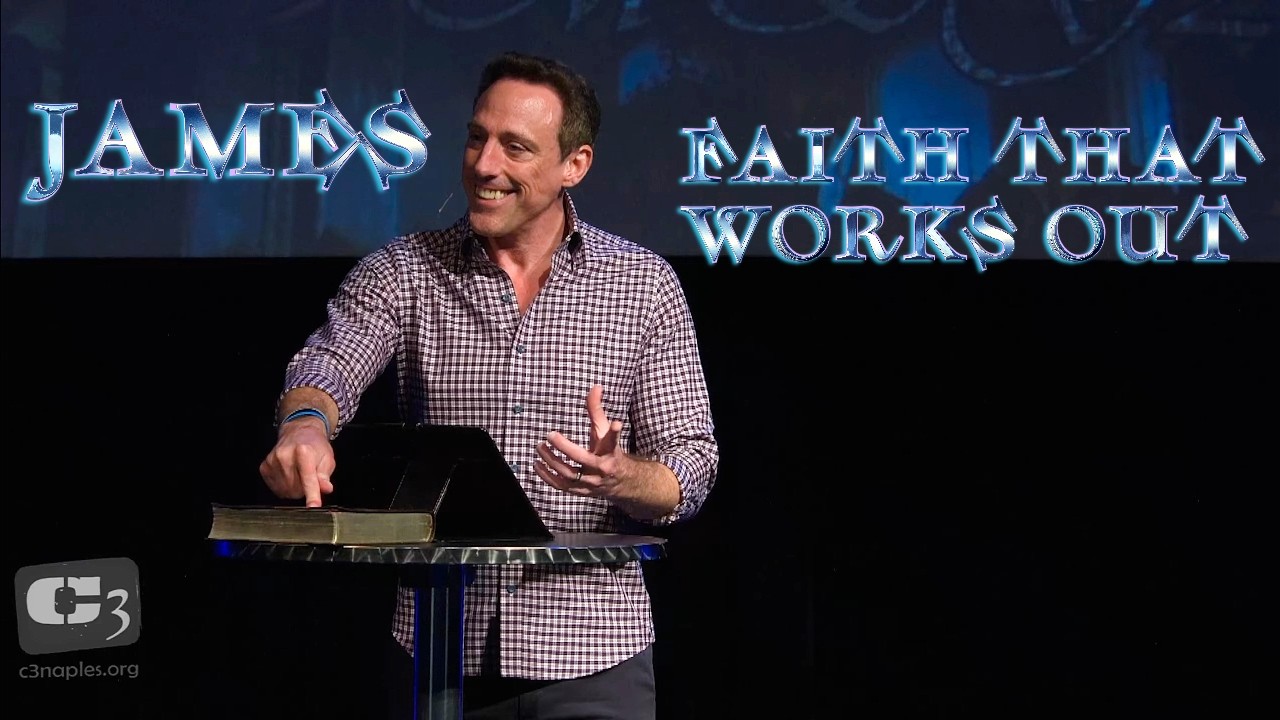
- James - Faith That Works Out
- Sermon by Gene Simco
- Reader’s Version
- From Theory to Action
- We just finished the book of Hebrews, where we established that Jesus is completely superior. A few weeks before that, we looked at Philemon, which gave us a window into a real home church dealing with real people, real tension, and real forgiveness. Paul did not deal in theory; he called for immediate action. Receive him, forgive him, and treat him like family.
- As we worked through that, we stepped directly into the teachings of Jesus, specifically the Sermon on the Mount. Jesus taught that true religion is not about surface-level faith; it is about total heart transformation.
- But here is the tension we face today. We absolutely love hearing the Sermon on the Mount until it is actually time to live it out! We love the teaching until it is time to do the work.
- That is exactly where the book of James comes in. James is what happens when someone hears Jesus teach and says, "Now actually go do it."
- Welcome to Leg Day
- If you spend any time in the gym, you know exactly what this book is. The book of James is leg day. It is nobody's favorite workout. Everybody tries to avoid it, but if you skip it, you stay incredibly weak!
- Before we get into the text, we need to know who is writing it. James is the half-brother of Jesus.
- Historical Insight: From Skeptic to Pillar It is incredible to realize that James did not actually believe in Jesus during His earthly ministry! John 7:5 tells us plainly, "For even his brothers didn’t believe in him." But after the resurrection, everything completely changed for James. He encountered the risen Christ and eventually became the primary leader of the church in Jerusalem, which was the "mother church" of early Christianity. He was not loud, and he was not flashy, but when he spoke, he carried immense weight.
- We have already seen James in action during our study of Acts 15. When the early church convened the Jerusalem Council, there was a massive debate. As I have mentioned before, there were Pharisees in the church who were trying to press the entire Law of Moses onto the new Gentile believers. There was massive tension in the room. But James stood up and brought absolute clarity. He made the final, deciding judgment.
- He didn't lower the standard of holiness, but he actively removed unnecessary religious burdens. That is important to understand, because when you read his letter, you see that exact same personality. James is not soft, and he is certainly not vague. He is calling for a faith that actually shows up and goes to work.
- The Scattered Church
- So who is he writing to? We find out in his opening greeting.
- James 1:1 (NLT):
- "This letter is from James, a slave of God and of the Lord Jesus Christ. I am writing to the 'twelve tribes'—Jewish believers scattered abroad. Greetings!"
- He is writing to Jewish believers who have been scattered under immense pressure. They already know the Scriptures. They have already heard the teachings of Jesus. Now, they have to actually live it out. James writes to them like a true pastor, essentially saying, "Do not just survive this pressure; I expect you to grow in it."
- Just as a reminder, the book of Hebrews ties into this perfectly. These were Jewish people who had become Christians, and because they were suffering intense persecution from their own people, they were tempted to turn back.
- If the Sermon on the Mount is the teaching, James is the training. If Jesus gave the blueprint, James gives the grueling workout. And the workout starts right here: your faith is not proven in times of comfort. It is revealed under pressure.
- Let's dive into Chapter One. Welcome to leg day.
- The Cost of a True Witness
- This should feel like review. We have already talked about this exact concept of trials, pressure, and the cost of being a witness. A true witness actually costs you something; it is not just a passive belief. It requires endurance, even under unjust authority, not taking matters into your own hands, and trusting God with the outcomes.
- James starts right there.
- James 1:2–4 (NLT):
- "Dear brothers and sisters, when troubles of any kind come your way, consider it an opportunity for great joy. For you know that when your faith is tested, your endurance has a chance to grow. So let it grow, for when your endurance is fully developed, you will be perfect and complete, needing nothing."
- Trials are not a punishment. As we have seen, especially when we looked at the concept of divine discipline in Hebrews 12, this is how God refines us. We have already seen this take shape in the early church.
- Greek Insight: The Meaning of Martyr Remember the definition of the word "martyr." In the original Greek, the word martys (μάρτυς) simply meant "witness." It was a legal term for someone who gives testimony to the truth. But in the early church, it quickly came to be synonymous with dying for the faith. Why? Because if you publicly witnessed as a Christian in the first century, there was a very good chance you were going to be killed for it. A witness that costs you something is a real witness. Faith that never gets tested never gets strong!
- Praying for Wisdom, Not Escape
- If you find yourself in the middle of these trials, James tells you exactly what to do.
- James 1:5 (NLT):
- "If you need wisdom, ask our generous God, and he will give it to you. He will not rebuke you for asking."
- Remember the preacher's massive frustration in Hebrews 5 and 6? He rebuked the church, essentially saying, "You should be teachers by now, but you are still acting like babies!" To the people who sit in church for years and keep making the excuse, "I just don't understand it yet," James gives the ultimate solution: pray for wisdom, and God will give it to you.
- Notice exactly how we are told to ask. We are not told to ask for comfort, and we are not told to ask for an escape. We are told to ask for wisdom. This should sound incredibly familiar. In the Sermon on the Mount, Jesus teaches us to pray, "Your will be done." We do not ask God to join our plan; we ask for the wisdom to align with His.
- James 1:6–8 (NLT):
- "But when you ask him, be sure that your faith is in God alone. Do not waver, for a person with divided loyalty is as unsettled as a wave of the sea that is blown and tossed by the wind. Such people should not expect to receive anything from the Lord. Their loyalty is divided between God and the world, and they are unstable in everything they do."
- Here is the ultimate contrast we see again and again: God's way versus the world's way. You cannot build your life on both. This is exactly where the prosperity mindset completely falls apart. You do not come to God asking Him to bless your version of worldly success. You come asking for His wisdom, even if it costs you everything.
- The Great Reversal
- Here, we are going to see a very stern contrast and another massive knock against the prosperity gospel.
- James 1:9–11 (NLT):
- "Believers who are poor have something to boast about, for God has honored them. And those who are rich should boast that God has humbled them. They will fade away like a little flower in the field. The hot sun rises and the grass withers; the little flower droops and falls, and its beauty fades away. In the same way, the rich will fade away with all of their achievements."
- If we are saying that James is the Sermon on the Mount in action, this is the exact same reversal that Jesus opens with in the Beatitudes. The world says that being rich equals being blessed. Jesus says, "Blessed are the poor."
- As a quick disclaimer, we are going to see when we get to chapter two that there were indeed wealthy people in the early church. It is okay to have nice things, but we are going to see that there is a much greater responsibility and danger that comes with them.
- Endurance vs. Temptation
- James 1:12 (NLT):
- "God blesses those who patiently endure testing and temptation. Afterward they will receive the crown of life that God has promised to those who love him."
- The call is endurance again. Not escape. Not avoidance. And if we connect this to the concept of wealth we just read about, we can absolutely view a lot of the wealth of the world as a temptation. Remember, the devil tempted Jesus in the wilderness with worldly blessings and kingdoms! We have to be incredibly careful.
- James 1:13–15 (NLT):
- "And remember, when you are being tempted, do not say, 'God is tempting me.' God is never tempted to do wrong, and he never tempts anyone else. Temptation comes from our own desires, which entice us and drag us away. These desires give birth to sinful actions. And when sin is allowed to grow, it gives birth to death."
- This perfectly echoes Romans 6, which tells us that the wages of sin is death.
- This is the other side of the coin: trials grow you, but temptations expose you. Remember our study in Hebrews regarding intentional sin? Our behavior exposes what is truly in our hearts. We looked at 1 John, and the logic was simple: if it quacks like a duck, it's a duck.
- This should also sound incredibly familiar. It echoes Jesus's prayer in the Sermon on the Mount: "Lead us not into temptation." You do not blame God for the sin that comes from within your own flesh. When we give in to temptation, it is a glaring sign that our loyalty is divided.
- The Thesis of the Sermon
- James 1:19–20 (NLT):
- "Understand this, my dear brothers and sisters: You must all be quick to listen, slow to speak, and slow to get angry. Human anger does not produce the righteousness God desires."
- This echoes Jesus in Matthew 5 during the Sermon on the Mount. Jesus taught that if you are even unjustly angry with someone, you are subject to the judgment of the fires of hell. This is huge! Your human anger does not accomplish God's will. You do not fix the world by losing control of your emotions. You leave justice to God, a principle we see repeated in places like Romans 12 and 1 Peter 2.
- James 1:22–25 (NLT):
- "But don’t just listen to God’s word. You must do what it says. Otherwise, you are only fooling yourselves. For if you listen to the word and don’t obey, it is like glancing at your face in a mirror. You see yourself, walk away, and forget what you look like. But if you look carefully into the perfect law that sets you free, and if you do what it says and don’t forget what you heard, then God will bless you for doing it."
- This is really the thesis statement of the entire book. This is the whole sermon right here. There is a clear biblical formula: if you do what it says, then God will bless you. We are called to not just be hearers, but doers. Hearing a sermon is not a sign of spiritual maturity. Obedience is.
- Pure Religion vs. Modern Clichés
- James 1:26–27 (NLT):
- "If you claim to be religious but don’t control your tongue, you are fooling yourself, and your religion is worthless. Pure and genuine religion in the sight of God the Father means caring for orphans and widows in their distress and refusing to let the world corrupt you."
- Notice what this immediately follows: doing good works. This gives us a perfect opportunity to fix something that modern Christianity gets completely wrong.
- Greek Insight: The True Meaning of Threskia (θρησκεία) When modern Christians hear the word religion, they often assume it means a dead, legalistic, works-based system. But the Greek word James uses here is threskeia (θρησκεία). In the first-century church, this was absolutely not a dirty word. Threskeia simply refers to the outward practice, the reverent worship, and the physical expression of a person's internal faith. It is the visible, tangible evidence of what you truly believe.
- The Apostle Paul actually uses this exact same word in a highly positive way over in Acts 26. While defending himself before King Agrippa, Paul proudly points to his devout upbringing, stating that he lived according to the strictest sect of our religion. He used the word threskeia as a badge of deep, serious devotion and structured reverence for God. James and Paul completely agree: religion is not the enemy of a relationship with God. When it is pure, genuine, and coupled with obedience, religion is the beautiful, physical expression of that relationship!
- Historical Insight: The "Relationship, Not Religion" Cliché A very common slogan in modern Protestant churches is: "Christianity isn't a religion; it's a relationship." People say it as if the two concepts are mutually exclusive. But the Bible never says that religion is bad! It says right here that pure and genuine religion is what God desires. So why do so many churches repeat this phrase? It is largely a historical overreaction. We must remember that Protestants are essentially reformed Catholics. During the Protestant Reformation, the reformers were pushing back hard against the corrupt, works-based systems and the selling of indulgences that had crept into the church. Over the centuries, that theological pushback grew into a catchy slogan that people regurgitate today without thinking. It falls easily on the ears of those who are not grounded in the Word of God. It is a half-truth. Yes, Christianity is absolutely about a relationship, but it is also about pure, obedient religion!
- As a disclaimer, the very first thing someone will retort with to defend that cliché is a quote from the Apostle Paul in Ephesians 2. People love to quote verses 8 and 9. But let's look at the whole context and include verse 10.
- Ephesians 2:8–10 (NLT):
- "God saved you by his grace when you believed. And you can’t take credit for this; it is a gift from God. Salvation is not a reward for the good things we have done, so none of us can boast about it. For we are God’s masterpiece. He has created us anew in Christ Jesus, so we can do the good things he planned for us long ago."
- Usually, this is the ultimate proof text for the "it's not about religion" crowd to fight against a works-based system. But look what happens when we just keep reading one more verse! It says right there that we were created anew in Christ Jesus for the very purpose of doing good works.
- We are not saved by works, but we are absolutely saved for them!
- Saved trees produce good fruit, and that fruit is good works. Anyone can simply say they believe. That is just signing up for the gym. James is asking the hard question: Are you actually showing up?
- Welcome to leg day.
- Favoritism in the Church
- James chapter two starts unpacking everything introduced in chapter one. He begins exactly where Jesus began in the Sermon on the Mount: "Blessed are the poor," and specifically addresses how we see people—the poor and the rich.
- James 2:1–4 (NLT):
- "My dear brothers and sisters, how can you claim to have faith in our glorious Lord Jesus Christ if you favor some people over others? For example, suppose someone comes into your meeting dressed in fancy clothes and expensive jewelry, and another comes in who is poor and dressed in shabby clothes. If you give special attention and a good seat to the rich person, but you say to the poor one, 'You can stand over there, or else sit on the floor'—well, doesn’t this discrimination show that your judgments are guided by evil motives?"
- Now remember, as I said before, there were rich people in the early church, but there is a massive responsibility that comes with wealth. James calls out favoritism not subtly, but directly. When someone wealthy walks in and someone poor walks in, and you treat them differently, you have already completely missed the point of the Gospel.
- This isn't about whether it is wrong to have nice things. It is not. The issue is favoritism—elevating status and giving weight to wealth and influence in a Kingdom where those things do not exist! At the foot of the cross, everyone stands on the exact same ground. We have to ask ourselves: do we still see this happening in the church today?
- The Royal Law
- James 2:5 (NLT):
- "Listen to me, dear brothers and sisters. Hasn’t God chosen the poor in this world to be rich in faith? Aren’t they the ones who will inherit the Kingdom he promised to those who love him?"
- This should sound incredibly familiar. God has consistently chosen exactly what the world overlooks: the poor in the world who are rich in faith. This echoes exactly how Jesus opened His teaching. The Kingdom of God simply does not operate on worldly value systems.
- James 2:8–9 (NLT):
- "Yes indeed, it is good when you obey the royal law as found in the Scriptures: 'Love your neighbor as yourself.' But if you favor some people over others, you are committing a sin. You are guilty of breaking the law."
- James calls it exactly what it is: sin. Favoritism isn't just a bad habit or a personality quirk; it is a direct violation of the Royal Law. Loving your neighbor as yourself means you do not get to love selectively.
- Faith Without Works is Dead
- Now James moves to the core issue, the central thesis he already introduced.
- James 2:14–17 (NLT):
- "What good is it, dear brothers and sisters, if you say you have faith but don’t show it by your actions? Can that kind of faith save anyone? Suppose you see a brother or sister who has no food or clothing, and you say, 'Good-bye and have a good day; stay warm and eat well'—but then you don’t give that person any food or clothing. What good does that do? So you see, faith by itself isn’t enough. Unless it produces good deeds, it is dead and useless."
- Remember last week when we talked about the people in Hebrews 6 who "tasted" the heavenly gift but fell away? They claimed to have faith, but it was a half-in faith that was not a saving faith. Remember when I told you about Heather's first baptism? She wasn't all in. That kind of faith isn't a saving faith.
- James puts it bluntly right here. Faith that doesn't move isn't faith. It is just talk. You can say all the right things and claim to believe all the right doctrines, but if it never actually shows up in how you live, James says your faith is dead. He doesn't say it is weak or immature; he says it is completely dead.
- Even the Demons Believe
- Then he pushes the envelope even further.
- James 2:18–20 (NLT):
- "Now someone may argue, 'Some people have faith; others have good deeds.' But I say, 'How can you show me your faith if you don’t have good deeds? I will show you my faith by my good deeds.' You say you have faith, for you believe that there is one God. Good for you! Even the demons believe this, and they tremble in terror. How foolish! Can’t you see that faith without good deeds is useless?"
- Real faith is visible. It actually does something. It produces something tangible. Mere belief by itself is not enough to save you. James points out a terrifying reality: even the demons believe in God! The massive difference between a demon's belief and a Christian's faith is obedience.
- He goes on to give examples of this, pointing back to heroes like Abraham and Rahab—very similar to the Hall of Faith we just studied in Hebrews 11—to prove that true faith always results in action.
- Theological Insight: Paul Versus James (Root and Fruit) Let's deal with the theological tension that everyone notices. James says that faith without works is dead. But the Apostle Paul says in Ephesians and Romans that we are saved by grace through faith, not by works. Paul even uses Abraham as an example in the exact opposite way that James does! So, which one is it? Are they contradicting each other?
- Absolutely not. Paul and James are simply describing two sides of the exact same coin. Paul is talking about the root of salvation. James is talking about the fruit of salvation. Paul is saying that your works do not save you. James is saying that saved people do works!
- There is no contradiction here; there is completion. Paul is dealing with legalistic people who are trying to earn their salvation. James is dealing with lazy people who are claiming salvation without any evidence. Paul says you cannot work your way in. James says, if you are truly in, it will show!
- Here is the piercing question that James forces us to answer: Is your faith alive enough to move, or is it just loud enough to talk?
- Taming the Tongue
- In chapter three, James is still unpacking the core themes he introduced in chapter one. He zeroes in on two massive issues: the tongue and wisdom. Both of these tie directly back to his opening command to ask God for wisdom.
- James 3:1–6 (NLT):
- "Dear brothers and sisters, not many of you should become teachers in the church, for we who teach will be judged more strictly. Indeed, we all make many mistakes. For if we could control our tongues, we would be perfect and could also control ourselves in every other way. We can make a large horse go wherever we want by means of a small bit in its mouth. And a small rudder makes a huge ship turn wherever the pilot chooses to go, even though the winds are strong. In the same way, the tongue is a small thing that makes grand speeches. But a tiny spark can set a great forest on fire. And among all the parts of the body, the tongue is a flame of fire. It is a whole world of wickedness, corrupting your entire body. It can set your whole life on fire, for it is set on fire by hell itself."
- We have seen this before. Teachers will be judged more strictly. Remember the pastoral requirements we studied in 1 Timothy 3 and Titus? It was all about character. Some people try to soften this verse by saying it just means other people will judge teachers more harshly. But if we look at the context, James is talking about the fires of hell! There is a definitively heavier responsibility and a stricter judgment from God when it comes to those who stand up to teach the Word.
- The tongue is small, but it is incredibly powerful. It directs, it destroys, and it exposes. You do not need to give someone a theology test to know where they are spiritually; just listen to them! What comes out of your mouth reveals exactly what is going on in your heart.
- Theological Insight: The Mouth and the Heart James is directly echoing the teachings of his half-brother, Jesus. In Matthew 15:18, Jesus taught, "But the words you speak come from the heart—that’s what defiles you." The tongue is simply a scoop that dips into the bucket of the heart. You cannot have a bitter, destructive tongue and a pure, Spirit-filled heart. James makes it clear that the tongue is the ultimate spiritual diagnostic tool.
- The Ultimate Inconsistency
- James 3:9–10 (NLT):
- "Sometimes it praises our Lord and Father, and sometimes it curses those who have been made in the image of God. And so blessing and cursing come pouring out of the same mouth. Surely, my brothers and sisters, this is not right!"
- This is the ultimate inconsistency: praising God and tearing people down with the exact same mouth. James says this simply should not exist in the life of a believer.
- Earthly Wisdom vs. Heavenly Wisdom
- James 3:13–16 (NLT):
- "If you are wise and understand God’s ways, prove it by living an honorable life, doing good works with the humility that comes from wisdom. But if you are bitterly jealous and there is selfish ambition in your heart, don’t cover up the truth with boasting and lying. For jealousy and selfishness are not God’s kind of wisdom. Such things are earthly, unspiritual, and demonic. For wherever there is jealousy and selfish ambition, there you will find disorder and evil of every kind."
- Remember our study in Galatians 5? Jealousy and selfish ambition are sins of the flesh, and they are incredibly serious. James shifts the focus back to wisdom here, making it clear that true wisdom is not about what you know; it is about how you live.
- There is a kind of counterfeit, earthly wisdom that is driven entirely by jealousy and selfish ambition. It is loud, it is divisive, and it is destructive. That is not from God.
- James 3:17 (NLT):
- "But the wisdom from above is first of all pure. It is also peace loving, gentle at all times, and willing to yield to others. It is full of mercy and the fruit of good deeds. It shows no favoritism and is always sincere."
- This is the true wisdom from above! This is exactly what we were told to ask for back in chapter one. It shows up completely differently. It is pure, peace-loving, gentle, willing to yield, full of mercy, and produces good fruit. It shows no favoritism and is always sincere. If the earthly wisdom sounded like the sins of the flesh, this heavenly wisdom sounds exactly like the other half of Galatians 5: the fruit of the Spirit!
- Sowing Seeds of Peace
- James 3:18 (NLT):
- "And those who are peacemakers will plant seeds of peace and reap a harvest of righteousness."
- If your words are destructive and your life is consistently divisive, you are not operating in the wisdom from above. Real wisdom shows up in how you speak and whether you bring peace or leave a trail of damage behind.
- The World Versus the Word
- Moving into James chapter four, we see this contrast more heavily: the Word versus the world. James is still unpacking the exact same thread of God's way versus the world's way. And here, he gets incredibly direct.
- James 4:4 (NLT):
- "You adulterers! Don’t you realize that friendship with the world makes you an enemy of God? I say it again: If you want to be a friend of the world, you make yourself an enemy of God."
- This is incredibly strong language. It is actually even stronger in the original language.
- Greek & Old Testament Insight: Spiritual Adultery While modern translations often say "You adulterers," the specific Greek word James uses here is moichalides (μοιχαλίδες), which strictly translates to feminine "adulteresses." Why would James use the feminine form? He is pulling directly from the deep imagery of the Old Testament prophets! In the Old Testament, God constantly referred to Israel as His bride. Whenever the Israelites chased after foreign idols or the culture of the surrounding nations, the prophets accused them of committing spiritual adultery against their Husband. James is telling the church: you are the bride of Christ! When you flirt with the world's value system, you are cheating on God. There is no middle ground.
- Friendship with the world is outright hostility to God. You cannot blend the two. You are either going to be shaped by the Word, or you are going to be pulled by the world.
- James 4:6–8 (NLT):
- "And he gives grace generously. As the Scriptures say, 'God opposes the proud but gives grace to the humble.' So humble yourselves before God. Resist the devil, and he will flee from you. Come close to God, and God will come close to you. Wash your hands, you sinners; purify your hearts, for your loyalty is divided between God and the world."
- So what is the required response? Humility. Submit to God. Resist the devil, which means actively fighting temptation. Draw near to God. This is not a call for a self-improvement project; it is a call for total surrender.
- The Hypocrisy of Playing Judge
- Now he moves into something that sounds very familiar.
- James 4:11–12 (NLT):
- "Don’t speak evil against each other, dear brothers and sisters. If you criticize and judge each other, then you are criticizing and judging God’s law. But your job is to obey the law, not to judge whether it applies to you. God alone, who gave the law, is the Judge. He alone has the power to save or to destroy. So what right do you have to judge your neighbor?"
- Do not speak against one another, and do not put yourself in the seat of the Judge. This perfectly echoes Matthew 7, where Jesus talks about the log and the speck. The issue here isn't just basic discernment; the issue is hypocrisy. We do not get to play Judge over people while ignoring our own spiritual condition. You have to take the log out of your own eye first!
- Now, that doesn't mean there is absolutely no judgment within the church at all. Scripture is clear that we must judge a tree by its fruit. The Apostle Paul even specifically commands the church to judge the unrepentant actions of those inside the body in 1 Corinthians 5. But that is a heavy spiritual responsibility. It is best handled by church leadership and structured accountability, not by rogue individuals running around playing God.
- The Arrogance of Tomorrow
- Then James shifts his crosshairs again, this time aiming at arrogance.
- James 4:13–16 (NLT):
- "Look here, you who say, 'Today or tomorrow we are going to a certain town and will stay there a year. We will do business there and make a profit.' How do you know what your life will be like tomorrow? Your life is like the morning fog—it’s here a little while, then it’s gone. What you ought to say is, 'If the Lord wants us to, we will live and do this or that.' Otherwise you are boasting about your own pretentious plans, and all such boasting is evil."
- This is self-confidence completely without God. It is planning, building, and controlling your life like you actually own tomorrow. James calls it exactly what it is: arrogance.
- This goes right back to the prayer of Jesus we saw earlier: not my will be done, but Your will be done. You cannot follow God and be driven by the ambition of the world at the same time. You cannot correct others while ignoring your own sin. And you do not control life; you submit it to God. Faith that works walks in humility, never in arrogance.
- The Corroded Treasure
- As we enter our final chapter, James talks about endurance, accountability, and crossing the finish line. Keep in mind, there were no chapter breaks in the original letter. This is the exact same thought process carried forward from chapter four.
- James 5:1–6 (NLT):
- "Look here, you rich people: Weep and groan with anguish because of all the terrible troubles ahead of you. Your wealth is rotting away, and your fine clothes are moth-eaten rags. Your gold and silver are corroded. The very wealth you were counting on will eat away your flesh like fire. This corroded treasure you have hoarded will testify against you on the day of judgment. For listen! Hear the cries of the field workers whom you have cheated of their pay. The cries of those who harvest your fields have reached the ears of the LORD of Heaven’s Armies. You have spent your years on earth in luxury, satisfying your every desire. You have fattened yourselves for the day of slaughter. You have condemned and killed innocent people, who do not resist you."
- These are terrifying warnings to the rich. But notice that the warning is not because money itself is evil; the warning is because control, comfort, and oppression are evil. Remember, it is okay to have nice things, but are you being generous with them? With great wealth comes great responsibility!
- This ties right back to what he just said about living like you own tomorrow. Storing up, hoarding, and using people for profit is a worldly system. James flips it completely: everything you trust in apart from God is actually going to testify against you on the Day of Judgment. This is a severe warning to anyone trying to build ultimate security apart from God.
- The Finish Line of Faith
- James 5:7–11 (NLT):
- "Dear brothers and sisters, be patient as you wait for the Lord’s return. Consider the farmers who patiently wait for the rains in the fall and in the spring. They eagerly look for the valuable harvest to ripen. You, too, must be patient. Take courage, for the coming of the Lord is near. Don’t grumble about each other, brothers and sisters, or you will be judged. For look—the Judge is standing at the door! For examples of patience in suffering, dear brothers and sisters, look at the prophets who spoke in the name of the Lord. We give great honor to those who endure under suffering. For instance, you know about Job, a man of great endurance. You can see how the Lord was kind to him at the end, for the Lord is full of tenderness and mercy."
- He shifts to endurance one final time. Be patient. Stand firm. The Lord is coming!
- This is where we tie everything back to what we have already talked about regarding suffering, pressure, and even martyrdom. The key to the Christian life is not finding an escape hatch; it is endurance. If you keep your eyes fixed forward, you can endure absolutely anything, because you know exactly how the story ends. The physical return of Jesus Christ reframes everything!
- As he wraps up the letter, he echoes even more of the Sermon on the Mount, telling the church to let their yes be yes and their no be no. He talks about suffering hardships, the powerful prayer of a righteous man, and the critical need for community confession.
- Remember our focus on the home church, accountability, and family. This is how faith finishes strong! It does not finish in isolation, it does not finish in control, and it does not finish in comfort. It finishes in endurance, humility, and a community of believers helping each other stay on the narrow path until Jesus returns.
- Welcome to Leg Day
- In this section of our series, we started with Philemon, which showed us a faith that forgives. We walked through the Sermon on the Mount, which showed us a faith that transforms. And now James brings it all home with a faith that works.
- It is not just talk. It is not just theory. It is not just good intentions. It is action. Anybody can say they believe. But James asks the ultimate question: does your life actually show it?
- This is leg day. It is uncomfortable, it is costly, but it is absolutely necessary. Because real faith does not sit still. Real faith endures, it obeys, and in the end, it finishes strong.
- Alpha and Omega Fulfillments: Faith Proven Through Action
- In James, we continue to see profound Alpha and Omega fulfillments where the Old Testament substance perfectly anchors the New Testament reality. James repeatedly reaches back into history to prove that faith has always required action.
- Abraham: Obedience Under Pressure
- Genesis 22:9–12 (NLT):
- "When they arrived at the place where God had told him to go, Abraham built an altar and arranged the wood on it. Then he tied his son, Isaac, and laid him on the altar on top of the wood. And Abraham picked up the knife to kill his son as a sacrifice. At that moment the angel of the LORD called to him from heaven, 'Abraham! Abraham!' 'Yes,' Abraham replied. 'Here I am!' 'Don’t lay a hand on the boy!' the angel said. 'Do not hurt him in any way, for now I know that you truly fear God. You have not withheld from me even your son, your only son.'"
- Genesis 15:6 (NLT):
- "And Abram believed the LORD, and the LORD counted him as righteous because of his faith."
- James 2:21–24 (NLT):
- "Don’t you remember that our ancestor Abraham was shown to be right with God by his actions when he offered his son Isaac on the altar? You see, his faith and his actions worked together. His actions made his faith complete. And so it happened just as the Scriptures say: 'Abraham believed God, and God counted him as righteous because of his faith.' He was even called the friend of God. So you see, we are shown to be right with God by what we do, not by faith alone."
- Abraham places Isaac on the altar. It is the definitive moment of action, not just belief. This is obedience under extreme pressure. This is faith moving, not just agreeing.
- Abraham is justified by what he does; his faith is completed by action. It is not replaced by action, but completed. What he believed internally showed up externally in what he did. This was never about Abraham earning anything; it was about proving everything. The exact same faith that trusted God showed up in his hands and feet.
- James is not adding to faith. He is exposing true faith. Real faith moves. If it never moves, it was never alive.
- The Poor and the Kingdom
- Isaiah 66:2 (NLT):
- "'My hands have made both heaven and earth; they and everything in them are mine. I, the LORD, have spoken! I will bless those who have humble and contrite hearts, who tremble at my word.'"
- James 2:5 (NLT):
- "Listen to me, dear brothers and sisters. Hasn’t God chosen the poor in this world to be rich in faith? Aren’t they the ones who will inherit the Kingdom he promised to those who love him?"
- God has always looked to the humble, the lowly, and the ones who tremble at His Word—not the powerful and not the impressive. God has chosen those who are poor in the world to be rich in faith and heirs of the Kingdom.
- The value system hasn't changed from the beginning. God has never operated on the world's system. The Kingdom of God does not run on wealth, influence, or status. It runs on humility and faith. James isn't introducing something new here; he is simply reinforcing what God has always valued. Favoritism reveals a heart that still thinks like the world.
- The Word Reveals the Heart
- Proverbs 18:21 (NLT):
- "The tongue can bring death or life; those who love to talk will reap the consequences."
- James 3:9–10 (NLT):
- "Sometimes it praises our Lord and Father, and sometimes it curses those who have been made in the image of God. And so blessing and cursing come pouring out of the same mouth. Surely, my brothers and sisters, this is not right!"
- Life and death are literally in the power of the tongue. Words are never neutral. They create outcomes.
- With the exact same mouth, we bless God and then turn around and curse people made in His image. This contradiction exposes the true condition of the heart. The Old Testament warned us about this power, and James shows us the daily reality. Your words are not accidental; they are diagnostic. They reveal exactly what is inside of you.
- A transformed heart produces transformed speech. If the mouth is destructive, it is because something deeper has not yet surrendered.
- Endurance to the End
- Job 1:21–22 (NLT):
- "He said, 'I came naked from my mother’s womb, and I will be naked when I leave. The LORD gave me what I had, and the LORD has taken it away. Praise the name of the LORD!' In all of this, Job did not sin by blaming God."
- Job 19:25–27 (NLT):
- "But as for me, I know that my Redeemer lives, and he will stand upon the earth at last. And after my body has decayed, yet in my body I will see God! I will see him for myself. Yes, I will see him with my own eyes. I am overwhelmed at the thought!"
- James 5:7–8, 10–11 (NLT):
- "Dear brothers and sisters, be patient as you wait for the Lord’s return. Consider the farmers who patiently wait for the rains in the fall and in the spring. They eagerly look for the valuable harvest to ripen. You, too, must be patient. Take courage, for the coming of the Lord is near... For examples of patience in suffering, dear brothers and sisters, look at the prophets who spoke in the name of the Lord. We give great honor to those who endure under suffering. For instance, you know about Job, a man of great endurance. You can see how the Lord was kind to him at the end, for the Lord is full of tenderness and mercy."
- Job loses absolutely everything and still chooses to worship. He models suffering without abandoning faith, and endurance without an explanation.
- James tells us to consider the prophets and Job. You see the Lord's ultimate purpose, His compassion, and His mercy through endurance. Endurance has always been the mark of real faith. The goal is not avoiding suffering; the goal is remaining faithful in the middle of it.
- James points back to Job to remind us of a critical truth: God is not absent in your suffering. He is actively working through it. And the ultimate anchor for this endurance is the knowledge that the Lord is coming. The finish line changes how you run the race.
- No Room for Comfort
- James simply does not leave any room for comfortable Christianity. This entire letter is not about what theological concepts you agree with; it is about what actually shows up in your daily life. If your faith never costs you anything, never changes anything, and never produces anything, James would say it is time to seriously examine it. He is not saying this to condemn you, but to wake you up!
- This hits every single area we just walked through: how you handle intense pressure, what you ask God for, how you view people, what comes out of your mouth, how you respond to temptation, and whether you actually act on the sermons you hear.
- This is not about perfection. It is about direction. Real faith always moves toward obedience.
- Genuine Religion Versus Hypocrisy
- James confronts us with a piercing question: is our religion genuine?
- Theological Insight: Jesus and Religion Many people today claim that Jesus hated religion. But Jesus never actually said that religion was bad, and He never criticized people for being religious. In fact, as a Torah-observant Jew, Jesus Himself was deeply religious! What He fiercely criticized were hypocrites—people who claimed to be religious but whose hearts were far from God. The problem has never been religion itself; the problem is practicing religion merely for the applause of men while remaining corrupted by the world.
- Remember the warnings we saw in Matthew 6 a few weeks ago? Jesus called out the toxic cycle of giving, praying, and fasting strictly for show. He warned that if you do things to be seen by men, you completely lose your reward in heaven. That was the pattern of the religious elite.
- Matthew 23:1–5a (NLT with Greek Corrections):
- Then Jesus said to the crowds and to his disciples, 2 “The teachers of religious law [scribes] and the Pharisees are the official interpreters of the law of Moses. 3 So practice and obey whatever they tell you, but don’t follow their example. For they don’t practice what they teach. 4 They crush people with unbearable religious demands [And they tie up heavy burdens and put them on people’s shoulders] and never lift a finger to ease the burden.
- 5 “Everything they do is for show.
- James 1:27 (NLT):
- "Pure and genuine religion in the sight of God the Father means caring for orphans and widows in their distress and refusing to let the world corrupt you."
- Note: The Greek text does not use the word “religious” here. This is an indication of how the text in modern translations can sometimes (perhaps) be influenced by Church culture.
- The real problem is letting the world corrupt you. It is acting like the world, needing to be seen, and taking pride in our worldly achievements.
- Divided Loyalty
- James 1:6–8 (NLT):
- "But when you ask him, be sure that your faith is in God alone. Do not waver, for a person with divided loyalty is as unsettled as a wave of the sea that is blown and tossed by the wind. Such people should not expect to receive anything from the Lord. Their loyalty is divided between God and the world, and they are unstable in everything they do."
- Is our loyalty divided? We have to look at 1 John again, just like we did last week, to see what the world actually offers.
- 1 John 2:16 (NLT):
- "For the world offers only a craving for physical pleasure, a craving for everything we see, and pride in our achievements and possessions. These are not from the Father, but are from this world."
- A divided loyalty happens when we chase these exact things or rest our security in them. This is exactly what makes the prosperity gospel so incredibly dangerous! It actively encourages a craving for physical pleasure, a craving for everything we can see, and a deep pride in our achievements and possessions.
- But true faith operates entirely differently.
- Hebrews 11:1 (NLT):
- "Faith shows the reality of what we hope for; it is the evidence of things we cannot see."
- When James tells us that faith without works is dead, we must ask ourselves: is our faith genuine, or is it dead?
- Giving Your Faith Legs
- This is where our faith must grow legs in selfless obedience. Here are some practical steps to give your faith legs this week.
- Identify one specific area where you have only been hearing the Word and not doing it. Do not generalize this; be highly specific. Where are you incredibly informed, but completely disobedient? Start right there this week. Take one command and take one step.
- We must also engage in self-examination. Do not judge others; judge yourself. Instead of holding up a picket sign at the world, hold up a mirror to your own heart.
- Examine your tongue. Are you guilty of gossiping and judging others? Are you engaging in foul or abusive language?
- Examine your generosity. There are severe warnings to the rich in this letter. Wealth is relative, and just because you think you don't have a lot does not excuse you from being charitable. Remember the widow with the two coins in Mark 12.
- Examine your church for favoritism. Do we see churches doing exactly what James warned against? Are we giving priority seating or special access to people simply because they are wealthy or influential? Are we ignoring those who are poor or who seem to have less worldly value?
- Examine your control. Are you trying to control every outcome in your life? Do you feel that your wealth actually gives you the power to control tomorrow? James warns that this mindset is spiritual adultery. We may need to totally reorder our prayer life. Before asking God to change your situation, ask Him to change you. Pray, "Your will be done," before you pray, "Fix this." Ask for wisdom, not comfort.
- Examine your temptations. What worldly influences do you need to cut off? Money is an obvious temptation, but James warns about being corrupted by the world in every way. Identify one area right now. What are you watching? What are you chasing? What are you taking pride in? Put up some strict boundaries on it this week.
- Practice Real Religion
- Finally, practice real religion. Do something tangible. Serve someone in desperate need, and give without any recognition. Step into someone's heavy burden instead of just talking about it.
- And speaking of talking about it, do not do it for show! Remember the cycle of warnings Jesus gave in Matthew 6. Do it without being seen. Do not post it on the internet. Do not take a selfie while you are doing it. Do not patronize the person you are helping. Just serve them.
- You do not need perfect faith. You just need real faith. You need the kind of faith that actually shows up, the kind that keeps going, and the kind that trusts God enough to simply obey.
- And here is the incredibly good news: you are not doing this alone. God is not watching you struggle from a distance. He is actively working in you, shaping you, strengthening you, and faithfully finishing what He started.
- So do not skip this. Lean into it. This is exactly where your faith gets strong.
- This is faith that works out.
- ________________________________________
- ©️Copyright 2026 Gene Simco Most Scripture quotations are taken from the Holy Bible, New Living Translation, copyright ©1996, 2004, 2015 by Tyndale House Foundation. Used by permission of Tyndale House Publishers, Carol Stream, Illinois 60188. All rights reserved. Scriptures in brackets reflect the original Biblical languages.