Wycliffe Bible Translators - Chronos to Kairos: Join Where God Is Working with Keith Patman
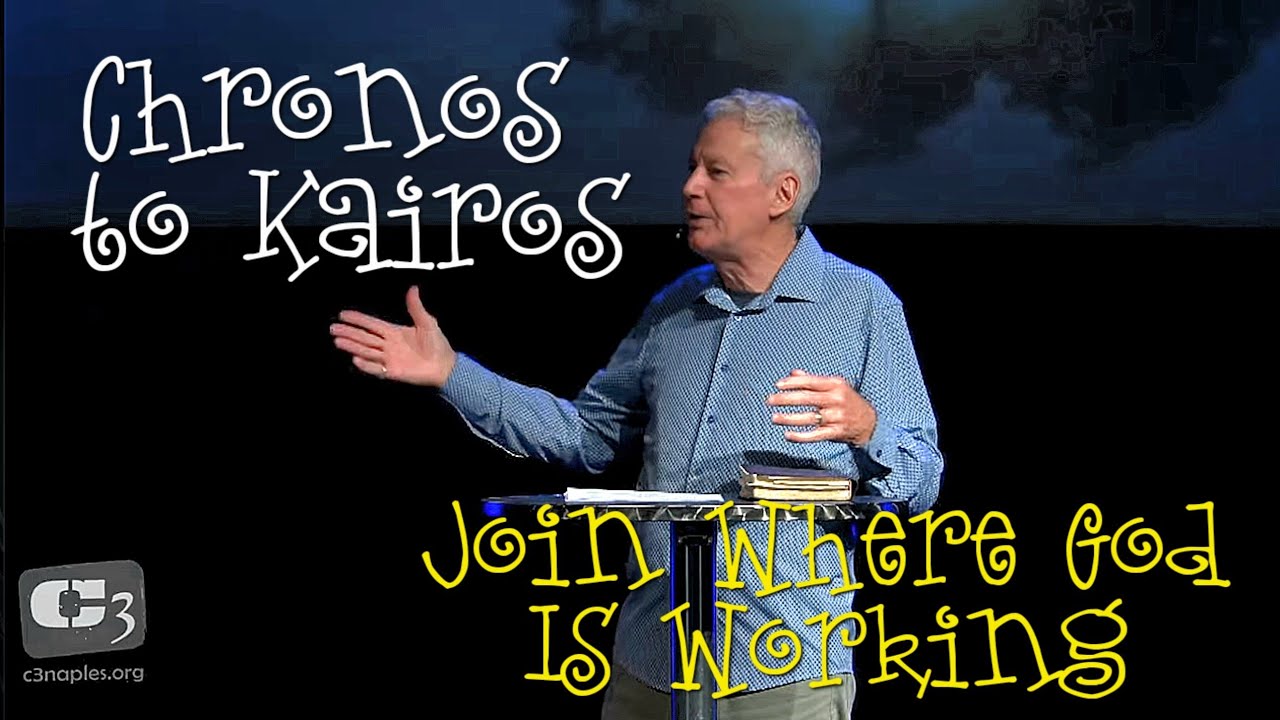
Guest speaker Keith Patton from Wycliffe Bible Translators shows how Jesus rebuked religious people for missing God's moment while obsessing over worldly details. Discover the life-changing difference between chronos (clock time) and kairos (God’s decisive season) — and how you can join where God is already working today. Be inspired by real stories of Bible translation miracles and answered prayer decades in the making. Now is the time to redeem the days!
Video can’t be displayed
Reader's Version
Signs of the Times & God’s Timetable: Joining the MissionSermon by Keith PatmanReader’s Version
Ed Anderson: Good morning! If you’re new here, welcome — we’re glad to have you and we’re glad to see you. Pastor Gene, Heather, and Sophie are on vacation, so let’s make sure we’re praying for safe travel — that they get lots of good rest and that they come back refreshed, renewed, and ready to continue leading us. I heard a story: a man robbed a bank, but he didn’t speak the local language where he robbed the bank. A few days later, the police caught him, but they realized they were having trouble communicating with him. So, they brought in a translator.The police said to the translator, “Ask him where he hid the money.”The translator turned to the man and said, “Where’d you hide the money?”The bank robber said, “I’ll never tell.”The translator told the police, “He’ll never tell.”The police said, “Tell him again — ask him again: where’d he hide the money?”The translator turned back, “Where’d you hide the money?”The robber said again, “I’ll never tell.”This went on hour after hour after hour — until finally the police got frustrated and said to the translator, “Tell the bank robber we’re going to start torturing him. It’s not going to be good.”The translator turned to the bank robber and said, “They’re really serious — they’re going to torture you; they may even kill you.”The bank robber said, “Okay, okay! I hid the money in the park — third trash can on the left.” The translator turned to the police and said, “He’s not afraid to die.” So, sometimes you need an honest and accurate translator! Which brings me to our guest today. First of all, let me introduce the Patmans — Keith and Jackie Patman — who are sitting here in front of you. Besides being long-term friends, they are truly a brother and sister in Christ. Keith works for Wycliffe Bible Translators, and he’s going to tell you today about what Wycliffe does and what Keith himself does. I hope you find it as interesting and fascinating as I do.So please join me in welcoming Keith Patman from Wycliffe Bible Translators! Keith Patman: “Thanks, Ed. Thank you all — it’s good to be with you today.I guess what we need to take away from that story is: if you’re going to rob a bank, be sure you understand the local language! It’s very important.So — my wife Jackie and I lived here in Naples for six years. We came here in 2015 when she was called to a position as associate pastor at Moorings Presbyterian Church. We have since moved up closer to where the kids and grandkids are in the Washington, D.C. area, which is where I’m from — and where I met Ed, many, many years ago. We’re now living up in Winchester, Northern Virginia, but it’s always fun to come back here to Naples and remember the good things we enjoyed here.My family and I lived in Cameroon, in West Central Africa, for a number of years, working directly with a particular people group — and I’ll talk a little bit more about that later on. I worked with a group of translators in the Nugunu language. [Note to reader: Insert slide here] — That’s most of the translation team at the wonderful moment when we dedicated their New Testament in 2017. That was great work. Since then, I’ve gone on — as a number of my colleagues have, who have worked in other African languages — to write notes for translators, to help them as they do their job. People translating into their own mother tongue — which is absolutely the best way to do it, because they are the experts in speaking their own language — can still use some outside help in understanding the source text in Greek or Hebrew. Or, in the case of many who don’t work directly from the original languages — for instance, the Nugunu team and many others I’ve worked with in Central and West Africa — they use French versions of the Bible as their source text, because the language of wider communication in those countries is French. So, writing notes for them... [Slide switch] I’m with a team that writes these notes. We’re trying to make a set for every book of the Bible — to give good advice to translators as they translate into their own language, helping them understand the meaning of the original text, helping them grapple with figurative language that might not transfer directly, different idioms, and so on. It’s about helping them make good translation decisions as they serve their people.We were also involved in Cameroon in community development and literacy work — paving the way for people to be able to use the Scriptures in their own language once they were available. Those were good years. [Slide switch] Since 1997, I’ve been based here in the States, working with this international team. We mostly communicate electronically with each other as we prepare those helps for mother tongue Bible translators. That’s the front end of the work — giving them the tools they need to do a good job in their translation. Then at the back end, as they complete each book of the Bible, it doesn’t go to publication without first being checked with a translation consultant. I get to work with these teams as they complete books of the Bible, checking for accuracy and clarity, and making sure they communicate correctly in the languages — so that they can then be published and used by their people.Those are the main parts of my work these days, and I want to share a little bit more about that towards the end. But first, let’s see what God’s Word has for us this morning. We are privileged to have His Word in the language that we understand best — what we call the heart language. I’d like to share a few thoughts from that this morning. Let’s just take a moment to pray before we do that:‘Lord, we thank you that you’ve gathered us here this morning in Your name. We thank You for the privilege of having Your Word in the language that we understand, and we thank You that Your Holy Spirit gives us understanding. We pray that You will help each of us open our hearts to what You have to say to us through Your Word today, and that You’ll help us to see how we can live that out in ways that please You. We ask this in Jesus’ name. Amen.’ I was working on the translation guide for Matthew’s Gospel recently, and I was struck — as I have been struck in the past — by a particular little phrase at the beginning of chapter 16. Let’s bring that up.[Slide note: There may be a slide of the French version.] Oh — did we skip a slide? Oh, no — I’m sorry, that’s just — up on the screen there:When evening comes, you say, “It will be fair weather, for the sky is red,” and in the morning, “Today it will be stormy, for the sky is red and overcast.” You know how to interpret the appearance of the sky, but you cannot interpret the signs of the times. This is Jesus speaking to the Pharisees, who had just asked Him to show them a miraculous sign — a sign from heaven. And Jesus rebukes them with this statement. It’s a very intriguing little phrase: the signs of the times. That whole idea of interpreting the signs of the times — why couldn’t the Pharisees do that? Why did Jesus hold them accountable for that and rebuke them for not being able to do it? There’s a similar passage in the book of Luke — a totally different occasion — but Jesus used a very similar way of speaking to a huge crowd that had gathered to listen to Him. We don’t have that one up on the screen, but in Luke 12:54–56, Jesus says to this large crowd:“When you see a cloud rising in the west, immediately you say, ‘It’s going to rain,’ and it does. And when the south wind blows, you say, ‘It’s going to be hot,’ and it is. Hypocrites! You know how to interpret the appearance of the earth and the sky. How is it that you don’t know how to interpret this present time?”That seems a little harsh — that Jesus just calls them hypocrites, this crowd of thousands of people. But He does. So what did they do wrong that He would be that blunt with them? If we go back to the top of that chapter — Luke chapter 12, verse 1 — it says:Meanwhile, when a crowd of many thousands had gathered, so that they were trampling on one another, Jesus began to speak first to His disciples, saying, “Be on your guard against the yeast of the Pharisees, which is hypocrisy.” And through the next fifty-some verses, He gives the whole crowd all these warnings about being careful not to be hypocrites. So, I think what He’s saying there is: if you profess to be following God, but your whole focus is on the things of this life only — that’s a kind of hypocrisy. You’re fooling yourself, or you’re trying to fool others. The Greek word for hypocrite — coincidentally enough — is ὑποκριτής (hypokritēs) [pronounced hee-poh-kree-TESS]. It originated in the Greek theater, where it described someone wearing a mask — someone putting on an appearance. Not to deceive others maliciously, but to take on a role, playing someone they really are not. As I’ve worked with different teams in Africa, the word hypocrite comes up in translation, and they have some interesting ways of expressing that meaning. I worked with a team in Cameroon whose word for hypocrite was literally “to walk like a parrot.” If you’ve ever seen an African gray parrot — they’ll walk along a branch like this, and you never quite know which way they want to go. So that language uses it as a figurative way of describing hypocrisy — you can’t tell where this person really stands. Another group I worked with — I asked, “What does that word in your language mean when you translate hypocrite in the Bible?” They said, “Oh, it’s our word for politician.” That tells you something, right? As we think about that, and as we think about Jesus’ warning about being able to understand and interpret the meaning of the signs of the times — what did that mean for the Pharisees of His day? And what does that mean for Jesus’ own disciples, including ourselves? Let’s think a little bit about that. There are two aspects — or actually two different Greek words — for “time.”[Slide note: Thank you — you’re right on cue. Thanks, Robert.] They are Chronos and Kairos. You’ve probably heard these words before and maybe already know exactly what they mean, but let’s just go down and look at their different characteristics. Chronos (χρόνος — KHRON-os):This is a way of talking about linear time — this event, then this event, then this event. It’s sequential. Chronos time is progressive. In Scripture, it’s the historical unfolding of events: one thing happens after another, in order. Kairos (καιρός — kai-ROSS):In contrast, Kairos is about occasion — it’s concerned with significant moments or seasons, particular events ordained by God for a special purpose.Chronos calls us to be aware of events, challenges, and changing situations that happen in history — the news, for example: today’s headlines develop out of yesterday’s stories. That’s Chronos — the timeline keeps moving. Kairos, on the other hand, calls us to be aware of the opportunities those events present — the windows God opens in the middle of the timeline for something significant to happen. Here’s an example: [Slide flip] — Matthew 16:3. I’ve kind of divided it into two parts there. First, Jesus’ disciples say to Him: “When will these things happen?” — that’s a question about when, about Chronos time — “When, in sequential time, will these events you’ve been talking about come to pass?” Then, in the rest of the sentence, they ask about the sign of Your coming and of the end of the age. That part is about a Kairos moment — a God-ordained, pre-planned moment of significance. So, in that one question, you see both Chronos and Kairos at work: the unfolding timeline, and the big decisive moment. ________________________________________ Let’s think about what Jesus was telling the Pharisees — and how that applies to us today, because we face the same challenges and opportunities.In Chronos time for the Pharisees — [Next slide] — there was political oppression in their day. They were under the thumb of the Roman Empire, and as religious leaders of the Jewish community, they were concerned about that and constantly facing that challenge. But the Kairos side — which they were not seeing, and this is why Jesus said, “You don’t know how to interpret the signs of the times” — was that the Kingdom of Heaven was right among them. The Kingdom of Heaven was near — Jesus kept saying that in various ways. They were blind to that. They were looking at the chronological sequence of things, focused on the harsh daily reality of Roman rule, but they were missing the bigger reality: God’s Kingdom is breaking in right now among you, and you don’t even see it. There were also challenges to their authority. The Pharisees were so harsh on people who couldn’t keep every little jot and tittle of the Law. To them, that legal detail was the whole point. Their authority was threatened because their system was nearly impossible to follow. But what they were missing was that Messiah’s reign had begun! They were missing the whole point — they focused on little rules and traditions they had piled up, thinking that was how people should live. Meanwhile, Jesus was saying, “God has sent Me — the Messiah you’ve long awaited has finally arrived!” They were very aware of the unrighteousness around them — all the sin among their people — but in Kairos time, Jesus was saying, “My yoke is easy, My burden is light. You don’t have to be crushed by all this.” What about in our own day?What do we see as the contrast? Well — we have a lot of political divisiveness and unrest. I’m sure everybody would agree with that. We can see it, and we do need to be aware of it — because that’s what’s happening in the sequential events of our history; that’s Chronos time at work. But Jesus taught us to pray, “Your Kingdom come, Your will be done.” So yes, we’re aware of the things going on in the kingdom of this world, and we should be aware of them — but we need to keep our eyes on the greater reality of Jesus’ Kingdom, and our part in living in that Kingdom and bringing the message of that Kingdom to others. A particular concern in our own country is this: there’s a move to legislate a “Christian morality.” In other words — let’s make people behave; let’s make people do what’s right by putting it all into legislation. But God’s way — the Kairos way, the God-ordained way — is that as people come to know the truth and receive Jesus Christ, then the Holy Spirit puts that desire within them, and the ability within them, to live a righteous life. It’s not enforced from the outside or legislated upon them. And finally, yes — there is increasing ungodliness today, just as in the days of the Pharisees and in the days of Jesus. That’s true. But if we’re really interpreting the signs of the time, we’re seeing that now is the time of God’s favor — now is the day of salvation. That’s straight out of Scripture, straight out of Paul. In 2 Corinthians 6:1–2, Paul says:“As God’s partners, we beg you not to accept this marvelous gift of God’s kindness and then ignore it. For God says, ‘At just the right time I heard you. On the day of salvation, I helped you.’ Indeed, the ‘right time’ is now. Today is the day of salvation.” That phrase, “At just the right time,” in the original Greek is καιρός (kai-ROSS). So, Paul is saying clearly: Now is the kairos — the opportune moment of God’s favor.That’s what we need to remember. We are living in God’s ordained day of salvation. If we are to interpret the times correctly, then yes — we see all the trouble around us, all these challenges, all the things that cause us to worry. But if we’re really interpreting God’s time — Kairos time — we’re also aware of what Paul said: Today is the day of salvation. The opportunity is still here. Let’s live into that opportunity! Psalm 90 — I love this — the little subscript at the top of that psalm calls it “A prayer of Moses, the man of God.” I love that title for Moses. In verse 12, Moses says:“Teach us to number our days, that we may gain a heart of wisdom.” That should still be our prayer today — not “Teach us to number our days” in the sense of How many days do I have left on this earth? — but recognizing that time is short, time passes quickly. So, let’s make the most of every opportunity, just as Paul says, and use the time wisely — use the time that God has given us well. In Ephesians 5:15–16, Paul says:“So be careful how you live. Don’t live like fools, but like those who are wise. Make the most of every opportunity in these evil days.” One of my favorite ways of looking at this whole question comes from the writer Henry Blackaby — many of you have probably read his book Experiencing God. He says, “Find out where God is working.” In other words, look around — have that perception, that insight, that discernment of Kairos time. Find out where God is working and join Him. Embrace God-sized visions with the power of God. He repeats that idea throughout his writings: Look around you — in your community, your neighborhood. See what God is doing, see where He’s working, and then ask Him how He wants you to join Him in what He’s doing. Well, for me, as I looked around — this was over forty years ago — I came to understand that there were many language groups in the world that still didn’t have a single verse of God’s Word. And I began to realize: What would my life have been like without God’s Word in my language? I would have been a totally different person if I had never understood His message to me through His revealed Word. And God put that burden on my heart — to join in His mission of bringing His Word to every single language group in the world, so that everyone would have a chance to hear His message to them in the language that speaks to their heart. Let’s switch to the next slide.So, Wycliffe Bible Translators — back in 1999 — kind of took stock of the rate at which Bible translation was happening. Wycliffe was founded back in the late 1930s or early 1940s, and since then there’s been steady progress: the Word has been going into more and more languages. But when people really paused and looked at the numbers, they realized: there are over 7,000 languages in the world. And at the rate we were going, it was going to take centuries before every one of them finally got the Word in their own language. We needed to start praying and strategizing in a way that could speed up the progress of God’s Word going out. So this idea of Vision 2025 came about. It wasn’t just Wycliffe — it was a whole network of organizations involved in Bible translation. And of course, it was communicated to God’s wider people — the Church around the world — because it takes all of us to make it happen, as any work of God does: through prayer, through giving, and through working together. So, over the past twenty-five years, progress has really accelerated. It was called Vision 2025 because we were praying that by the year 2025 — what year is it, by the way? — oh yes, we’re there! — by the year 2025 there would at least be a Bible translation begun — even the very first verse translated — in every remaining one of those four thousand-some languages that still didn’t have God’s Word. Well, here we are: it’s 2025, and there are still somewhere around 800 languages where translation hasn’t begun yet. But look at the progress — it’s been amazing.Next slide: you can see the acceleration of the process, as a whole lot of organizations — and the Church in general — rallied around this vision. We began using new strategies, praying together, and seeing real results. Especially in equipping mother tongue Bible translators: giving them the training and the tools they need. Because once they have the right tools to understand the meaning of the original text, they can really move forward in translating for their own people.So, it really has sped up. Maybe by the end of this year, that number will be down to zero — we don’t know. But whether that happens or not, the main thing is that the work is moving forward at a much faster pace than ever before.We can change the slide again — thank you. Let me just share a few stories of how I’ve seen God at work. I hope this will open your eyes to one of the ways that God’s mission is being carried out in the world — but it’s not just about Bible translation. I hope all of you can translate this principle to your own experience, to what you see God doing where He’s called you. Open your eyes to see — because it’s God’s mission, and He allows us to have a part in it. Whether it’s Bible translation, feeding the hungry, or reaching out in personal witness to the people you run into every day — whatever it happens to be — that principle still applies: God is at work. Today is the day of salvation. Let’s join Him in what He’s doing. ________________________________________ **This is a picture that was taken in November of 2017 — the day before the big dedication celebration of the Nugunu New Testament — the language I had started out working in, in Cameroon. Jackie and I went back for this dedication. The day before the big celebration, Crap — the man you see on our left in the photo — he was the head translator for the Nugunu work. He organized a kind of parade to all the different Nugunu-speaking villages, or at least all the main villages. There was this whole caravan of cars, trucks, and motorcycles — and they had a box of the Nugunu New Testament, which you see there. They kept it unopened that day because they wanted to go around to all the villages and say, “Tomorrow we dedicate the New Testament. You’re invited to come — let’s all come and celebrate what God has done for our people!” Surprisingly, the first village he stopped at on this route was actually a non-Nugunu-speaking village — it was a village where they spoke New Libyá. The man to our right in the photo — Ashil — was the head translator for the New Libyá Bible translation work, which was just beginning at that time.Crap wanted to stop there and say, “You’re our brothers in Christ. You’re just beginning this work — we want to encourage you. Look where God has brought us — and you’re going to be there too, one of these days!” And there they are together, praying over that box of Nugunu New Testaments.Now, the next slide — and lo and behold! How many years later — about eight years — there’s Ashil again. He looks a little longer in the tooth now, but he is proudly holding up the New Libyá New Testament, which was just dedicated this past March. They were able to do it! To me, one of the astounding and wonderful things about the dedication of the New Libyá New Testament is how unique it was in this way:Next slide:Normally, every New Testament — or any whole Bible in an African language (and in many other parts of the world too) — when it’s time for the whole volume to be printed, the text goes to Korea or sometimes Japan. They have specialized Bible printing presses there. You can’t just print a Bible on any ordinary printing press. The paper is so thin that, without that special paper, you’d have a Bible the size of a phone book — for those of you who remember what a phone book looks like! Not every press can handle that delicate Bible paper that keeps the volume a manageable size.So, they would send the text off to Korea — sometimes it would wait in line for months and months before it got its turn to be published, bound, crated up, and shipped. Then it had to travel by container ship back to Africa. Once it got to Africa, it was often held up in port for months — in some cases, even years.Right now, for example, I’m praying for the whole Bible in Kera, a language of Chad, and for the New Testament and Psalms in Bandolinda and Bookoto, two languages of the Central African Republic. These have been sitting in the port in Douala, Cameroon, for months, waiting to be released and delivered.Sometimes, getting them out of port involves corruption — local authorities want a bribe before they’ll release the shipment. And once they do, it still has to be hauled by truck, across borders, to landlocked countries, and finally delivered to the community. It takes months and months — sometimes even years. And that’s really disappointing for people who have worked so hard to translate God’s Word and then have to wait so long just to hold it in their hands. Next slide:But in the case of that New Libyá New Testament you saw Ashil holding, it didn’t have to go through all that. It went to Yaoundé, an hour and a half down the road, to CABTAL — which has now acquired a Bible printing press, thanks to donations from around the world. That is a landmark thing!I am praying that they will now be able to do all the Bible printing for all of West and Central Africa as more and more Scriptures are produced. It cuts down on expense, risk, time, and all the complications. They’re now trying to raise money for a better bookbinding machine, so they can do an even better job turning out beautiful, durable printed Scriptures. Thank God for that! ________________________________________ Back to this picture again from the Nugunu New Testament dedication:The moment after that picture was snapped, the man on our left in the photo turned to me and said, “Well, when do we get to start the Old Testament?”That surprised me — because they were so worn out after all that work! But I said, “Let’s pray about it.” So Jackie and I went home, and they did pray about it — and lo and behold, they are now working on it! Under the auspices of the national translation organization in Cameroon, they are working on the Old Testament in the Nugunu language. Starting last September, I had the opportunity to do a year of Hebrew study. I’ve studied Greek and worked with teams on the New Testament for years, but now, as more and more teams finish their New Testaments and move on to the Old Testament, I’m getting qualified to help them with that too. So, pray for me as I do that — and I would love to get back with the Nugunu team again to work with them on checking their Old Testament for publication. ________________________________________ One more story here:The Embati teams — I have never met these guys. Way back when I first joined Wycliffe in 1982, shortly afterward I learned about something called the Bibleless People’s Prayer Project that Wycliffe was sponsoring. It wasn’t just for Wycliffe members — anyone could write in, ask for the name of a Bibleless people group, and commit to praying every day for that group until they got the Scriptures in their language.Somebody sent me Embati — all I knew was that it was a people group somewhere in Central Africa. I started praying for them. Not much information ever came through over all those years — but day after day, I would pray, in my daily prayer time, that they would get the Scripture in their language.Decades — literally decades — went by. I hardly ever got any updates. And finally, just a few months ago, a colleague of mine from the Central African Republic sent me these pictures and said, “We now have two teams of translators in the Embati language, working on translation. They’re facing a lot of challenges, but they’ve begun.” And you can see — from the smiles on their faces — that they’re happy to be doing the work. I would guess at least a couple of those guys weren’t even born yet when I first started praying for that project! The reason I share that is to encourage you all. I know probably everybody here has something on your heart that you pray for every day — maybe a family challenge, maybe an unsaved neighbor, maybe a health challenge. And sometimes we go for years and years praying for that, and it seems like God isn’t working. But it’s always His time — it’s always Kairos time for God — and even if forty years go by, He’s listening, and He is answering in His time.That was a huge encouragement to me — and a reminder that God’s work never gets done without the prayers of His people. So keep praying! Keep praying for the Christian workers you know. Keep praying for your own mission as a church, for God’s mission as it works out through you. God does hear, and God does answer those prayers. ________________________________________ I’ll just close with this verse — I read it earlier in one translation; let me read it now in another one:Ephesians 5:15–16 (KJV):"See then that ye walk circumspectly, not as fools, but as wise, redeeming the time, because the days are evil."I love that phrase: redeeming the time. We make the most of every Kairos moment because the days are evil — but today is the day of salvation. Today is God’s ordained Kairos time for His work to be carried forth.Thank you all for being part of that. Amen.
Ed Anderson: Good morning! If you’re new here, welcome — we’re glad to have you and we’re glad to see you. Pastor Gene, Heather, and Sophie are on vacation, so let’s make sure we’re praying for safe travel — that they get lots of good rest and that they come back refreshed, renewed, and ready to continue leading us. I heard a story: a man robbed a bank, but he didn’t speak the local language where he robbed the bank. A few days later, the police caught him, but they realized they were having trouble communicating with him. So, they brought in a translator.The police said to the translator, “Ask him where he hid the money.”The translator turned to the man and said, “Where’d you hide the money?”The bank robber said, “I’ll never tell.”The translator told the police, “He’ll never tell.”The police said, “Tell him again — ask him again: where’d he hide the money?”The translator turned back, “Where’d you hide the money?”The robber said again, “I’ll never tell.”This went on hour after hour after hour — until finally the police got frustrated and said to the translator, “Tell the bank robber we’re going to start torturing him. It’s not going to be good.”The translator turned to the bank robber and said, “They’re really serious — they’re going to torture you; they may even kill you.”The bank robber said, “Okay, okay! I hid the money in the park — third trash can on the left.” The translator turned to the police and said, “He’s not afraid to die.” So, sometimes you need an honest and accurate translator! Which brings me to our guest today. First of all, let me introduce the Patmans — Keith and Jackie Patman — who are sitting here in front of you. Besides being long-term friends, they are truly a brother and sister in Christ. Keith works for Wycliffe Bible Translators, and he’s going to tell you today about what Wycliffe does and what Keith himself does. I hope you find it as interesting and fascinating as I do.So please join me in welcoming Keith Patman from Wycliffe Bible Translators! Keith Patman: “Thanks, Ed. Thank you all — it’s good to be with you today.I guess what we need to take away from that story is: if you’re going to rob a bank, be sure you understand the local language! It’s very important.So — my wife Jackie and I lived here in Naples for six years. We came here in 2015 when she was called to a position as associate pastor at Moorings Presbyterian Church. We have since moved up closer to where the kids and grandkids are in the Washington, D.C. area, which is where I’m from — and where I met Ed, many, many years ago. We’re now living up in Winchester, Northern Virginia, but it’s always fun to come back here to Naples and remember the good things we enjoyed here.My family and I lived in Cameroon, in West Central Africa, for a number of years, working directly with a particular people group — and I’ll talk a little bit more about that later on. I worked with a group of translators in the Nugunu language. [Note to reader: Insert slide here] — That’s most of the translation team at the wonderful moment when we dedicated their New Testament in 2017. That was great work. Since then, I’ve gone on — as a number of my colleagues have, who have worked in other African languages — to write notes for translators, to help them as they do their job. People translating into their own mother tongue — which is absolutely the best way to do it, because they are the experts in speaking their own language — can still use some outside help in understanding the source text in Greek or Hebrew. Or, in the case of many who don’t work directly from the original languages — for instance, the Nugunu team and many others I’ve worked with in Central and West Africa — they use French versions of the Bible as their source text, because the language of wider communication in those countries is French. So, writing notes for them... [Slide switch] I’m with a team that writes these notes. We’re trying to make a set for every book of the Bible — to give good advice to translators as they translate into their own language, helping them understand the meaning of the original text, helping them grapple with figurative language that might not transfer directly, different idioms, and so on. It’s about helping them make good translation decisions as they serve their people.We were also involved in Cameroon in community development and literacy work — paving the way for people to be able to use the Scriptures in their own language once they were available. Those were good years. [Slide switch] Since 1997, I’ve been based here in the States, working with this international team. We mostly communicate electronically with each other as we prepare those helps for mother tongue Bible translators. That’s the front end of the work — giving them the tools they need to do a good job in their translation. Then at the back end, as they complete each book of the Bible, it doesn’t go to publication without first being checked with a translation consultant. I get to work with these teams as they complete books of the Bible, checking for accuracy and clarity, and making sure they communicate correctly in the languages — so that they can then be published and used by their people.Those are the main parts of my work these days, and I want to share a little bit more about that towards the end. But first, let’s see what God’s Word has for us this morning. We are privileged to have His Word in the language that we understand best — what we call the heart language. I’d like to share a few thoughts from that this morning. Let’s just take a moment to pray before we do that:‘Lord, we thank you that you’ve gathered us here this morning in Your name. We thank You for the privilege of having Your Word in the language that we understand, and we thank You that Your Holy Spirit gives us understanding. We pray that You will help each of us open our hearts to what You have to say to us through Your Word today, and that You’ll help us to see how we can live that out in ways that please You. We ask this in Jesus’ name. Amen.’ I was working on the translation guide for Matthew’s Gospel recently, and I was struck — as I have been struck in the past — by a particular little phrase at the beginning of chapter 16. Let’s bring that up.[Slide note: There may be a slide of the French version.] Oh — did we skip a slide? Oh, no — I’m sorry, that’s just — up on the screen there:When evening comes, you say, “It will be fair weather, for the sky is red,” and in the morning, “Today it will be stormy, for the sky is red and overcast.” You know how to interpret the appearance of the sky, but you cannot interpret the signs of the times. This is Jesus speaking to the Pharisees, who had just asked Him to show them a miraculous sign — a sign from heaven. And Jesus rebukes them with this statement. It’s a very intriguing little phrase: the signs of the times. That whole idea of interpreting the signs of the times — why couldn’t the Pharisees do that? Why did Jesus hold them accountable for that and rebuke them for not being able to do it? There’s a similar passage in the book of Luke — a totally different occasion — but Jesus used a very similar way of speaking to a huge crowd that had gathered to listen to Him. We don’t have that one up on the screen, but in Luke 12:54–56, Jesus says to this large crowd:“When you see a cloud rising in the west, immediately you say, ‘It’s going to rain,’ and it does. And when the south wind blows, you say, ‘It’s going to be hot,’ and it is. Hypocrites! You know how to interpret the appearance of the earth and the sky. How is it that you don’t know how to interpret this present time?”That seems a little harsh — that Jesus just calls them hypocrites, this crowd of thousands of people. But He does. So what did they do wrong that He would be that blunt with them? If we go back to the top of that chapter — Luke chapter 12, verse 1 — it says:Meanwhile, when a crowd of many thousands had gathered, so that they were trampling on one another, Jesus began to speak first to His disciples, saying, “Be on your guard against the yeast of the Pharisees, which is hypocrisy.” And through the next fifty-some verses, He gives the whole crowd all these warnings about being careful not to be hypocrites. So, I think what He’s saying there is: if you profess to be following God, but your whole focus is on the things of this life only — that’s a kind of hypocrisy. You’re fooling yourself, or you’re trying to fool others. The Greek word for hypocrite — coincidentally enough — is ὑποκριτής (hypokritēs) [pronounced hee-poh-kree-TESS]. It originated in the Greek theater, where it described someone wearing a mask — someone putting on an appearance. Not to deceive others maliciously, but to take on a role, playing someone they really are not. As I’ve worked with different teams in Africa, the word hypocrite comes up in translation, and they have some interesting ways of expressing that meaning. I worked with a team in Cameroon whose word for hypocrite was literally “to walk like a parrot.” If you’ve ever seen an African gray parrot — they’ll walk along a branch like this, and you never quite know which way they want to go. So that language uses it as a figurative way of describing hypocrisy — you can’t tell where this person really stands. Another group I worked with — I asked, “What does that word in your language mean when you translate hypocrite in the Bible?” They said, “Oh, it’s our word for politician.” That tells you something, right? As we think about that, and as we think about Jesus’ warning about being able to understand and interpret the meaning of the signs of the times — what did that mean for the Pharisees of His day? And what does that mean for Jesus’ own disciples, including ourselves? Let’s think a little bit about that. There are two aspects — or actually two different Greek words — for “time.”[Slide note: Thank you — you’re right on cue. Thanks, Robert.] They are Chronos and Kairos. You’ve probably heard these words before and maybe already know exactly what they mean, but let’s just go down and look at their different characteristics. Chronos (χρόνος — KHRON-os):This is a way of talking about linear time — this event, then this event, then this event. It’s sequential. Chronos time is progressive. In Scripture, it’s the historical unfolding of events: one thing happens after another, in order. Kairos (καιρός — kai-ROSS):In contrast, Kairos is about occasion — it’s concerned with significant moments or seasons, particular events ordained by God for a special purpose.Chronos calls us to be aware of events, challenges, and changing situations that happen in history — the news, for example: today’s headlines develop out of yesterday’s stories. That’s Chronos — the timeline keeps moving. Kairos, on the other hand, calls us to be aware of the opportunities those events present — the windows God opens in the middle of the timeline for something significant to happen. Here’s an example: [Slide flip] — Matthew 16:3. I’ve kind of divided it into two parts there. First, Jesus’ disciples say to Him: “When will these things happen?” — that’s a question about when, about Chronos time — “When, in sequential time, will these events you’ve been talking about come to pass?” Then, in the rest of the sentence, they ask about the sign of Your coming and of the end of the age. That part is about a Kairos moment — a God-ordained, pre-planned moment of significance. So, in that one question, you see both Chronos and Kairos at work: the unfolding timeline, and the big decisive moment. ________________________________________ Let’s think about what Jesus was telling the Pharisees — and how that applies to us today, because we face the same challenges and opportunities.In Chronos time for the Pharisees — [Next slide] — there was political oppression in their day. They were under the thumb of the Roman Empire, and as religious leaders of the Jewish community, they were concerned about that and constantly facing that challenge. But the Kairos side — which they were not seeing, and this is why Jesus said, “You don’t know how to interpret the signs of the times” — was that the Kingdom of Heaven was right among them. The Kingdom of Heaven was near — Jesus kept saying that in various ways. They were blind to that. They were looking at the chronological sequence of things, focused on the harsh daily reality of Roman rule, but they were missing the bigger reality: God’s Kingdom is breaking in right now among you, and you don’t even see it. There were also challenges to their authority. The Pharisees were so harsh on people who couldn’t keep every little jot and tittle of the Law. To them, that legal detail was the whole point. Their authority was threatened because their system was nearly impossible to follow. But what they were missing was that Messiah’s reign had begun! They were missing the whole point — they focused on little rules and traditions they had piled up, thinking that was how people should live. Meanwhile, Jesus was saying, “God has sent Me — the Messiah you’ve long awaited has finally arrived!” They were very aware of the unrighteousness around them — all the sin among their people — but in Kairos time, Jesus was saying, “My yoke is easy, My burden is light. You don’t have to be crushed by all this.” What about in our own day?What do we see as the contrast? Well — we have a lot of political divisiveness and unrest. I’m sure everybody would agree with that. We can see it, and we do need to be aware of it — because that’s what’s happening in the sequential events of our history; that’s Chronos time at work. But Jesus taught us to pray, “Your Kingdom come, Your will be done.” So yes, we’re aware of the things going on in the kingdom of this world, and we should be aware of them — but we need to keep our eyes on the greater reality of Jesus’ Kingdom, and our part in living in that Kingdom and bringing the message of that Kingdom to others. A particular concern in our own country is this: there’s a move to legislate a “Christian morality.” In other words — let’s make people behave; let’s make people do what’s right by putting it all into legislation. But God’s way — the Kairos way, the God-ordained way — is that as people come to know the truth and receive Jesus Christ, then the Holy Spirit puts that desire within them, and the ability within them, to live a righteous life. It’s not enforced from the outside or legislated upon them. And finally, yes — there is increasing ungodliness today, just as in the days of the Pharisees and in the days of Jesus. That’s true. But if we’re really interpreting the signs of the time, we’re seeing that now is the time of God’s favor — now is the day of salvation. That’s straight out of Scripture, straight out of Paul. In 2 Corinthians 6:1–2, Paul says:“As God’s partners, we beg you not to accept this marvelous gift of God’s kindness and then ignore it. For God says, ‘At just the right time I heard you. On the day of salvation, I helped you.’ Indeed, the ‘right time’ is now. Today is the day of salvation.” That phrase, “At just the right time,” in the original Greek is καιρός (kai-ROSS). So, Paul is saying clearly: Now is the kairos — the opportune moment of God’s favor.That’s what we need to remember. We are living in God’s ordained day of salvation. If we are to interpret the times correctly, then yes — we see all the trouble around us, all these challenges, all the things that cause us to worry. But if we’re really interpreting God’s time — Kairos time — we’re also aware of what Paul said: Today is the day of salvation. The opportunity is still here. Let’s live into that opportunity! Psalm 90 — I love this — the little subscript at the top of that psalm calls it “A prayer of Moses, the man of God.” I love that title for Moses. In verse 12, Moses says:“Teach us to number our days, that we may gain a heart of wisdom.” That should still be our prayer today — not “Teach us to number our days” in the sense of How many days do I have left on this earth? — but recognizing that time is short, time passes quickly. So, let’s make the most of every opportunity, just as Paul says, and use the time wisely — use the time that God has given us well. In Ephesians 5:15–16, Paul says:“So be careful how you live. Don’t live like fools, but like those who are wise. Make the most of every opportunity in these evil days.” One of my favorite ways of looking at this whole question comes from the writer Henry Blackaby — many of you have probably read his book Experiencing God. He says, “Find out where God is working.” In other words, look around — have that perception, that insight, that discernment of Kairos time. Find out where God is working and join Him. Embrace God-sized visions with the power of God. He repeats that idea throughout his writings: Look around you — in your community, your neighborhood. See what God is doing, see where He’s working, and then ask Him how He wants you to join Him in what He’s doing. Well, for me, as I looked around — this was over forty years ago — I came to understand that there were many language groups in the world that still didn’t have a single verse of God’s Word. And I began to realize: What would my life have been like without God’s Word in my language? I would have been a totally different person if I had never understood His message to me through His revealed Word. And God put that burden on my heart — to join in His mission of bringing His Word to every single language group in the world, so that everyone would have a chance to hear His message to them in the language that speaks to their heart. Let’s switch to the next slide.So, Wycliffe Bible Translators — back in 1999 — kind of took stock of the rate at which Bible translation was happening. Wycliffe was founded back in the late 1930s or early 1940s, and since then there’s been steady progress: the Word has been going into more and more languages. But when people really paused and looked at the numbers, they realized: there are over 7,000 languages in the world. And at the rate we were going, it was going to take centuries before every one of them finally got the Word in their own language. We needed to start praying and strategizing in a way that could speed up the progress of God’s Word going out. So this idea of Vision 2025 came about. It wasn’t just Wycliffe — it was a whole network of organizations involved in Bible translation. And of course, it was communicated to God’s wider people — the Church around the world — because it takes all of us to make it happen, as any work of God does: through prayer, through giving, and through working together. So, over the past twenty-five years, progress has really accelerated. It was called Vision 2025 because we were praying that by the year 2025 — what year is it, by the way? — oh yes, we’re there! — by the year 2025 there would at least be a Bible translation begun — even the very first verse translated — in every remaining one of those four thousand-some languages that still didn’t have God’s Word. Well, here we are: it’s 2025, and there are still somewhere around 800 languages where translation hasn’t begun yet. But look at the progress — it’s been amazing.Next slide: you can see the acceleration of the process, as a whole lot of organizations — and the Church in general — rallied around this vision. We began using new strategies, praying together, and seeing real results. Especially in equipping mother tongue Bible translators: giving them the training and the tools they need. Because once they have the right tools to understand the meaning of the original text, they can really move forward in translating for their own people.So, it really has sped up. Maybe by the end of this year, that number will be down to zero — we don’t know. But whether that happens or not, the main thing is that the work is moving forward at a much faster pace than ever before.We can change the slide again — thank you. Let me just share a few stories of how I’ve seen God at work. I hope this will open your eyes to one of the ways that God’s mission is being carried out in the world — but it’s not just about Bible translation. I hope all of you can translate this principle to your own experience, to what you see God doing where He’s called you. Open your eyes to see — because it’s God’s mission, and He allows us to have a part in it. Whether it’s Bible translation, feeding the hungry, or reaching out in personal witness to the people you run into every day — whatever it happens to be — that principle still applies: God is at work. Today is the day of salvation. Let’s join Him in what He’s doing. ________________________________________ **This is a picture that was taken in November of 2017 — the day before the big dedication celebration of the Nugunu New Testament — the language I had started out working in, in Cameroon. Jackie and I went back for this dedication. The day before the big celebration, Crap — the man you see on our left in the photo — he was the head translator for the Nugunu work. He organized a kind of parade to all the different Nugunu-speaking villages, or at least all the main villages. There was this whole caravan of cars, trucks, and motorcycles — and they had a box of the Nugunu New Testament, which you see there. They kept it unopened that day because they wanted to go around to all the villages and say, “Tomorrow we dedicate the New Testament. You’re invited to come — let’s all come and celebrate what God has done for our people!” Surprisingly, the first village he stopped at on this route was actually a non-Nugunu-speaking village — it was a village where they spoke New Libyá. The man to our right in the photo — Ashil — was the head translator for the New Libyá Bible translation work, which was just beginning at that time.Crap wanted to stop there and say, “You’re our brothers in Christ. You’re just beginning this work — we want to encourage you. Look where God has brought us — and you’re going to be there too, one of these days!” And there they are together, praying over that box of Nugunu New Testaments.Now, the next slide — and lo and behold! How many years later — about eight years — there’s Ashil again. He looks a little longer in the tooth now, but he is proudly holding up the New Libyá New Testament, which was just dedicated this past March. They were able to do it! To me, one of the astounding and wonderful things about the dedication of the New Libyá New Testament is how unique it was in this way:Next slide:Normally, every New Testament — or any whole Bible in an African language (and in many other parts of the world too) — when it’s time for the whole volume to be printed, the text goes to Korea or sometimes Japan. They have specialized Bible printing presses there. You can’t just print a Bible on any ordinary printing press. The paper is so thin that, without that special paper, you’d have a Bible the size of a phone book — for those of you who remember what a phone book looks like! Not every press can handle that delicate Bible paper that keeps the volume a manageable size.So, they would send the text off to Korea — sometimes it would wait in line for months and months before it got its turn to be published, bound, crated up, and shipped. Then it had to travel by container ship back to Africa. Once it got to Africa, it was often held up in port for months — in some cases, even years.Right now, for example, I’m praying for the whole Bible in Kera, a language of Chad, and for the New Testament and Psalms in Bandolinda and Bookoto, two languages of the Central African Republic. These have been sitting in the port in Douala, Cameroon, for months, waiting to be released and delivered.Sometimes, getting them out of port involves corruption — local authorities want a bribe before they’ll release the shipment. And once they do, it still has to be hauled by truck, across borders, to landlocked countries, and finally delivered to the community. It takes months and months — sometimes even years. And that’s really disappointing for people who have worked so hard to translate God’s Word and then have to wait so long just to hold it in their hands. Next slide:But in the case of that New Libyá New Testament you saw Ashil holding, it didn’t have to go through all that. It went to Yaoundé, an hour and a half down the road, to CABTAL — which has now acquired a Bible printing press, thanks to donations from around the world. That is a landmark thing!I am praying that they will now be able to do all the Bible printing for all of West and Central Africa as more and more Scriptures are produced. It cuts down on expense, risk, time, and all the complications. They’re now trying to raise money for a better bookbinding machine, so they can do an even better job turning out beautiful, durable printed Scriptures. Thank God for that! ________________________________________ Back to this picture again from the Nugunu New Testament dedication:The moment after that picture was snapped, the man on our left in the photo turned to me and said, “Well, when do we get to start the Old Testament?”That surprised me — because they were so worn out after all that work! But I said, “Let’s pray about it.” So Jackie and I went home, and they did pray about it — and lo and behold, they are now working on it! Under the auspices of the national translation organization in Cameroon, they are working on the Old Testament in the Nugunu language. Starting last September, I had the opportunity to do a year of Hebrew study. I’ve studied Greek and worked with teams on the New Testament for years, but now, as more and more teams finish their New Testaments and move on to the Old Testament, I’m getting qualified to help them with that too. So, pray for me as I do that — and I would love to get back with the Nugunu team again to work with them on checking their Old Testament for publication. ________________________________________ One more story here:The Embati teams — I have never met these guys. Way back when I first joined Wycliffe in 1982, shortly afterward I learned about something called the Bibleless People’s Prayer Project that Wycliffe was sponsoring. It wasn’t just for Wycliffe members — anyone could write in, ask for the name of a Bibleless people group, and commit to praying every day for that group until they got the Scriptures in their language.Somebody sent me Embati — all I knew was that it was a people group somewhere in Central Africa. I started praying for them. Not much information ever came through over all those years — but day after day, I would pray, in my daily prayer time, that they would get the Scripture in their language.Decades — literally decades — went by. I hardly ever got any updates. And finally, just a few months ago, a colleague of mine from the Central African Republic sent me these pictures and said, “We now have two teams of translators in the Embati language, working on translation. They’re facing a lot of challenges, but they’ve begun.” And you can see — from the smiles on their faces — that they’re happy to be doing the work. I would guess at least a couple of those guys weren’t even born yet when I first started praying for that project! The reason I share that is to encourage you all. I know probably everybody here has something on your heart that you pray for every day — maybe a family challenge, maybe an unsaved neighbor, maybe a health challenge. And sometimes we go for years and years praying for that, and it seems like God isn’t working. But it’s always His time — it’s always Kairos time for God — and even if forty years go by, He’s listening, and He is answering in His time.That was a huge encouragement to me — and a reminder that God’s work never gets done without the prayers of His people. So keep praying! Keep praying for the Christian workers you know. Keep praying for your own mission as a church, for God’s mission as it works out through you. God does hear, and God does answer those prayers. ________________________________________ I’ll just close with this verse — I read it earlier in one translation; let me read it now in another one:Ephesians 5:15–16 (KJV):"See then that ye walk circumspectly, not as fools, but as wise, redeeming the time, because the days are evil."I love that phrase: redeeming the time. We make the most of every Kairos moment because the days are evil — but today is the day of salvation. Today is God’s ordained Kairos time for His work to be carried forth.Thank you all for being part of that. Amen.